Call Center Best Practices: 18 Proven Strategies to Improve Performance
Whenever we think of a call center, what comes to our mind can be the image of a warehouse-sized room packed with desks and air conditioners where you can hear phones ringing continuously and agents working tirelessly answering queries. However, such visuals are rare these days.
A call center, or contact center as modern multi-channel operations are more commonly called, is an essential part of any customer-facing organization. Today's call centers handle far more than phone calls: email, live chat, social media, and self-service channels are all part of the mix. Below is a complete guide to the best practices that drive real call center performance: what to implement, what to measure, and where most operations still fall short.

What is a Call Center?
A call center is a dedicated team or facility that manages high-volume customer communications on behalf of an organization, handling inbound calls for support and inquiries, outbound calls for sales and follow-ups, or both. It's where customer issues get resolved, leads get qualified, and the day-to-day relationship between a company and its customers plays out at scale.
Some responsibilities of a call center include:
- Providing satisfactory and all-round support to customers
- Increasing the frequency and quality of leads
- Generating new leads
- Providing an excellent customer experience overall
The advent of the Covid-19 pandemic created increased demand for remote customer service options for interactions between organizations and their customers. This has incentivized companies to provide work from home options to make the industry more attractive to employees.
Be Clear About What You Are After - A Call Center or a Contact Center
Is a call center different from a contact center? Many times you might hear these terms being used interchangeably when managing a call center. We can consider a contact center as an evolution of a call center. According to a recent customer service trends study, call centers can now receive customer queries through any number of communication channels, unlike in the past when the preferred channel used by a customer to contact the company was only through phone. As customers over the last decade have opted for an omnichannel approach to contacting a company representative, which includes messaging, emails, chat platforms, or through social media, the term contact center is being used to refer to a call center that accommodates this omnichannel methodology.
Furthermore, to keep up with other customer service trends by avoiding the poor reputation associated with the term call center, companies today prefer to call their customer support departments a contact center.
Are There Different Types of Call Centers?
Indeed yes. A call center is expected to address various needs of both customers and a company. We have broadly classified call center categories into the following:
- Inbound or outbound
- In-house or outsourced, based on who operates the call center, whether the company or a separate organization
- Proactive or reactive, based on the timing of reaction to a customer's problem
- And some call center plans are a mix of the above options
How to Run a Successful Call Center
To run a successful call center in present times, implementing new and innovative ideas for improvement is necessary to survive intense competition. A call center serves as a front line for a company's defenses, thus implementing these improvement ideas in a timely manner can align a contact center with the latest customer service trends, which will contribute to call center success. But, how to improve call center customer service?
Call Center Best Practices and Improvement Strategies
The following are several innovation ideas for managing a call center successfully that can help you achieve maximum success, obtain goals, boost lead generation, and maximize customer satisfaction:
-
Revisit and Evaluate Skills and Training
Evaluating an employee for their skills long after you hire them is necessary and should be included in call center plans, as it helps to keep the individual updated, and increases their morale and efficiency. To test an employee, their problem-solving skills, aptitude, attitude and pressure handling skills must be evaluated. You should evaluate every employee from the ground up, starting with your supervisor, and providing them with career coaching and incentives.
Starting with a quick chat with individual agents, holding daily sessions instead of monthly or weekly appraisals is one of the best practices for call centers. Do not worry about the resources being consumed, since this will only create a culture of learning among your staff and help your contact center grow well into the future.
-
Integrate CRM Software
Customer Relationship Management (CRM) software is used in managing call center interactions and relationships with customers. The goal is to stay connected and improve business relationships to increase profitability.
CRM has become an essential call center improvement idea because it is difficult to remember every client's information. This tool lets you find sales prospects, store customers' contact information, and deal with marketing campaigns from a single platform.
-
Prioritize First Call Resolution (FCR)
First Call Resolution, which is resolving a customer's issue on the first contact, without a callback or escalation, is one of the highest-impact metrics a call center can improve. Every repeat call is wasted capacity. According to SQM Group, each 1% improvement in FCR reduces operating costs by roughly 1%, and 93% of customers say they expect their issue to be resolved on the first contact.
The three practices that most reliably drive FCR improvement:
- Give agents authority to resolve common issues without supervisor approval. Requiring escalation for minor credits or refunds creates unnecessary callbacks.
- Build and maintain a searchable knowledge base. Agents who can't find the answer escalate instead of resolving.
- Integrate your CRM so agents see full customer history before the call starts. Repeat context-gathering is the leading cause of unnecessary handle time. Giva's First Call Resolution calculator can help you baseline and track your current FCR rate.
For more, see How to Improve First Call Resolution Rate Without Hiring More Agents.
-
Include Real-Time Call Monitoring from Time to Time
Real-time call monitoring involves tracking agent calls to oversee their performance as they are carried out. Managers can get an insight into call analytics, and track speech patterns and acoustics. This helps to detect escalation attempts, abusive dialect, and compliance offenses. Real-time transcripts and call playback are generated automatically, which can be accessed by the managers to help them to track the performance of their employees.
Including real-time call monitoring of employees helps ensure that a consistent level of customer service is provided to every customer. It also helps to identify the best-performing agents and agents who need more contact center training.
-
Implement Self-Monitoring
Self-monitoring helps contact center agents assess their performance with key call center metrics. This type of autonomous self-monitoring allows them to evaluate their own behavior and performance and adjust them properly. Self-monitoring interestingly can be better than real-time monitoring in that it can give them a sense of accomplishment in their role, which can have a marked improvement in their motivation and performance.
-
Maintain Regular Communication with Employees
Your employees are the ones who are on the front line of your company. They know the process inside out and are familiar with the problems and solutions.
Maintaining regular contact with employees will help to keep you updated about the problems your company might be facing. Getting timely feedback from employees, holding board meetings, and accepting and implementing their call center improvement ideas will contribute to call center success.
-
Provide Targeted Feedback for Employees
Providing targeted feedback after regular evaluation of your company's employees, and listening to their problems, will help them improve performance.
Do not overly-criticize your employees, evaluate swiftly, measure their abilities, provide targeted feedback politely, and try to encourage them.
-
Offer Incentives for Outperforming Employees
There is no better way to encourage an employee to outperform than to offer incentives. You can place these incentives as contests, quotas, or rewards. Incentives will be their driving force in difficult situations, keeping their morale high, thus making them feel appreciated.
-
Make Agent Retention a Priority
Annual agent turnover in call centers runs at 30-45%, with some centers hitting 60%. The direct cost of replacing a single agent ranges from $10,000 to $20,000, but the total impact, like lost productivity, longer handle times from inexperienced staff, and customer experience degradation during ramp-up, can reach $46,000 per departure. High turnover is one of the most expensive but solvable problems in call center management.
The retention practices that consistently work:
- Clear career paths, because gents who can see a path to team lead, QA analyst, or trainer are far more likely to stay
- Regular 1:1 coaching that's developmental rather than punitive
- Flexible scheduling where volume allows
- Consistent public recognition for strong performance
87% of call center agents report high workplace stress. Scheduling practices that prevent chronic high-occupancy shifts are a retention strategy as much as an operations one.
-
Prioritize Key Metrics and KPIs
Key metrics and KPIs tell you whether your call center is working and which problems to address first. The most important ones to track:
- First Call Resolution (FCR): The percentage of issues resolved on the first contact without a callback or escalation. Industry standard is 70-79%; 80%+ is world-class. Each 1% improvement in FCR reduces operating costs by roughly 1%.
- Average Handle Time (AHT): The average total duration of a call including hold time and after-call wrap-up. Useful as an efficiency benchmark, but be careful about optimizing AHT at the expense of resolution quality, as that is one of the most common call center mistakes.
- Customer Satisfaction Score (CSAT): Usually measured via a quick post-call survey ("How satisfied were you with today's call?"). A CSAT of 85%+ is the target for consistently strong customer experience.
- Service Level: The percentage of calls answered within a target threshold. The industry-standard benchmark is 80% of calls answered within 20 seconds (the "80/20 rule").
- Net Promoter Score (NPS): Measures customer loyalty, for example, "How likely are you to recommend us to others?" Useful for tracking longer-term CX quality across multiple touchpoints.
- Agent Occupancy: The percentage of time agents spend on call-related activity during their shift. High occupancy (over 85-90%) correlates with burnout and service quality drops.
Don't try to optimize all these metrics at once. Choose the 2-3 most relevant to your current performance gap and build from there.
-
Apply Specific Practices for Outbound Calling
Outbound call centers, or those that initiate calls for sales, appointment reminders, collections, or proactive service follow-ups, have a distinct set of best practices from inbound operations. The most important are:
- Script discipline without rigidity: Agents should know the script well enough to sound natural but not recite it. Give agents a talk track with decision branches and not something to read verbatim.
- Optimal calling windows: Outbound call answer rates vary significantly by time of day and day of week. Most organizations find mid-morning and early evening on weekdays produce the highest contact rates.
- Persistent follow-up with restraint: Research suggests the majority of sales conversions happen after the third to fifth contact attempt. But excessive calling damages your brand, so establish a maximum attempt threshold per prospect per cycle.
- Regulatory compliance: Outbound calling is heavily regulated (TCPA, Do Not Call registries, GDPR for international calls). Compliance isn't optional and violations carry significant fines. Make sure your dialing platform enforces compliance automatically.
Technological Call Center Innovation Ideas
Apart from implementing call center best practices, innovations in technology are also important to supercharge your contact center's performance. The following are a few customer service technology trends that can contribute to call center improvements:
-
Adopt an Omnichannel Approach
Innovation in channel management is necessary for the maximum performance of a contact center. In days past, phone calls were the most-used channel for communication, but they had long waiting times and required more company resources. Today, customers prefer to use multiple channels based on their convenience. They include emails, SMS, and chatbots.
Adopting technology that can provide access to multiple platforms all from a single interface, and training employees to multitask using an omnichannel approach, is necessary for efficiently managing a call center. Using email auto-responders can help in timely response in an omnichannel approach.
-
Use Automation and Artificial Intelligence
AI has moved well beyond simple chatbots. Today's call centers use AI at three distinct levels:
- Self-Service and Deflection: Conversational IVR and AI chat tools handle routine queries, like account status checks, password resets, appointment scheduling, without involving a human agent. Well-deployed, these tools typically deflect 20-30% of call volume.
- Real-Time Agent Assist: AI copilot tools listen to live calls and surface relevant knowledge base articles, compliance prompts, and suggested next steps in real time. Agents stay in control of the conversation, but they have an AI second set of eyes helping them resolve issues faster and more accurately.
- Automated Quality Assurance: AI-powered QA tools can now analyze 100% of call interactions and not just the handful a supervisor can manually review each week. Every call is scored for tone, compliance, resolution quality, and customer sentiment, giving managers a complete picture of call center performance.
Gartner predicts that agentic AI, which is AI capable of taking autonomous, multi-step actions, will resolve 80% of common customer service issues without human intervention by 2029. We're not there yet, but the direction is clear. The most competitive call centers are building a human-AI collaboration model today, with AI handling the routine and humans handling the complex and the emotional.
-
Include a Call-Back Option into Your Channels
The most frequent complaint causing a call center to gain a poor reputation is the long wait times. This problem is sometimes unavoidable, especially during peak hours. So what can you do to avoid queues and provide timely assistance to your customers?
The best solution is the callback option that can be directly embedded into your company's website, which allows customers to receive callbacks from agents instead of waiting in the queues. With the callback option, a customer can receive free callbacks at their time of convenience. There is less pressure on agents who can then receive and respond to more inbound queries, and can reduce the number of frustrated customers who would be waiting for their turn in the wait queue.
-
Provide Multilingual Support
The world of trade and commerce has become one globalized community without boundaries. This means that your company might receive queries from customers speaking different languages from different parts of the world. Providing customer support in multiple languages other than the country's native language will give your call center a competitive edge over your competitors.
Providing multi-lingual support will provide a personalized experience for your customers and increase customer satisfaction and loyalty. But hiring and training your staff to speak multiple languages fluently is difficult and requires many of resources. So what is the solution? Using a multilingual built-in translation platform for customer service. Some of these software platforms can converse in more than 100 languages, instantly giving your customers an elevated customer experience.
-
Implement a Face-to-Face Video Chat Option
Providing face-to-face communication using video call options for customer service has made support more personalized and effective. Video customer support helps to build a rapport with customers, which can increase the efficiency of a contact center, and has shown to increase sales by 30%.
Video conversation allows support agents and customers to understand each other faster, as body language and facial expression on both sides are clearly visible. Because of this, video conversations are completed quicker than chat conversations, allowing agents to service more customers.
-
Integrate Live Chat with Social Media
In earlier days, customers used social media to read reviews or surf new products, but more recently, customers are using social media platforms for posting queries and complaints. Live chat integration of your contact center with social media channels like Facebook, Twitter and Instagram allows customer support agents to respond to clients on the platform of customer's choice. This ensures timely response and boosts customer satisfaction.
-
Employ Call Center Software as a Service
Cloud-based call center platforms, often called Contact Center as a Service (CCaaS), are now the standard choice for most organizations. CCaaS eliminates the need for on-premise hardware, supports distributed and remote agent teams, and makes it straightforward to add new channels, scale capacity during peak periods, or integrate emerging AI tools. If your call center still runs on on-premise telephony, the decision to move to CCaaS is less a question of "whether to" than "when and how."
Call Center Quality Assurance Best Practices
Quality Assurance (QA) in a call center is the process of monitoring, evaluating, and improving the quality of customer interactions. A good QA program does two things:
- It catches performance problems early before they become patterns
- It gives agents consistent, fair feedback they can actually use
Here are the core practices of an effective call center QA program:
- Define your scoring criteria upfront: Before evaluating any calls, document what "good" looks like. Build a scorecard that covers greeting and closing, issue resolution, hold time management, tone and empathy, script or guideline adherence, and compliance. Every agent should be scored against the same criteria, regardless of who does the evaluating.
- Use AI to increase coverage: Traditional QA involves a supervisor manually reviewing 2-5 calls per agent per month, which is a tiny and potentially unrepresentative sample. AI-powered QA tools can evaluate every single interaction, so you catch problems that would otherwise be invisible.
- Give feedback promptly: Feedback delivered within 24-48 hours of a call is far more effective than a monthly review. Agents remember the call, can contextualize the feedback, and can apply it immediately.
- Run calibration sessions: Even well-designed scorecards drift when different evaluators interpret criteria differently. Hold regular sessions where supervisors score the same call independently, then compare and resolve discrepancies. This keeps scoring consistent across teams.
- Connect QA data to coaching: QA scores should feed directly into your coaching program. Use them to identify specific skill gaps per agent and address those gaps in targeted 1:1 sessions, not generic group training. For more, see How to Coach Help Desk Agents on Ticket Quality Without Micromanaging.
Conclusion: Research and Implement Call Center Innovations and Improvement Strategies
Apart from introducing innovations in a call center, it is important to understand the latest service desk trends and best practices in order to outperform competitors. For managing a call center efficiently, make sure that all the contact channels are working as a unit and not acting as separate entities. These call center improvement strategies, innovations, and best practices can contribute to your call center's success if implemented correctly.
Provide Top-Notch Call Center Support with Giva's Customer Service Software
Giva's AI-powered and HIPAA-compliant Customer Service Software directly addresses these trends by providing a robust, intuitive solution that enhances efficiency, ensures data privacy, and supports a seamless customer service experience.
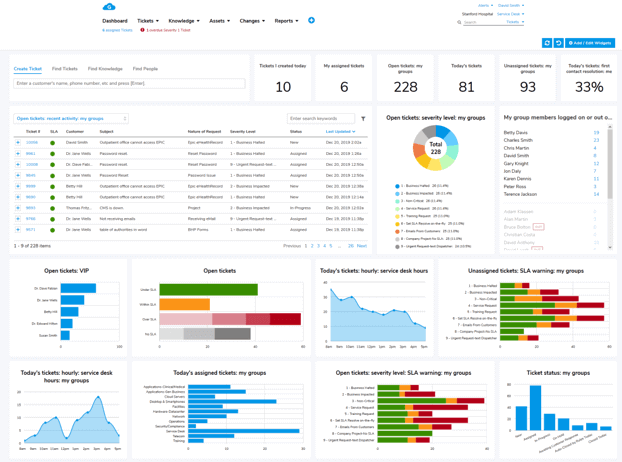
With features like advanced ticketing systems, AI Copilots, real-time analytics, and comprehensive customer support workflows, Giva empowers your team to deliver exceptional service. Moreover, Giva's commitment to security and compliance ensures your customer data is handled with the utmost care.
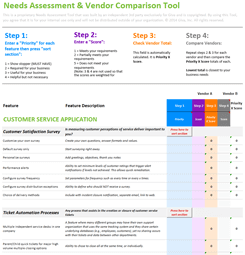
Discover how Giva can revolutionize your call center by getting a free demo to see our solutions in action! You can also download our free assessment tool, or start your own free, 30-day trial today!

Categories: Customer Service