Customer Service Across Generations: Strategies for Every Age Group
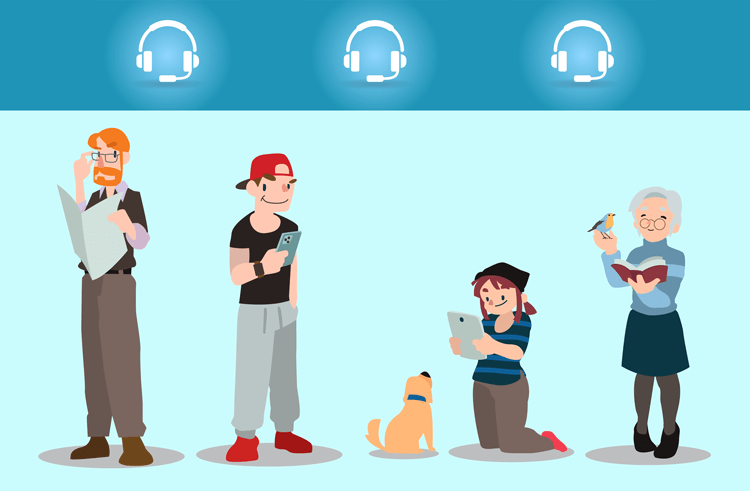
Delivering excellent customer service across generations starts with a straightforward fact: different age groups expect fundamentally different things. Generational differences in customer service preferences span communication channels, response speed, tone, and the balance between human and digital support. This may be the first time in history that representatives are tasked with serving customers from five generations simultaneously — Matures, Baby Boomers, Generation X, Millennials, and Generation Z — each shaped by distinct life experiences and technology adoption curves. A multigenerational customer service strategy cannot rely on a single approach; it requires adapting communication style, channel selection, and pacing to match the expectations of each group. This guide breaks down each generation's customer service expectations and provides practical strategies for meeting them.
From a consumer's point of view, excellent customer service goes a long way in creating a positive image about the brand, and confidence and loyalty in the brand. This will translate into profits for the company and help achieve desired business goals.
To deliver this excellent customer service, a service rep first needs to understand the five generations of customers they could be potentially dealing with, which we can name the following way:
- Matures
- Baby Boomers
- Generation X
- Millenials/Generation Y
- Generation Z
Customer Service for the Mature Generation
They are today's oldest living generation who were born before 1945.
The Mature Generation Characteristics
- They can have a false assumption that they have knowledge of everything, and they might often refuse to agree with your suggestions easily.
- Matures may have many regrets in their life, a bucket list of things they wish they have done or they have to do, many experiences that they want to share and assume you will want to hear about them.
- Old age is like their second childhood.
- They can be demanding, exaggerating, and sometimes annoying, but in the end, what they long for is personal attention.
What Matures Expect When They Call Customer Service
We cannot assume them as computer illiterate but late adopters of technology, and this might confuse and overwhelm them. When they contact a customer service representative, they might expect complete guidance about your product with little to no research being done beforehand. Their conversations can be long and might require detailed explanations of your product, which can be done through screen sharing and remote assistant tools. Giving them time, personal attention, and listening to them patiently is the only way to win over the trust of this generation of customers.
Customer Service for the Baby Boomers
Psychographics of Baby Boomers
Baby boomers are the major spenders in the U.S. economy. We estimated them to be around 80 to 90 million among the total population of the U.S.A with the millennials heeling them in terms of population. This generation was born between 1946 and 1964, which included the time of The Great Depression and the Dust Bowl. During this period, they were still children, and the influence of events then taught them to be hardworking and to become careful spenders.
Baby Boomers Characteristics
- They can be silent and known to work within the system and not against it.
- They are usually optimistic, with a can-do-it-yourself attitude.
- They can be competitive, goal-oriented, with a stable mindset.
- Unlike other generations, they often prefer on-call or face-to-face conversations.
- This generation is typically less formal than the Matures and early adopters of technology.
- Baby boomers like to dig deeper into issues and try to fix it themselves, but if they do not find any solution, they expect answers to be available 24/7.
It's notable that 52% of Baby Boomers prefer calling for customer service, compared to just 25% of Gen Z, the sharpest generational divide across any channel (Source: YouGov). Boomers are also more likely to wait on hold and engage in longer conversations to fully resolve an issue, reflecting their higher tolerance for phone-based interactions and lower expectation of instant digital resolution.
What Is the Baby Boomer Culture? What Do They Value?
Unlike any other generation, baby boomers value relationships the most. They like spending time with their family and friends the most. Baby boomers desire quality and excellence and are ready to pay top dollars for commodities that they presume are high in value.
What Do Baby Boomers Want When They Call Customer Service?
- Before they call a customer service representative, baby boomers normally would have completed most of the research about your product.
- Because of their busy lifestyle, baby boomers expect a service representative to be precise and available 24/7 to provide resolution to their queries.
- They are the first generation of consumers and like any other generation; they generally expect to be treated with respect.
- When dealing with this generation, avoid using slang words and abbreviations. Avoid using words like "elderly" or "old" while trying to show respect. This might otherwise hurt the customer and make them feel out of the league.
- Using unclear words or abbreviations might create a sense of doubt in the customers' minds, thus misunderstanding the product, and you might end up with a confused customer who has lost interest in the purchase.
- Avoid using irrelevant clickbait, and try to use contrasting fonts and big buttons, especially for mobile websites, as a majority of baby boomers use glasses.
- Baby boomers are used to brick-and-mortar stores and are less confident about using online stores. Providing personalized customer service, and rewarding with loyalty points and regular follow-ups after-sales, can go a long way in creating confidence and loyalty.
Customer Service for Generation X
What is Gen X Known For?
Anyone born between 1965 -1981 is considered as Generation X. We consider them as the middle bridge between the silent baby boomers and millennials. They are more straightforward and task-oriented. They usually prefer job security, which accustomed them to the 9 to 5 model of earning.
Generation X Characteristics
- Gen X is typically more patient, more accepting of criticism, and this doesn't keep them up the entire night with grief.
- Unlike millennials, they were not raised under the influence of the internet, but they had access to the internet and smartphone only in their adulthood, so they have lived a hybrid life and are mostly computer literate, independent and self-reliant.
What Generation X Expects When They Call Customer Service
A customer from this generation expects a customer service representative to be honest with them. They search for value in what your product is offering and simply do not fall for what you say. They take time researching your product, reading through your product reviews, and searching for social proof about your product.
To work with this generation, consider the following:
- A customer rep should have complete knowledge related to the product, should be able to provide social proof of the product, and provide fast and effective solutions.
- Rewarding someone for being loyal, with short and long-term rewards, goes a long way in saying thank you to a customer without actually saying it.
- Also as noted previously, this generation will research online on a wide range of social media platforms and search for social proof of your product. Facebook is the most used platform by Gen X, followed by LinkedIn and Instagram. Consequently, leveraging these social media platforms by the company to promote their product can make a customer service representative's task much easier.
Customer Service for Millennials (Gen Y)
Millennial customers are those born between 1985 and 2004. They are today's adults or in their 20s and number around 76 million, forming a large part of the U.S population.
Millennials Characteristics
Millennials are usually:
- Fun-loving
- Tech-savvy
- Cheerful
- Demanding of respect and recognition
Millennials Customer Service Expectations
-
Quick and Accessible Customer Service
A Millennial customer can be impatient and prefer convenience, so they are ready to pay a high price in return. They expect round-the-clock availability of customer service from a company through any accessible channel from chatbots to Facebook Messenger.
-
Personalization
A Millennial customer is ready to share their sensitive information in order to receive a personalized experience from a company. They expect a company to have their information and service history secure and accessible so that they could provide it whenever the customer needs it.
Millennials and Customer Service Interaction
To manage millennial customers, consider the following:
- A customer service representative should give them respect and never look down on them because of their age.
- Acknowledge your mistakes and do not make excuses.
- Using the internet, they usually conduct thorough research on your product and its competitors and contact a customer service representative only as a last option, so they can easily single out any false claim made by a customer service representative.
- Greet them with a smile, be precise and accurate, acknowledge their smartness, and make them feel valued.
Customer Service for Generation Z
This is the youngest generation of customers born between 1995 to 2010. They have been exposed to the internet and social media networks from a very young age and have grown up under its influence, so they can be called "the true products of the internet". Therefore, their major source of knowledge is the internet. Many Gen Zers received little to no attention from their parents because of their parent's busy schedules, so they resorted to the virtual world to compensate for that. This generation normally trusts most information that is available on the internet, believes in the virtual world, and often prefers virtual relationships over their families.
Gen Z Characteristics
- The Gen Zers, do not prefer to be identified through one stereotype but would rather like to explore different ways that can shape their identities.
- They often think they are religious and prefer to follow their parents' religion, but they are open to incorporating broader beliefs into their declared religion.
- Gen Zers are frequently open to dialogues and discussions with parents or institutions having different ideas and values rather than outrightly rejecting them but often find it difficult to convince them, and they can be quite analytical, not just accepting things because someone said they should.
- They are usually ready to stand for any cause or interest that might even conflict with their belief if they feel the cause is right.
Gen Z Customer Service Expectations
Millennial customers may be the first to embrace the online retail space disrupting the brick and mortar stores, but we expect Gen Z to take it further because of increased trust in the online space, personalized experience, and the pandemic. As we expect them to emerge as the largest workforce in near future, and considering their influence on their parents' money, we expect them to become the largest consumers.
To connect with this largest consumer group of the future, a customer service representative should:
- Focus on personalization: Gen Z is willing to share data but expects it to be used for relevant, tailored interactions, not generic messaging.
- Adopt a mobile-first, omnichannel approach: only 25% of Gen Z prefer calling for support, while 28% favor email and 8% use social media, meaning they expect to reach you on their terms across multiple channels (Source: YouGov).
- Enable self-service and AI-assisted options: Gen Z is the generation most open to AI support: 14% prefer AI over a human agent when quality is equivalent, compared to just 4% of Baby Boomers (Source: SurveyMonkey). That gap matters for channel routing even if the absolute numbers remain low across all ages.
- Maintain authentic presence on social media: Gen Z expects companies to be reachable and transparent on the platforms they use daily.
- Do not patronize or oversell: This generation researches extensively and will quickly identify exaggerated claims.
AI and Self-Service: Matching the Channel to the Generation
One of the sharpest fault lines between generations today is how they feel about AI-powered support and self-service options. Getting this wrong is costly in both directions, where pushing a Baby Boomer to a chatbot creates frustration, while forcing a Gen Z customer to wait on hold causes abandonment.
The numbers are more nuanced than headlines suggest. The SurveyMonkey study noted above asked consumers which they would prefer, AI or a human agent, assuming equivalent speed and service quality. Even under that favorable framing for AI, only 14% of Gen Z and 11% of Millennials chose AI, compared to 7% of Gen X and 4% of Baby Boomers. The generational gap is real, with Gen Z is 3.5x more likely than Boomers to accept AI support, but in every generation the clear majority still prefers a human. The practical implication is not "serve Gen Z with AI" but it's "give Gen Z the option to use AI without forcing Boomers into it."
Separately, 38% of Gen Z and Millennial customers say they will give up on a support issue entirely if no self-service option is available, from a Gartner survey of 6,138 customers (Source: Gartner).
And for Baby Boomers the picture is the reverse, with only 4% prefer AI over a human agent, and Boomers are significantly more likely to wait on hold for a person than to engage a chatbot. For this group AI chatbots feel impersonal and inadequate for the detailed, patient conversations they expect.
Practical implication for support teams:
- Route incoming contacts intelligently: Use channel and device signals to surface self-service or chatbot options first for younger customers, while offering immediate human options for channels dominated by older users (especially inbound phone)
- Always provide a visible and easy "talk to a person" path for any AI interaction: This single feature makes AI acceptable across all generations, including skeptics
- Build a robust knowledge base and FAQ layer: Younger generations default to searching Google or YouTube before calling, removing friction from self-resolution reduces contact volume while increasing satisfaction for the customers most likely to abandon without it
Cross-Generation Customer Service Strategies
Omnichannel Customer Service for All Generations
We've seen that different age groups prefer different communication channels, with Boomers overwhelmingly by phone, Gen Z by email, chat, and social media, with every generation in between falling somewhere along that spectrum. Meeting customers where they are is the difference between a service interaction that completes and one that gets abandoned. The goal is for companies to connect these channels seamlessly while preserving the generational personalization that makes each interaction feel relevant.
An effective omnichannel system should:
- Offer a mix of traditional (phone, in-person) and digital (chat, apps, social) support
- Retain customer history so service remains consistent across channels
- Use adaptive tools such as AI-powered knowledge bases for Millennials and Gen Z, while ensuring accessible phone support for Boomers and Matures
Training Customer Service Agents for Generational Differences
Service representatives must be prepared to adapt their tone, pace, and communication method based on the customer they are serving. Special training helps agents to shift seamlessly between generations without frustrating customers.
Here are some suggested training practices to include:
- Role-Play Scenarios: Practice explaining a process slowly and clearly for Matures, versus quickly resolving issues for Millennials over chat
- Channel Proficiency: Train reps to use higher-tech platforms like Instagram DMs or WhatsApp with Gen Z, while maintaining excellence in phone tone and style for Boomers
- Empathy and Respect: Teach agents to avoid stereotypes or patronizing language because what feels respectful to one generation might feel disrespectful to another
- Knowledge Depth: Make sure reps can provide social media examples and product reviews for Gen X, and personalized recommendations for Millennials and Gen Z
By bringing this generational flexibility into training, companies can keep their service teams delivering empathy and excellence to every customer, regardless of age.
Comparing Side-by-Side Customer Service Across the Generations
To try to summarize, the table below is a quick-reference comparison across the five generations of consumers discussed above:
Generation |
Key Traits |
Preferred Channels |
Service Expectations |
Tips for Service Reps |
|---|---|---|---|---|
Matures |
Value personal attention, late adopters of technology |
Phone, in-person |
Long, detailed explanations and guidance |
Be patient, avoid jargon, use visual aids like screen-sharing |
Baby Boomers |
Relationship-focused, quality-driven, competitive |
Phone, email, in-person |
Respect, clarity, loyalty perks, 24/7 availability |
Avoid slang, offer thorough explanations, provide follow-up and loyalty rewards |
Generation X |
Independent, skeptical of marketing, research-driven |
Email, social proof, phone |
Honesty, evidence-based claims, reliable support |
Provide product reviews, highlight value, reward loyalty |
Millennials |
Tech-savvy, impatient, demand recognition |
Chat, messaging apps, social media |
Fast resolution, personalized experiences, accessible across channels |
Respect their knowledge, avoid excuses, acknowledge their research |
Generation Z |
Digital natives, skeptical, highly connected |
Social media, mobile-first apps, self-service |
Instant, authentic, omnichannel support |
Be transparent, maintain presence on multiple platforms, avoid patronizing language |
Looking Ahead for the Next Generation for Customer Service: Gen Alpha
Before we conclude, while the focus above is on Matures through Gen Z, the next generation is already here. Gen Alpha, born after 2010, is growing up in a world of artificial intelligence, augmented reality, and constant connectivity. These consumers will likely expect immersive, gamified, and highly intuitive customer service experiences.
Companies can prepare by:
- Looking at AI-driven virtual assistants capable of natural conversations
- Considering AR/VR for product demonstrations and service experiences
- Building seamless digital-first systems that keep service smooth amongst each tech type
Preparing now for Gen Alpha can help keep businesses ahead of the curve, while continuing to serve the unique needs of every generation before them.
Conclusion: Understanding the Generations for Customer Service Excellence
Customer service is not just about having a conversation with someone—it's the art of bringing along a complete stranger at any stage of the sales funnel without demanding, insulting, or being pushy. To master this art, customer service representatives need to be trained in the nuances of service delivery, which in this era includes understanding the generational differences among all your customers. Understanding these differences and implementing a tailored customer service initiative will keep a high rate of customer satisfaction across your customer spectrum, contributing positively to your company's bottom line.
Giva Can Help Streamline Customer Service Operations
Help your support teams provide the best service with our customer service software solution:
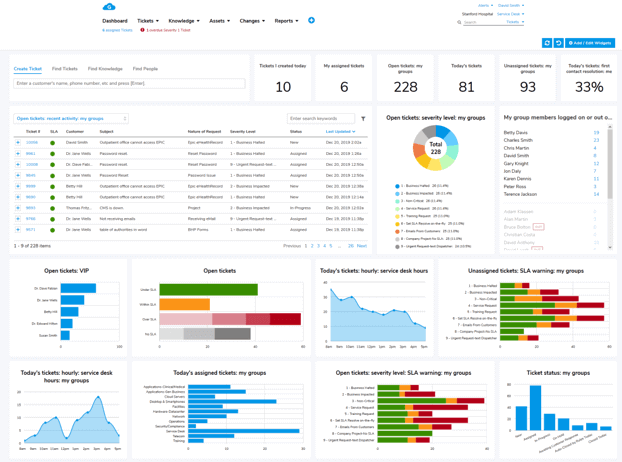
- Boost visibility and productivity with real-time dashboards
- Spend more time with customers and less with setup
- Make fast business decisions with deep and comprehensive out-of-box reporting and analytics
- Giva's AI Copilots help agents close tickets and retrieve answers quickly
Ready to learn more? Get a demo to see Giva's solutions in action, or start your own free, 30-day trial of Giva today!

Categories: Customer Service