Call Center Monitoring: Metrics, Tools, and How-To Strategies to Improve Performance
Most people think of call center monitoring as managers listening to live or recorded calls for quality assurance. That perception isn't wrong. Many organizations still approach QA in this traditional way. But its role has evolved.
Today, call center monitoring plays a larger role. It connects performance data to business results and customer experience. For example, monitoring may show that more support calls are being escalated because company policies seem to be unclear. That insight goes beyond agent performance. It highlights a process issue that leadership can fix.
Technology is driving much of this shift. Modern call center monitoring software goes far beyond call recording. It combines analytics, reporting, and workflow data into one view. Leaders can see how agent actions, processes, and systems affect results.
Call center monitoring is not meant to be a "gotcha" tactic used to catch employees' mistakes. Rather, call quality monitoring helps teams find process gaps and training needs early.

What Is Call Center Monitoring?
Call center monitoring is the systematic process of evaluating agent-customer interactions to ensure quality assurance, compliance, and performance standards. It uses call recording, real-time AI analysis, and KPI tracking to identify agent training needs and improve customer experience.
More specifically, call monitoring looks at things like:
- Tone of the agent: Are they outgoing and helpful, or dismissive and lacking empathy?
- Accuracy: Does the agent provide correct product and policy information?
- Resolution quality: Are the solutions consistent with how similar situations are handled?
- Script adherence: If your organization uses scripts or talk tracks, do agents follow them?
Call center monitoring programs typically combine four main components:
- Real-Time Monitoring: Supervisors observe live calls via dashboards and can intervene through whisper coaching or barge-in to assist agents in the moment
- Call Recording & Evaluation: Recorded interactions are reviewed against QA scorecards to verify script adherence, accuracy, and regulatory compliance
- Speech Analytics & AI: Automated tools analyze 100% of calls for keywords, sentiment, and silence, flagging compliance risks and coaching opportunities that manual sampling would miss
- Performance Metrics (KPIs): Key indicators, including First Call Resolution (FCR), Average Handle Time (AHT), Customer Satisfaction (CSAT), and Net Promoter Score (NPS), quantify outcomes and guide improvement priorities
Call quality monitoring should not be informal. Organizations should use a clear scorecard to keep reviews fair and consistent across calls and agents.
The goal of call center monitoring is to keep service standards high, help agents improve, and create consistent customer experiences. It's also important to understand the difference between monitoring and simple call recording. Recording captures interactions. Monitoring analyzes them and drives action.
Types of Call Center Monitoring
Call center monitoring is not one-size-fits-all. Organizations typically use a combination of the following methods:
- Silent Monitoring: Supervisors listen to live calls without the agent or customer hearing them. This allows unbiased evaluation of real-time performance.
- Whisper Coaching: Managers can speak directly to the agent during a live call without the customer hearing. This is useful for training new hires.
- Barge-In Monitoring: A supervisor joins the call if escalation is needed or compliance risks arise.
- Side-by-Side Coaching: A supervisor sits next to the agent (physically or virtually) and observes in real time. Unlike whisper coaching, feedback is delivered directly after the call ends, making it especially effective for new hire onboarding and targeted skill development.
- Post-Call Monitoring: Recorded calls are reviewed later using structured QA scorecards.
- Automated Monitoring: AI tools analyze 100% of interactions using speech analytics and sentiment detection, flagging high-risk calls automatically.
AI in Call Center Monitoring
Let's examine automated monitoring closer. While manual sampling reviews only a small percentage of calls, AI-powered monitoring changes that.
Modern systems use:
- Speech-to-text transcription
- Keyword and phrase detection
- Sentiment analysis
- Silence and talk-over detection
- Compliance trigger alerts
Instead of reviewing 5% of calls, organizations can analyze 100% of interactions.
AI can flag:
- Escalation risk
- Compliance violations
- Customer frustration spikes
- Script deviation
- Repeated issue patterns
This allows managers to focus on coaching and root cause improvement instead of manual listening.
Even though AI can provide this large-scale analysis, there are some considerations to note:
- Human review is still needed for context
- Not every flagged issue requires intervention
- Sampling may still be useful for coaching depth
The best approach combines automated analytics with structured human review.
What Does a Call Monitoring Scorecard Include?
A structured monitoring QA scorecard typically evaluates:
Category |
Example Criteria |
Greeting |
Gave proper introduction and verification |
Empathy |
Acknowledged customer concerns with patience and professionalism |
Identification |
Understood the customer issue |
Accuracy |
Provided the correct product/policy/procedural information |
Resolution |
Provided clear next steps |
Compliance |
Followed required scripts, disclosures, or regulatory prompts |
Closing |
Confirmed resolution, invited follow-up questions, and closed the call professionally |
Documentation |
Logged notes accurately |
Each category is weighted based on business priorities. For example, compliance adherence may carry more weight in healthcare or financial services. This prevents subjective reviews and maintains fairness across agents and reviewers.
How Does Call Center Monitoring Work?
While monitoring methods vary, the core process follows a consistent cycle:
- Define evaluation criteria: Establish what good looks like by building a QA scorecard with weighted categories. Align criteria to your business priorities (compliance, resolution quality, tone).
- Capture interactions: Use call recording, live monitoring, or AI-powered transcription to collect the calls or interactions to be evaluated.
- Score each interaction: Reviewers (or automated tools) score calls against the scorecard. AI tools can score 100% of interactions; human reviewers typically sample 5-10 calls per agent per month.
- Calibrate reviewers: Hold regular calibration sessions where QA reviewers score the same call independently and compare results. This keeps scoring consistent across the team.
- Deliver feedback and coaching: Share scores with agents quickly. Connect results to targeted coaching, not just a score report.
- Track trends and act: Review aggregate data to identify patterns, and not just individual performance, but process gaps, policy confusion, and training needs.
The value is in step six, monitoring that stops at scoring is just surveillance. Monitoring that feeds into process improvement is a performance management system.
Is Call Center Monitoring Legal?
Call monitoring is legal in most jurisdictions, but organizations must follow recording disclosure laws.
In the United States:
- Some states require one-party consent
- Others require two-party consent
In regulated industries:
- PCI-DSS restricts storage of credit card data
- HIPAA governs protected health information
- GDPR requires transparency and lawful processing
Here is a best practice: Always inform customers that calls may be monitored or recorded for quality and training purposes.
Failure to comply can result in fines and reputational damage.
Call Center Monitoring Metrics
Call center monitoring starts with listening to agent calls, but it goes far beyond that. Listening alone doesn't achieve much if you aren't tracking the right call center metrics. While speed to resolution is often the most obvious benchmark, over-focusing on it can hurt quality of service. Here are some of the essential metrics to track for successful call monitoring:
Main Performance Metrics
- Average Handle Time (AHT): Measures how long calls take. While speed matters, shorter isn't always better. A longer call that leads to a clear and satisfying outcome is often more valuable.
- First Call Resolution (FCR): How often are issues resolved in one interaction? Problems that require multiple follow-ups frustrate customers and increase workload.
- Call Abandonment Rate: What percentage of callers hang up before being helped? High abandonment may signal long hold times or routing issues.
- After-Call Work (ACW): How long does it take an agent to log notes and close out a call? How quickly can they move to the next interaction? Efficient help desk software can reduce ACW through automation.
Quality and Experience Metrics
- Customer Satisfaction Scores (CSAT): This is why speed alone isn't enough. The goal is to leave customers satisfied with the outcome. Higher CSAT scores often lead to repeat business and positive reviews.
- Quality Assurance (QA) Scores: These scores measure how well agents follow service standards. They follow a structured scorecard that evaluates areas like tone, accuracy, resolution quality, and policy adherence.
- Sentiment indicators: What is the tone of customers when they reach your team? If many callers sound frustrated or angry, there may be a deeper issue with your product, service, or processes.
- Escalation rate or repeat contact rate: How often do customers call back about the same issue? How often do agents escalate? While some escalations are expected, most issues should be resolved by front-line agents.
Compliance and Risk Metrics
- Policy Adherence Rate: Do agents handle issues in line with company policy? For example, are credits issued appropriately and consistently? If agents often give out credits to appease customers, it may be time to look for other solutions that cost less.
- Script Adherence: If your organization uses scripts or talk tracks, how often do agents follow them? If agents are going off-script, it may be time to revise the messaging or allow them more flexibility.
- Error Rate: How often do agents make mistakes in documentation, policy, or communication? Error thresholds should trigger training opportunities.
No single metric tells the full story. Strong call center monitoring programs look at trends across the categories listed above. The goal is not to chase speed or inflate scores. It is to identify patterns, improve processes, and support agents in delivering consistent results.
Measuring the ROI of Call Monitoring
Once the tracking of metrics is in place and data are collected, it's important to understand how to apply them for ROI.
First, monitoring should drive measurable financial results:
- Reduced repeat calls
- Lower escalation rates
- Fewer compliance violations
- Improved agent retention
- Higher CSAT and NPS (Net Promoter Score)
For example, if improved First Call Resolution reduces repeat contacts by 10%, operational workload drops significantly. This reduces staffing pressure and overtime costs.
Then, leadership should track:
- Cost per call before and after improvements
- Escalation rate trends
- Repeat contact reduction
- Compliance incident frequency
With those, monitoring becomes a performance strategy and not just a compliance check.
How to Improve Call Center Monitoring
Improvement starts by moving from manual sampling to a structured, data-driven approach.
While no two interactions are the same, the scorecard should include the following approach:
- Evaluate each interaction against the same set of standards: Scorecards may vary by channel, but the criteria should remain consistent and without bias. These scorecards can measure speed, first call resolution rates, customer sentiment, and more. The elements you monitor should align with your desired business outcomes.
- Focus on the right key metrics: Do not chase speed alone. Balance efficiency with service quality. If your escalation rate is rising, or if customer satisfaction scores are dropping, dig deeper into the root cause. Monitoring should uncover patterns, not individual mistakes.
- Factor in the role of technology:. Modern call center monitoring software provides real-time insights into agent performance. Instead of relying on recorded customer service calls, managers can use data analysis and actionable reports to make decisions. The goal is to move from guesswork to data-driven feedback.
- Build a feedback loop: Monitoring without coaching does not improve performance. Share results with agents in a clear and constructive way. Use findings to guide training sessions.
Call Center Monitoring Best-Practices Checklist
To build an effective program:
- Monitor consistently across agents
- Use calibration meetings to align QA reviewers
- Review at least 5–10 calls per agent monthly (or more in high-risk environments)
- Combine AI analysis with human coaching
- Use live monitoring for escalations and compliance-sensitive calls
- Conduct recorded-call audits for coaching depth and trend analysis
- Focus on patterns, not isolated mistakes
- Tie monitoring results to training plans
- Share feedback quickly
Monitoring should feel helpful and not disciplinary.
Benefits of Call Center Monitoring
We have established that call center monitoring is not just another call center quality assurance exercise. When done well, it benefits several parts of the business.
-
Improved Customer Experience
One of the primary benefits is to your customers. Monitoring identifies pain points that increase customer effort, such as long hold times, repeated contacts, policy confusion, and gives leaders the data to remove them. When monitoring works, issues get resolved faster, customers call back less often, and satisfaction scores improve. Reduced customer effort translates directly to higher loyalty and repeat business — a win-win for customers and the business.
-
Increased Agent Performance and Confidence
What about your agents? Strong monitoring processes make their jobs easier too. They work from clear standards and understand their strengths and training needs. Dedicated employees want to know where they stand and how they can improve. Clear expectations and ongoing development also help attract and keep new hires.
-
Reduced Operational Costs
Effective monitoring optimizes workflows and identifies bottlenecks, whether that is a routing step that adds unnecessary hold time or a policy gap that generates repeat contacts.
As teams act on monitoring data:
- Results improve
- Escalations decrease
- Repeat calls drop
- Compliance violations become less frequent
- Staffing decisions improve
This is where the financial impact of lower costs becomes clear.
-
Stronger Compliance and Risk Management
In regulated industries such as healthcare and banking, policy adherence is critical. Call monitoring serves a purpose beyond customer satisfaction. It helps protect sensitive data like personal health information and Social Security numbers. It reduces overall legal exposure.
-
Better Decision-Making for Leadership
The C-suite focuses on results, not individual calls. Leaders want clear reports and data-backed reviews. They also want to see how the call center is performing over time.
Monitoring creates transparency → transparency leads to accountability → accountability drives continuous improvement.
Common Challenges in Call Center Monitoring
Call center monitoring sounds straightforward. In practice, many programs struggle. The idea is usually solid. The challenge is in execution.
-
Over-Reliance on Speed Metrics
Agents can become overly focused on chasing lower average handling times. Leaders must emphasize that speed alone can lead to poor outcomes. Customers feel rushed. Details are missed. Repeat contacts increase.
Balance matters. For example, checking a customer's account balance might take five minutes end-to-end. Troubleshooting a defective product could take closer to twenty. If those timelines were reversed, it would signal a deeper issue. Context is key.
-
Inconsistent Evaluation Standards
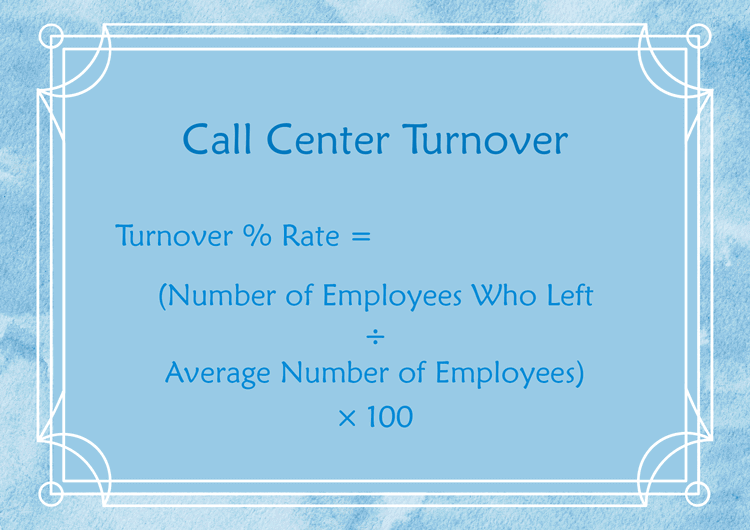
Scorecards should be consistent from reviewer to reviewer. They should be standard and clearly defined. This ensures feedback is based on the same metrics every time and for every employee. When standards vary, feedback becomes subjective. Agents notice the bias. Trust erodes, and turnover can follow.
-
Manual Sampling and Limited Visibility
Monitoring too few calls creates blind spots. This is why limited manual sampling alone isn't recommended. An agent may have one difficult call but otherwise follow company policies. Call centers are dynamic, and no two interactions are the same. When reviews rely on isolated examples, leaders could miss broader trends.
-
Agent Resistance and Morale Impact
Call center monitoring can feel like surveillance. If positioned poorly, it damages morale and creates distrust. Organizations should be transparent about how often calls are reviewed and scorecard metrics. Be clear about the purpose. The goal is improvement, not punishment. That distinction matters.
-
Disconnected Systems
Monitoring data often lives in one system. Ticketing and workflow data live elsewhere. When systems are disconnected, teams lack the full picture. Insights fail to translate into action. Monitoring should integrate with existing help desk or ITSM software to improve traceability.
-
Compliance and Risk Gaps
In regulated industries, inconsistency increases risk. Monitoring may serve a compliance tracking role in these environments. When done manually or infrequently, high-risk interactions can go unnoticed and create exposure.
Read more: Call Center Compliance: Risks, Key Laws and Regulations, and Best Practices
Understanding Call Center Monitoring Tools
Call center monitoring tools have evolved beyond simple recording. Recording still matters. But teams also need better visibility, clear data, and tools that integrate better with their current systems. If you are evaluating call center monitoring tools, here are the core capabilities to look for.
Core Capabilities Every Tool Should Offer
- Call recording and playback
- Real-time call monitoring
- Scorecards and a defined quality monitoring process
- Key metrics dashboards
- Compliance tracking
- Secure storage of recorded calls
Advanced Capabilities
- Real-time visibility into agent performance
- AI-powered insights
- Sentiment or emotion detection
- Screen recording for chat or email interactions
- Customizable dashboards
- Data analysis across interactions
Integration Matters
These features should work together, not in separate systems. Monitoring tools should connect to your contact center and help desk platforms. When call data links to tickets, teams can track follow-through more easily. That data should help guide escalations, staffing, and spending decisions.
Popular Monitoring Platforms
Purpose-built call monitoring platforms used by enterprise and mid-market contact centers include the following:
These platforms specialize in call recording, speech analytics, and QA scoring at scale.
How to Choose the Right Tool
At a high level, here's what to look for in order to select the right tool:
- Scalability for high call volumes
- Secure access controls
- Comprehensive reports for business leaders
- A clear evaluation process
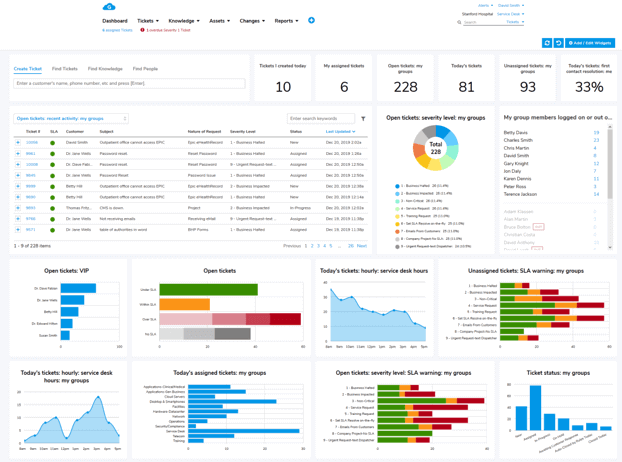
The real value of monitoring comes from what happens after the call ends. Giva's Customer Service Software helps teams track tickets, manage escalations, and organize service requests in one place. Its dashboards and reports give leaders visibility into ticket trends and team responsiveness. When monitoring data connects to ticket tracking, teams can take action instead of only reviewing calls.
Read more: Contact Center Trends in 2026 Plus Planning Strategies for Success
From Monitoring Calls in Call Centers to Driving Results
Call center monitoring is no longer just a quality assurance activity. When structured correctly, it becomes a performance management tool. It draws a line from customer experience to operational results.
Metrics matter, but context matters more. Monitoring should drive action, not just reporting. It should be transparent with agents and consistent for customers.
Let Giva Be Your Partner for All Your Call Center Support Software Needs
Giva's customer service software is built for quick deployment and ease of use. That way, you can start seeing value right away:
- Use Giva's AI Copilot to help agents craft the best responses to customers
- Help users find the best responses to questions from your knowledge base using Giva's Knowledge AI Copilot
- Get visual insights with real-time dashboards
- Make fast business decisions with out-of-the-box reporting and analytics
Learn how Giva can benefit your support organization. Get a demo to see Giva's solutions in action, or start your own free, 30-day trial today!


Categories: Customer Service