Call Center Turnover: Causes, Costs and Best-Practice Solutions
Call center turnover is a cycle that's hard to break when employees keep leaving your company.
It's an expensive cycle that looks like this: Just as you finish training new hires, experienced agents walk out the door. Customer satisfaction scores drop. Costs climb. And call center managers find themselves stuck in an endless loop of recruiting, hiring, and training. In most cases, that's a revolving door of employees in and out.
Call center turnover is one of the biggest challenges facing the contact center and customer service industry today. Understanding why it happens and how to fix it can transform your operation from a revolving door into a stable, successful team.
In this guide, we will walk you through everything you need to know about call center turnover, from measuring your turnover rate to implementing targeted retention strategies that actually work.
Key Takeaways: Summary Table
For those in a hurry, we've compiled the following quick reference summary table:
Topic |
Key Points |
What is Call Center Turnover? |
The rate at which employees leave their positions and need replacement, including both voluntary (resignations) and involuntary (terminations) departures. |
Average Turnover Rates |
Overall industry: 30-45% annually (some reach 60-70%). Retail: 40-60%, Financial services: 25-35%, Technical support: 30-45%, Healthcare: 20-35%. |
Cost Per Agent |
$10,000-$20,000 to replace a single agent when factoring in recruitment, hiring, training, and lost productivity. |
Main Causes |
Low pay, limited career growth, poor training, inflexible scheduling, high stress, poor management, and low employee engagement. |
How to Calculate |
(Number of Employees Who Left / Average Number of Employees) × 100 = Turnover Rate % |
Top Impacts |
Decreased customer satisfaction, lost productivity, increased training burden, staffing shortages, damaged morale, and weakened company culture. |
Best Solutions |
Competitive compensation, clear career paths, improved training, flexible work arrangements, stress reduction, better management, and enhanced employee engagement. |
Role of Software |
Quality assurance tools, AI-powered coaching, better training resources, workload management, performance visibility, and customer context reduce turnover. |
Now, let's get into all of this in more detail.
What is Call Center Turnover?
Call center turnover is the rate that staff leave and need to be replaced.
Turnover or attrition includes both voluntary turnover (when agents quit) and involuntary turnover (when the company terminates employment). In the contact center industry, turnover happens when customer service agents, support agents, or other frontline employees leave their call center roles.
High employee turnover creates serious problems for call center operations.
Every time an experienced agent leaves, you lose their product or service knowledge, customer service skills, and ability to handle emotional customers efficiently. In some cases, they may have known work-arounds or other problem solving skills that aren't written down (something that a strong knowledge base should solve), which in turn causes more problems.
Meanwhile, new employees need months of training before they can perform at the same level. This constant churn affects everything from first-call resolution rates to customer satisfaction scores.
There are a number of reasons staff leave, as we'll look into below. For example, the repetitive nature of call center work, combined with demanding performance metrics and sometimes difficult customer calls, makes retention particularly challenging.
However, contact center and customer experience (CX) leaders who understand the root causes of staff turnover can take proactive measures to improve retention rates and build stronger teams.
How to Calculate Your Call Center Turnover Rate
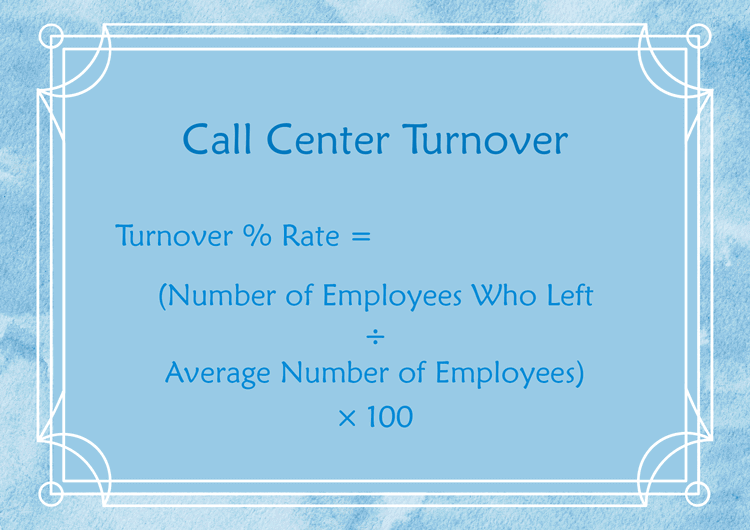
Before you can improve retention, you need to measure your current employee turnover rate. Here's the standard formula:
Turnover Rate = (Number of Employees Who Left / Average Number of Employees) × 100
For example, if your call center started the year with 80 agents, and ended with 100 agents, your average number of employees would be 90 (ie. (100+80)/2), but 30 people left during that time, your calculation would be:
(30 / 90) × 100 = 33% annual turnover rate
Most contact centers calculate this monthly, quarterly, and annually to track turnover trends. You can also break it down further:
- Voluntary vs. involuntary turnover to understand if people are quitting or being terminated. Even if staff are being fired (rather than quitting), this needs to be investigated, so managers need to understand why staff are leaving, even if it's involuntary.
- Turnover by team to identify if specific managers or departments have retention problems.
- New hire turnover to see if people leave shortly after onboarding (suggesting training issues).
Tracking these metrics helps you identify patterns and focus your retention strategies where they'll have the biggest impact. Moreover, tracking turnover monthly and quarterly helps identify sudden spikes tied to scheduling changes, new KPIs, leadership shifts, or seasonal demand.
How to Interpret Your Call Center Turnover Rate
Calculating your call center turnover rate is only the first step. The more important question is what that number tells you about your operation:
- Below 20%: Exceptionally strong retention for most call centers, often driven by higher wages, strong management, or specialized roles
- 20%–30%: Better than average and typically sustainable
- 30%–45%: Industry average, but still costly and worth addressing
- 45%+: A warning sign that burnout, compensation, management, or workload issues are likely present
If your center's attrition rate is around 30% to 45%, or even higher, it's time to examine your retention strategies. Even if you're within average ranges, remember that lower turnover rates mean significant cost savings and better customer experience.
Average Call Center Turnover Rates: Industry Benchmarks
Call center attrition rates are notoriously high compared to other industries. While average turnover rates vary, industry experts typically cite these benchmarks:
Average contact center turnover: As noted above, 30% to 45% annually is common (and a widely cited figure), with some centers experiencing turnover as high as 60% to 70% or more.
Staff attrition depends on a number of factors. One study found that "some call centers have agent turnover as low as 20% and as high as over 200%."
Now, here's a break down of call center turnover rates by industry:
- Retail and E-commerce: 40%–60%: High call volumes, seasonal spikes, and lower average wages contribute to some of the highest turnover rates in the contact center sector.
- Telecommunications and Utilities: 35%–50%: Complex customer issues, frequent complaints, and high emotional labor increase agent burnout and reduction.
- General Customer Service / Inbound Support: 30%–45%: This is often cited as the overall industry average for contact centers, with some operations exceeding 60% annually.
- Technical Support / IT Help Desks: 30%–45%: Higher skill requirements help slightly reduce churn, but stress from complex troubleshooting and performance pressure still drives turnover.
- Financial Services and Banking: 25%–35%: More structured environments, better compensation, and clearer career paths typically result in lower attrition than retail-focused centers.
- Healthcare Call Centers: 20%–35%: Regulatory requirements, specialized training, and higher job stability contribute to comparatively lower turnover, though stress levels remain high.
- BPO / Outsourced Call Centers: 45%–70%+: Cost pressure, repetitive work, and limited advancement opportunities often lead to significantly lower retention, with some centers reporting annual turnover well above 100%.
Why Call Center Employees Leave
Understanding why agents leave is the first step toward reducing turnover.
Here are the 7 most common reasons behind high attrition rates in contact centers:
-
Low Pay and Inadequate Compensation
Sadly, it's no secret that many call center roles don't offer competitive pay compared to other jobs requiring similar skills. When agents can earn more money elsewhere with less stress, they'll take that opportunity.
Competitive compensation isn't just about base salary either. It includes benefits, bonuses tied to outstanding performance, and recognition programs that make employees feel valued.
Contact center agents often handle hundreds of phone calls and Live Messages every day, resolve complex customer issues, and meet strict KPIs. When their paycheck doesn't reflect this demanding work, employee satisfaction suffers and turnover naturally follows.
-
Limited Career Growth Opportunities
Many call center employees see their position as a dead end. If there's no clear career path from entry-level agent to team leader or other advancement opportunities, talented workers will look elsewhere. Agents want to know that exceptional performance can lead to promotions, new responsibilities, or specialized roles.
Contact centers that invest in career development opportunities, such as training programs that build technical skills or leadership pathways, see lower turnover rates. When employees can see a future they want at your company, they're more likely to stay.
-
Poor Training and Lack of Support
Throwing new employees onto the front-lines after a brief onboarding process is a recipe for disaster. A limited amount of training leaves agents unprepared to handle real customer calls and Live Chats, leading to higher levels of stress, performance issues, and them running for the door.
Poor training also affects customer experience. Frustrated and unhappy customers complain, which demoralizes agents even further.
Effective contact center software should support ongoing training, not just initial onboarding. Quality assurance and training connection is crucial. Agents need regular coaching, feedback on their performance metrics, and resources to improve their skills throughout their employment.
-
Lack of Work-Life Balance and Inflexible Scheduling
Call centers operate longer hours so that customers who are at work can get the help they need when they've finished. For staff this often means weekend and holiday shifts. When agents have no control over their schedules or can't request time off without difficulty, burnout happens fast. The inability to balance daily tasks at work with personal life responsibilities drives many employees away.
Companies offering flexible scheduling options, remote work possibilities, or predictable work arrangements see better retention rates. Even small improvements like giving agents input on their schedules or allowing shift swaps can significantly boost employee satisfaction.
-
High-Stress Environment and Agent Burnout
Taking customer calls all day is mentally exhausting. Contact center agents deal with frustrated customers, tight service level requirements, and constant performance monitoring. The emotional toll of this repetitive work, combined with pressure to meet business goals, creates an environment where agent burnout is common.
Without adequate breaks, supportive management, or recognition for handling difficult situations well, stress builds up. Over time, this leads to increased absenteeism, poor mental health, declining performance, and eventually, resignation.
Find out more: Preventing Help Desk and Call Center Burnout: Ideas for Managers and Agents
-
Poor Management and Lack of Employee Recognition
Call center managers play a huge role in retention.
When leadership fails to recognize good work, provide constructive feedback, or support their teams, employees feel undervalued. Micromanagement, unrealistic expectations, and failure to address performance issues fairly all contribute to low job satisfaction.
On the flip side, managers who celebrate achievements, offer meaningful employee recognition, and create a positive company culture can dramatically improve retention efforts. People don't just leave jobs they dislike, and often, bad managers are one of the main reasons.
-
Limited Employee Engagement and Disconnect From Business Success
When agents feel like just another number in a cost center rather than contributors to business success, engagement really does suffer. If they don't understand how their work impacts customer expectations or company goals, the job feels meaningless.
Contact center leaders should connect agent performance to bigger outcomes. Show how their efforts improve customer satisfaction scores, reduce customer churn, or drive business growth. This context helps employees see value in their role beyond just answering phone calls.
At the same time, it really helps if you actually reward staff in a meaningful way for doing well.
When Call Center Employees Leave
Not all call center turnover happens evenly over time. In many organizations, the highest risk period is within the first 90 days of employment.
- First 30–90 days: Often driven by poor onboarding, unrealistic job previews, or lack of coaching
- 3–12 months: Commonly tied to burnout, schedule fatigue, or performance pressure
- 12+ months: Usually influenced by limited career growth or compensation ceilings
High early attrition is a signal that hiring practices, training programs, or expectations need immediate attention.
The Negative Financial Cost of High Call Center Staff Turnover
High employee turnover both creates hiring headaches and damages your entire operation and bottom line.
-
Financial Costs
Replacing a single contact center agent typically costs $10,000 - $20,000 when you factor in recruitment, hiring, training costs, and lost productivity during the learning curve.
So, let's assume 30% annual attrition rates for a 100-person contact center. The annual cost of this at the average figure of $10,000 per employee = 30 staff leave/new joiners = $300,000!
With attrition issues affecting dozens or hundreds of employees annually, these expenses add up quickly.
-
Decreased Customer Satisfaction
New employees lack the experience to handle complex issues efficiently. This leads to longer call times, lower first-call resolution rates, and ultimately, lower customer satisfaction. Frustrated customers may leave for competitors, increasing customer churn.
-
Lost Productivity
When experienced agents leave, institutional knowledge walks out with them. New hires need time to reach full productivity, usually 3-6 months for call center roles. During this period, they handle fewer calls and need more support, reducing overall team efficiency.
-
Increased Training Burden
High turnover means constantly training new employees instead of developing existing talent. This drains resources from quality assurance, performance management, and other initiatives that could improve service levels.
-
Staffing Shortages
While positions remain unfilled or occupied by trainees, remaining agents face heavier workloads. This creates a vicious cycle where overworked employees burn out and leave, making staffing problems worse.
-
Damage to Team Morale
Constant churn disrupts team dynamics and exhausts the employees who stay. When colleagues continually leave, remaining agents question whether they should leave too.
-
Impact on Company Culture
High turnover prevents the development of a strong and positive company culture. When most employees are relatively new, it's harder to establish shared values, experienced mentorship, or team cohesion.
10 Best-Practice Strategies to Reduce Call Center Staff Turnover
Lowering your center's attrition rate requires a multi-faceted approach. Here are the 10 most effective retention strategies:
-
Offer More Competitive Compensation and Benefits
Regularly review your pay rates against industry benchmarks. Even if you can't match the highest salaries, competitive pay combined with good benefits and performance bonuses shows your employees they're with a company that cares.
-
Create Clear Career Paths
Develop structured advancement opportunities from entry-level positions to team leads, specialists, trainers, or management roles. Help employees see a future at your company. A future they actually want.
-
Improve Training Programs
Invest in comprehensive onboarding that prepares new hires for real-world situations. Provide ongoing coaching, regular feedback, and opportunities to develop new technical skills. Use behavioral interviews and pre-hire assessments to ensure you're hiring people that are going to perform well in call center roles.
-
Implement Flexible Work Arrangements
Where possible, offer remote work, flexible scheduling options, or self-scheduling systems. Make sure it aligns with systems that track and predict call and message volumes. Giving employees control over their work-life balance significantly improves retention.
-
Reduce Job Stress
Set realistic performance metrics, provide adequate breaks, and create supportive environments where agents can decompress after difficult calls. Train managers to recognize signs of agent burnout before it leads to turnover.
-
Strengthen Management Quality
Train call center leaders and managers in effective leadership, communication, and employee recognition. Good managers make employees want to stay, while poor management drives people away.
-
Boost Employee Engagement
Connect call center agents daily tasks to business goals and customer satisfaction. Share success stories. Create opportunities for input and feedback. Make employees feel like valued contributors, not replaceable cogs.
-
Conduct Exit Interviews
When people do leave (ideally, fewer than before, thanks to the approaches outlined in this guide), use exit interviews and open-ended questions to understand why. This valuable information helps you address attrition issues before they affect more employees.
-
Focus on Improving the Employee Experience
From the first interview through daily operations, create positive experiences. Celebrate wins, acknowledge challenges, and build community among frontline employees.
-
Implement Employee Recognition Programs
Regularly acknowledge outstanding performance, whether through formal awards, public recognition, or simple thank-yous. Appreciation is a powerful retention tool. Most managers don't show this often enough, and then wonder why staff keep leaving.
At the same time, with the right call center software like Giva, this will also help to reduce employee turnover.
How the Right Call Center Software Helps Reduce Staff Turnover
Contact center software not only routes calls, but it directly impacts employee retention by making agents' jobs easier and more rewarding.
-
Quality Assurance and Performance Management
Modern software provides automated quality assurance, helping managers give specific, constructive feedback instead of vague criticism. When agents understand exactly what they're doing well and where to improve, job satisfaction increases.
-
AI-Powered Coaching
Advanced platforms offer AI-powered coaching that identifies performance issues early and suggests personalized improvement strategies. This agentic AI can help new employees get up to speed faster while supporting experienced agents in developing new skills.
-
Better Training Tools
Software that integrates training resources, knowledge bases, and real-time assistance helps agents handle customer calls confidently. When employees have the support they need, stress decreases and performance improves.
-
Workload Management
Smart scheduling and call routing reduce burnout by distributing work more evenly and preventing individual agents from being overwhelmed. Workforce Management software can help too.
-
Performance Visibility
Transparent performance metrics help agents understand their progress toward goals. Gamification features in some platforms make work more engaging and provide recognition for achievements.
-
Customer Context
When software provides a complete customer history and context, agents can deliver better service with less effort. This improves both customer experience and employee satisfaction.
-
What to Look for in Call Center Software
When evaluating contact center software for its impact on retention, consider:
- User-friendly interface that doesn't add to agent frustration
- Having AI built-in is also very important these days
- Integrated quality assurance tools for consistent feedback
- Robust reporting on performance metrics and turnover trends
- Training and knowledge management features. These are very important if you want staff to find answers to customer questions quickly
- Automation that reduces repetitive work
- Customer context that helps agents provide better service
Reduce Turnover with Giva's Call Center Software
Giva understands that happy customers start with happy employees. Our comprehensive call center software is designed to support your retention efforts by making agents' jobs easier, managers more effective, and your entire operation more efficient. It also helps new employees get up to speed faster while giving experienced agents the resources they need to excel.
From knowledge management to performance tracking, every feature is built with both customer satisfaction and employee experience in mind.
Don't let high turnover drain your resources and damage your customer relationships. Schedule a demo with Giva today or start your own free, 30-day trial and discover how the right software can transform your call center from a revolving door into a stable, successful operation where both employees and customers thrive.
Conclusion: Reducing Call Center Turnover for the Best Customer Support
High levels (30% to 45%) of call center turnover doesn't have to be inevitable. While the contact center industry faces unique retention challenges, from the repetitive nature of the work to demanding customer expectations, forward-thinking companies are proving that lower turnover rates are achievable.
Don't treat attrition as an unavoidable cost of doing business. It's a problem you can solve through strategic investment in your people. Address the root causes and you can solve this problem:
- Low pay
- Limited career growth
- Poor training
- Inflexible schedules
- High stress
- Weak, reactive management
- Low engagement
Create an environment where employees want to stay.
Call Center Turnover: Additional resources
- Giva Customer Service Software: AI Powered and HIPAA Compliant
- The 16 Best Customer Service Software Solutions for 2026: Buyer's Guide
- Customer Service Resource Center
- Omnichannel Contact Center: What It Is, Features and Best-Practice How-To's
- Customer Effort Score (CES): How to Calculate and Improve It Plus Industry Benchmarks
- CSAT vs. NPS vs. CES: How to Calculate Plus the Pros and Cons of Each
Call Center Turnover: Frequently Asked Questions (FAQs)
-
What is a good turnover rate for a call center?
While the contact center industry averages 30-45% annual turnover, a "good" rate depends on your specific sector and circumstances.
The real goal isn't just hitting a number, but it's continuous improvement. Even reducing your rate by 5-10% points can save hundreds of thousands of dollars annually in recruitment and training costs while improving customer satisfaction scores.
-
How long does it take for a new call center agent to become fully productive?
Most new call center agents require 3-6 months to reach full productivity levels.
During the first few weeks, they're focused on learning systems, products, and procedures through onboarding and training programs. In months 2-3, they handle actual customer calls but need more time per interaction and frequent support from supervisors. By months 4-6, most agents develop the confidence and technical skills to work independently and meet performance metrics.
-
What's the single most effective way to reduce call center turnover?
While there's no magic bullet, improving management quality often delivers the biggest impact. Research consistently shows that people don't leave jobs but they leave bad managers.
Call center leaders and managers who provide regular feedback, recognize outstanding performance, show genuine appreciation, and create supportive team environments can dramatically improve retention rates. This is possible even when other factors like pay or scheduling aren't perfect.



Categories: Customer Service