Customer Apology Email Script Examples: How to Apologize Without Sounding Scripted
 By Zac Amos
A customer apology email is a direct message that acknowledges a specific service failure, takes clear responsibility without making excuses, and explains what your team has done or is doing to make it right. In customer service, knowing how to write one (and how to train your team to deliver the same message sincerely over the phone) is one of the most practical skills you can build. A well-written apology can rebuild trust after a mistake. A poorly written one, such as one that is vague, defensive, or full of "we're sorry for any inconvenience", can end the customer relationship entirely.
However, it takes more than saying "sorry" to make a change. Customers want fast, simple solutions to their problems. And when they can't solve it themselves, customer reps need the ability to tell them what to do instead of apologizing and asking them what they need.
In a study by Harvard Business Review, researchers studied the effects of customer satisfaction levels between Empathizers and Controllers:
- Empathizers are reps described as communicators, listeners, and willful.
- Meanwhile, Controllers are people who take charge of the situation. They "go with the flow" and are often opinionated, confident decision-makers.
One of the results showed that 84% of customers prefer a straightforward solution. They don't want to invest too much time in solving their problems. Therefore, Controllers are quite competent in their roles in providing this.
In fact, they can improve results by 30% when it comes to customers committing payments. Research also shows that a bank could drop 30 appeals each month down to fewer than 5 because of the approach they used from Controllers.
Yet, in some scenarios, Controllers aren't always the best culture fit within certain companies, and not all service reps are suited to coming up with a straightforward solution.
7 Types of Customer Apology Situations
Most customer apologies fall into one of seven situations. Identifying which one you're in shapes everything: the tone, the level of specificity, the type of resolution to offer, and whether a template is appropriate at all:
- Late or missed delivery: Acknowledge the delay first, then provide logistics. A tracking update is not an apology. Customers who waited for a package they needed want to feel heard before they want a link.
- Wrong order or fulfillment error: Own the mistake directly. State what was received incorrectly, confirm what you will send instead, and give a specific resolution timeline.
- Poor service interaction: This is personal. A customer felt dismissed, disrespected, or ignored by a member of your team. The apology needs to come from a named person (not a template header), acknowledge what specifically went wrong, and confirm what will be different.
- Billing error or overcharge: Be specific about the error amount, confirm when the refund will appear, and briefly state what internal process change has been made. Customers track billing closely and notice vague reassurances.
- System outage or service disruption: Affects multiple customers simultaneously. Respond within one to four hours of confirmation, briefly explain what happened, confirm what has been done, and describe any compensation offered.
- Product defect or quality issue: Acknowledge that the product did not meet standard. Offer replacement, refund, or repair and not just an explanation. Customers who received a defective product are already past wanting to hear why it happened.
- Data breach or security incident: The highest-stakes scenario. Customers need to know specifically what data was affected, what your organization has done to contain the breach, and what actions they should take to protect themselves. A generic "we take your security seriously" response is not sufficient and can accelerate trust damage.
What Customers Want in Apology Statements
When apologizing to customers, it can be challenging to find what your customers need exactly. It requires a strong sense of caring and empathy on your part.
Therefore, your customer service team may need apology training to meet customers' needs more effectively. To retain more customer satisfaction, knowing what to avoid first can be just as important as knowing how to interact with customers.
What to Avoid in Apology Responses
Below are some of the customer service apology phrases and response methods to avoid when following these best practices:
- Following up with a response without context: In apology training, you might use scripts to help agents practice their skills. While scripts can be helpful, relying only on canned responses can make the situation more troubling for the representative and the customer.
- Use of "But": "But" statements should be avoided since they can contradict a situation. Rather than focusing on why the customer is wrong, consider focusing on making the situation positive and how to provide better solutions.
- Over-apologizing: Being overly apologetic can send customers into even further frustration. Customers want thoughtful, immediate solutions.
- Arguing: While it can be tempting to argue with a disgruntled customer, this can only worsen things. Offer to let them speak to someone above you to sort the situation carefully if they refuse to work with you.
Other Ways to Meet Customer Needs When Apologizing
Everyone is bound to slip up eventually and make a mistake. If you've offended a customer for one reason or another, you might be quick to apologize and give an explanation.
However, customers don't care for your reasons. Instead, they'd rather focus on what you haven't done or did do so you don't offend them even further.
For example, if you give a statement such as, "I apologize for the confusion. I didn't mean to..." or "I'm sorry, I was just trying to...", these strategies can lead to ineffective results. Therefore, it's helpful to be clear on exactly what you're apologizing for and give an explanation later when the apology has been accepted.
So, how can you apologize for a mistake professionally?
Apologies are about righting the wrong. Therefore, it's best to keep in mind that customers want you to move forward in helping them. What exactly can you do to solve their problem?
It's more beneficial to put whatever personal feelings you have aside and deliver a genuine apology rather than being defensive. People can tell the difference between these, and you can make the overall situation better by being productive.
Also, how quickly you respond matters nearly as much as what you say. For most service failures, like a delayed reply, a billing mistake, a poor support interaction, your apology should reach the customer within 24 to 48 hours. For higher-severity events that affect many customers at once, like a system outage or a billing platform error, acknowledge the issue within one to four hours even if a full resolution is still in progress. An early acknowledgment tells the customer their frustration is real and your team is already working on it. Waiting until everything is fixed to send anything often feels too late.
Apology Training vs. Apology Scripts
As previously mentioned, apology scripts and training can be helpful and produce effective results. Knowing when and how to apologize to a customer for bad service is the first step to recovering from a difficult situation.
In apology training, you'll want to ensure you provide your team with the resources they need to perform on the issue properly. The stakes of getting it wrong are significant. In a National Customer Rage Survey conducted by Arizona State University's W. P. Carey School of Business and Customer Care Measurement & Consulting, they found that businesses risk losing $887 billion in future revenue from mediocre complaint handling. This is nearly double the $494 billion at risk just three years earlier.
Therefore, proper training techniques will provide value upon taking action.
Apology Training Tips
Here are a few simple rules you can follow in apology training:
- Gain a complete understanding of what has gone wrong in the situation. Gather all the details. Asking questions will help you fully grasp the customer's problems.
- Acknowledge the mistake made and how it impacted the customer. Let the customer know you realize their disruption and are doing everything possible to make the situation right.
- Empathize with the customer. Listening patiently and putting yourself in the customer's shoes will help the customer appreciate your honesty. Furthermore, speaking when they're finished talking and expecting a response will help keep them calm when handling the conversation correctly.
- Set expectations when troubleshooting. Customers naturally expect quick resolutions, which can lead to questions on when you will handle the situation. Make it clear to the customer how long it will take to resolve the issues and promise the ETA accordingly, if possible.
- Follow up with the customer. Once your reps have completely handled the situation, the cycle doesn't end there. Following up with customers regularly to ensure you've smoothed out the issue will provide the optimal experience they look for and turn them into loyal users.
4 Elements Every Customer Apology Email Needs
Regardless of scenario, an effective customer apology email covers four things:
- Acknowledgment: Name the specific issue clearly. "We sent your order to the wrong address" is better than "there was a fulfillment discrepancy." Customers need to know you understand exactly what happened before anything else you say registers.
- Responsibility without excuses: Own the mistake directly. Briefly explain what happened if the explanation helps, but keep it short and never position it as a reason the customer should be less upset. The explanation follows the apology, it does not qualify it.
- Concrete resolution: State what you are doing or have already done to fix it. Be specific, like a refund, a replacement, a credit, a corrected process. Match the resolution to the scale of the problem. A small discount for a major disruption can feel dismissive and worsen the situation.
- A clear next step or follow-up path: Tell the customer what happens next, or give them a specific way to reach a named person if they still have questions. This closes the loop on the immediate failure and keeps the relationship open.
Apology Script Tips
Learning how to write an apology email or letter to a customer or an apology script for general use is an important aspect your team will need in ameliorating the situation completely. Therefore, apology examples will serve as a helpful guide.
Use apology statements and consider modifying your responses when applying them over the phone, in person, or by email. For example, suppose your customers have difficulty accessing the company's website because the server was down. They sent in their complaints and your responses were not up to par during that event.
In a typical situation where a service disruption affects a customer, a full apology email may look like this:
Subject: We're Sorry for the Recent Disruption - Here's What We've Done
Hi [Customer First Name],
I'm writing to personally apologize for the service disruption you experienced on [Date]. Our platform experienced an unexpected [brief description: server outage / software issue / data processing error] that prevented normal access for approximately [X hours]. I know that disruption affected your work, and I'm sorry we weren't able to prevent it.
Since then, we have [briefly describe fix: restored full service / corrected the configuration / upgraded the affected infrastructure], and we've added additional monitoring to catch similar issues earlier. We've also applied [credit/discount/compensation] to your account as a thank-you for your patience.
If anything about your service still doesn't look right, please reply directly to this email or call us at [Phone Number] and I'll take care of it personally.
[Your Name]
[Your Title]
[Company Name]
Tips from this example:
- The subject line names the specific issue (the disruption), not just "we apologize." Naming the event in the subject line signals to the customer that this is a real, individual response.
- The opening paragraph takes direct responsibility and acknowledges the impact on the customer specifically (ie. "your work") rather than expressing vague regret.
- A concrete fix is described in past tense. Customers need to hear what has already changed, not just what you plan to do.
- The compensation is framed as appreciation for patience rather than as an admission of liability.
- The closing includes a named person and a specific contact path, keeping the conversation open at a human level.
For a delayed delivery, a complete apology email might look like this:
Subject: Update on Order #[Order Number] - We're Sorry for the Delay
Hi [Customer First Name],
I'm writing to apologize for the delay in delivering your order. We know you were counting on receiving [Product Name] by [Expected Date], and we didn't meet that commitment.
Your order is now on its way. You can track it here: [Tracking Link]. The estimated delivery date is [New Date].
To thank you for your patience, we've added a [X%] discount code to your account: [Code]. It's valid on your next order and has no minimum purchase.
If you have any questions or if the order doesn't arrive by [New Date], please reply to this email directly and I'll look into it immediately.
[Your Name]
[Company Name]
What this template does differently: it gives the customer a tracking link rather than asking them to check themselves, names the specific product and the expected date they missed, and frames the discount as a thank-you for patience rather than a compensation payment. The tone is direct and personal and not a mass notification.
Finally, one shift worth noting in recent years. AI drafting tools and help desk platforms now offer auto-generated apology responses that can pre-fill based on ticket type. These tools can speed up initial response time significantly. The risk is that a generated apology without human review reads exactly like a generated apology, and customers notice the difference. The most effective current approach is to use AI to draft a first version and then have a human review and personalize it before sending.
Apology Email Subject Lines
The subject line determines whether your apology email gets opened. An unopened apology does no work at all. Keep subject lines under 50 characters for full visibility on mobile devices, name the specific issue rather than using vague language, and avoid "We're sorry for any inconvenience," which is both overused and non-specific.
Here are examples by scenario type:
- Delayed order: "Update on Order #[Order Number] - We're Sorry"
- Billing error: "Correction to Your Recent Invoice - Action Taken"
- Poor service experience: "A Personal Apology From [Your Name]"
- Service outage: "We're Sorry for the Recent Disruption - Here's What We've Done"
- Wrong order: "Your Order Mix-Up - Let Us Make This Right"
- Product defect: "About the Issue With Your [Product Name]"
Notice that each subject line includes something specific: an order number, the type of error, a person's name. That specificity signals to the customer that this is an individual response, not a mass blast. It also increases open rates, where customers are far more likely to open an email that names the issue they experienced than one with a generic subject line.
Should You Use an Apology Script?
Apology scripts can be useful. However, it would be best to remember that every situation is unique. Often, customer support will reuse apology templates to help save time when creating a personalized response.
In certain situations, this can backfire on the results you want to achieve. Therefore, clichéd replies may not help address the problem entirely. However, they do serve as a valuable resource since apology scripts can:
- Prepare your reps for difficult customers
- Transform negative experiences into positive ones
- Reduce stress for customer reps
- Speed up the process
Remember, apology scripts are only helpful when using them as guidelines or resources. The customer support agents should avoid following them word for word since that can cause further confusion and frustration.
Apology Script Best-Practice Examples
When your organization is in the wrong — and a customer service rep is having trouble taking care of the issue — these apology script best practices will provide them with a systematic approach to help them prepare:
-
Acknowledging Your Mistake
Remember, taking ownership and providing quick solutions is one of the most important things you can do to resolve a situation.
For example, if you sent a product to the wrong address:
We apologize for the inconvenience. I see your order was sent to the wrong address. That's entirely our fault. I will go ahead and send the order to you right away.
-
Communicate Understanding
No matter the scenario, conveying your understanding to the customer demonstrates you're on their side. Help customers feel valued and understood using this sample apology script.
In this scenario, your customer is disappointed in the product they received. Consider stating:
I understand how you're feeling. This does sound especially frustrating, and I'm sorry you're experiencing these issues. Here are some of the ways I can help you.
-
Explain the Problem and Potential Solutions
Customers like to have options when an issue occurs. Therefore, you can show them you care by providing them with dedicated solutions.
In this example, your customer is experiencing a technical delivery issue. Here's a sample apology script to the customer for the mistake:
Alright, it seems there was an issue with the warehouse department. I'd like to take care of that for you by going ahead and resending the order. Or, if you'd like a refund, this is available to you as well. Will either of those options work okay for you?
-
Express Gratitude
Expressing gratitude when customers provide feedback shows you're being thoughtful and taking their suggestions in mind. For example, if a customer suggests a new product idea, consider this response:
We highly appreciate your feedback and thank you for the recommendation. While we can't guarantee this, I'd like to pass this along to our product team and share how great customers like you are excited to provide invaluable solutions to us.
-
Be Personable and Sincere, With a Human Touch
A personal touch, and that your customer is talking to someone who is genuinely interested in them as a person, is most appreciated in a customer service apology. Amp up your interactions by providing a human element.
For example, a customer tried to complete an order but could not. Treat your customers like people in this apology script:
Hi, [name]. I'm glad you contacted us to let us know, and I'm really sorry you had trouble placing the order. I do see you've purchased from us several times this year, and we always really appreciate that a lot. Actually, I can send your order to this [address] right away if you'd like? Would you like me to go ahead and do that?
Customer Service Apologies Practice Makes Perfect
Anyone can apologize for the mistakes that they inconveniently made. However, it takes skill to apologize effectively without taking matters personally. Use these apology scripts and training tips to bring value to your business. Knowing the right way to apologize can yield immeasurable benefits and likely retain customers in the long run.
Giva Can Help You Streamline Your Customer Service
Giva's Customer Service Software gives teams and their managers the infrastructure to help keep operations streamlined, so agents can stay focused on servicing their customers the right way.
Giva's platform includes the tools your agents depend on:
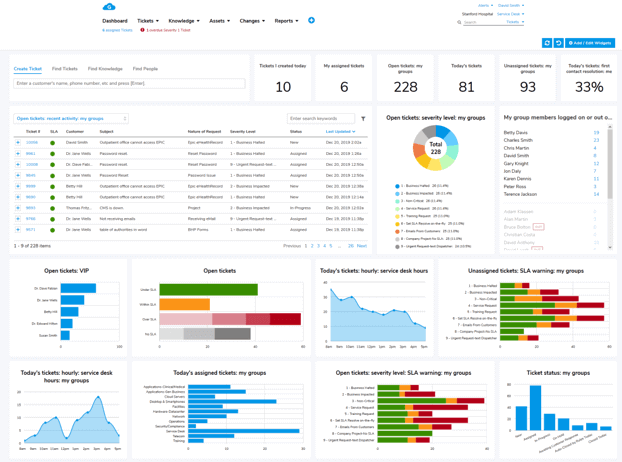
- Intuitive ticket management
- Real-time dashboards and reporting
- SLA tracking
- AI-Copilots that free your agents to focus on the interactions that matter most
Teams using Giva's software consistently report faster resolution times, better visibility across the support queue, and measurable improvement in customer satisfaction scores
Get a demo to see Giva's solutions in action, or start your own free, 30-day trial today!



Categories: Customer Service