Customer Service Apologies: Saying "Sorry" in Scripts, Phrases and Examples
Customer service apologies are something every business will eventually need to deliver. Mistakes happen, like a delayed shipment, a billing error, a support interaction that missed the mark, and how your team responds in those moments shapes whether customers stay or walk away. The idea of acknowledging fault can feel uncomfortable, but handled well, a sincere apology is one of the most effective tools for preserving customer relationships.
Whenever your company is dealing with customers who would like an issue addressed or have a complaint to make, an apology is a good place to start.

Why an Apology in Customer Service is Important
- An apology cultivates a better relationship or preserves an existing one. When a customer is unhappy, it helps for them to hear someone acknowledge the problem and say they are sorry.
- An apology helps to move forward with a solution. If a customer is angry or feels like they have been treated unfairly, it can be hard to get to actually fixing the problem. Listening to the problem and saying something like "We are sorry this is happening to you, let us fix it" opens the door to reaching a solution. When a situation is difficult, being empathetic helps diffuse any tension.
- Apologizing establishes that your business cares about the problems that customers are having. Your company does not want them to be angry or frustrated and your company is sorry that something went wrong.
A Four-Part Framework for Customer Service Apologies
Effective customer service apologies follow a consistent structure, regardless of whether the channel is phone, email, or chat. Use these four steps as a guide:
- Acknowledge the specific issue: Name exactly what went wrong. "I see your order was delayed by three days" is far more credible than "sorry for any inconvenience." Specificity proves you have actually read the situation.
- Take clear responsibility: Avoid "if you feel that way" or "if there was an issue." Say it directly: "We made a mistake" or "This is on us." Customers can tell the difference between a genuine apology and a liability disclaimer.
- Offer a concrete repair: Tell the customer exactly what you are doing to fix the problem, and where appropriate what you are offering as compensation. An apology without a remedy leaves the customer with nothing.
- Reassure with a follow-through commitment: Briefly explain how the issue will be prevented in future. This closes the loop and shows the apology is genuine, not just a script.
How Do You Say "Sorry" in Customer Service?
Customer apologies should:
-
Be Sincere
A customer can tell when an apology is rehearsed, forced, or just meant to pacify. If there is a situation where it is hard to be genuine, try putting yourself in the customer's position, or remember a time when you were a customer who needed support.
-
Acknowledge Feelings
This goes along with sincerity. Whether a customer is right or wrong about a situation, how they perceive it and the way they are feeling is very real. They are upset over something that they connect to your company and ignoring their feelings can cost your company their business.
-
Admit Mistakes
Sometimes an issue is not the company's fault and an apology should not be viewed as automatically taking responsibility for a problem. However, when your company makes a mistake it must be acknowledged. An apology without accepting responsibility for the problem when your company did cause it will not get your company anywhere.
-
Include a Fix
When a customer has a problem, provide a solution. Start with saying "We are sorry" and then back it up by taking action. Fix the problem, verify that the customer is satisfied with the solution, and offer something extra as compensation.
Customer apologies should not:
-
Be Difficult
When a customer comes forward with a complaint, the response needs to be apologetic. They are unhappy and having an issue with a product or service your company provides, and it should not be hard to be sorry for that. Customers should enjoy the product or service, and they should not have to fight to get a "We are sorry" and some type of support.
-
Contain Excuses
An apology that goes "We are sorry, but we were just following corporate policy" or worse "We are sorry, but if you had just..." is pointless. Making excuses or shifting blame basically nullifies any sentiment an apology expresses.
-
Require Repetition
A conversation can start with "We are sorry about this" and end with "Again, we apologize for the problem we caused". The repetition to avoid is saying sorry so many times that it loses all meaning or having to apologize twice because the same problem occurs again. An apology is good, but becomes hollow when said every few minutes or in place of fixing an issue.
Customer Service Apology Phrases: What to Say (and What to Avoid)
Phrases that work:
- "I'm sorry this happened. Let me fix this for you right now."
- "I completely understand your frustration, and I take full responsibility for this."
- "That is not the experience we want for our customers. Here is exactly what I am going to do."
- "Thank you for telling us about this. We fell short, and I want to make it right."
- "I can see why this is frustrating. Let me look into this immediately and get back to you."
Phrases to avoid:
- "We apologize for any inconvenience." This is vague and passive. Customers have experienced a real inconvenience, not a hypothetical one.
- "I'm sorry you feel that way." This shifts the problem to the customer's perception rather than acknowledging the actual issue.
- "We're sorry, but..." The word "but" immediately cancels whatever came before it.
- "That's not our policy, but I'll make an exception." This leads with a barrier before offering help.
- "I'm sorry, I'm sorry, I'm so sorry..." The repetition erodes sincerity. say it once and back it up with action.
Customer Service Apology Scripts for Common Situations
Use these as starting points for phone, chat, or in-person interactions. The more specific you make the apology to the actual situation, the more credible it will be:
-
For a delayed order or shipment:
"[Customer name], I'm sorry -- your order was supposed to arrive by [date] and it has not. That is our failure to meet what we promised. I have escalated this with our fulfillment team and your updated delivery date is [new date]. As an apology for the wait, [compensation -- e.g., we have upgraded your shipping or applied a discount to your next order]. Thank you for your patience."
-
For a billing error:
"[Customer name], I can see the charge on your account and I can confirm this was an error on our end. I'm sorry -- you should never have been billed for this. I am processing the refund now and you will see it reflected within [timeframe]. I have flagged this with our billing team to prevent it from happening again."
-
For a poor service interaction:
"[Customer name], I have reviewed what happened during your previous contact and I want to apologize directly. The experience you had does not reflect the standard we hold ourselves to. I have shared your feedback with the team so we can address it. What can I do right now to make this right for you?"
For full email templates covering these and additional scenarios, see our guide on customer apology letter and email scripts.
A Genuine Apology Goes a Long Way
A genuine apology and a willingness to acknowledge and make up for a mistake goes a long way. If it is your company's fault, say so. When a problem arises, fix it. Businesses are made up of people, and sometimes "We are so sorry about this -- here is how we will make it better" is all that people really need. The scripts and phrases above are tools, but the attitude behind them is what customers actually remember.
See How Giva Supports Service Recovery
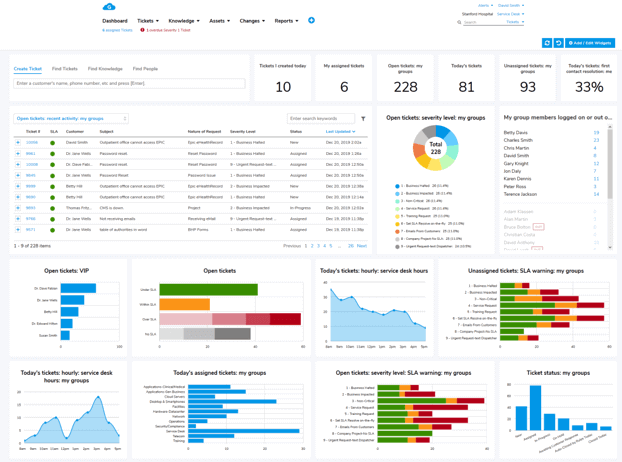
Knowing when to apologize starts with knowing when things go wrong. Giva's customer service software gives support teams a clear, real-time dashboard view of every open complaint, escalation, and unresolved ticket, so service failures are caught quickly, apologies are timely, and nothing slips through the cracks. From first contact to resolution, Giva keeps the follow-through accountable.
Get a demo to see Giva's solutions in action, or start your own free, 30-day trial today!
Categories: IT, Business, Help Desk, Customer Service