16 Best-Practice Customer Service Soft Skills Plus How-To's and AI's Effect
 By Ron Avignone
An agent can resolve the right problem and still lose the customer. The difference between an interaction that builds loyalty and one that drives churn rarely comes down to whether the issue got fixed. It often comes down to whether the customer felt heard and treated with respect, and if they left with the sense that someone genuinely cared about their situation. That experience ability is entirely in the area of what are called "soft skills."
This guide covers the core customer service soft skills every support team needs, why they matter more than ever as AI reshapes service operations, how to develop them through training, and how to assess them when hiring.

What Are Customer Service Soft Skills?
Customer service soft skills are the interpersonal, communication, and emotional capabilities that shape how agents interact with customers. Unlike hard skills (which are technical, job-specific, and relatively easy to measure), soft skills regulate the quality of the human relationship in a service interaction.
Hard skills help an agent resolve a problem. Soft skills determine whether the customer feels good about how it was resolved. Both matter, but they work differently:
|
Soft Skills |
Hard Skills |
Nature |
Interpersonal, emotional, behavioral |
Technical, job-specific, procedural |
Examples |
Empathy, active listening, conflict resolution |
CRM proficiency, product knowledge, typing speed |
How They're Measured |
Harder to quantify; observed through behavior |
Tests, certifications, performance metrics |
How They're Developed |
Mentoring, practice, feedback, experience |
Training, courses, on-the-job practice |
Transferability |
Highly transferable across roles and industries |
Often specific to a job, system, or industry |
Why Soft Skills Matter More Than Ever
The business case for investing in customer service soft skills is substantial. According to Forrester's 2024 US Customer Experience Index, "customer-obsessed organizations," or those that put customers' needs at the forefront of every decision, reported 49% faster profit growth and 51% better customer retention than their peers.
Soft skills are at the core of that difference. When customers leave a brand, it's rarely because of a single product failure, but it's because they didn't feel respected or understood during a service interaction. Customer churn driven by poor service is expensive to reverse, and the cost of acquiring a new customer typically runs far higher than the cost of retaining an existing one.
The AI dynamic makes this more urgent, not less. According to Gartner, "Agentic AI" (AI systems capable of taking autonomous, multi-step actions without human direction) will autonomously resolve 80% of routine customer service issues without human intervention by 2029. As automation takes over straightforward queries, the contacts that reach human agents will tend toward the complex, emotional, or high-stakes ones. The customers who make it to a live agent will already be frustrated, confused, or dealing with something important to them. Those are exactly the situations where empathy, patience, and judgment count most.
Teams that recognize this are investing in soft skills development now before the shift is complete. The ones that don't will find that their agents are only equipped to answer the simple questions they're no longer getting asked.
16 Key Customer Service Soft Skills
Customer service soft skills fall into a few natural categories. The sections below cover communication, emotional intelligence, problem-solving and adaptability, resilience and professionalism, and collaboration. Not every role needs all of them equally, but the strongest agents tend to be strong across most:
Communication
-
Active Listening
Active listening means giving a customer your full attention, not just waiting for your turn to speak. It involves tracking the emotional content of what someone says alongside the factual content, so you can respond to how they're feeling as well as what they need.
An agent who practices active listening paraphrases back what they've heard, asks clarifying questions before jumping to a solution, and avoids interrupting.
The practical effect is significant. Customers who feel genuinely heard are far more willing to accept a less-than-perfect outcome.
Further, agents who skip active listening often misdiagnose the issue, offer the wrong solution, and then have to start over from a more frustrated starting point.
-
Clear Communication
Clear communication means saying what needs to be said in plain language, without jargon, without leaving key information out, and without overwhelming the customer with too much at once. This applies equally to phone calls, live chat, and email. The tone, pacing, and structure all matter.
One common failure mode is agents who give technically correct answers in language the customer can't relate to. If someone doesn't understand what they're being told, the interaction has failed even if the agent checked every box.
-
Positive Language and Paraphrasing
Positive language is framing responses around what can be done rather than what can't. "I can help you with that on Monday" sounds more positive to the customer than "We don't process returns on weekends." The substance is the same, but the experience is not.
Paraphrasing works alongside it. Restating the customer's issue in your own words before responding confirms understanding, prevents solution misfires, and signals to the customer that they've been heard.
Together, these conversation methods build rapport with customers and make them more willing to work through a difficult resolution rather than disengage.
Emotional Intelligence
-
Empathy
Empathy is the ability to recognize and share what a customer is feeling, not just to acknowledge it with a scripted phrase, but to genuinely take their perspective into account when deciding how to respond. The difference between "I'm sorry you feel that way" and "I can see why that's frustrating. Let me fix this." is entirely a matter of whether the empathy is real.
Empathy shapes small decisions. Whether you:
- Pivot quickly from process to problem-solving
- Lead with what the customer needs instead of what's convenient for your workflow
- Treat someone as an individual rather than a ticket number
All of these reflect the depth of empathy an agent brings to an interaction.
Southwest Airlines has built a lasting reputation for service in large part by giving frontline staff the latitude to respond empathetically, including compensating customers proactively without waiting for complaints to escalate. It's a useful example of what happens when an organization treats empathy as an operational value, not just a training module.
-
Emotional Regulation and Self-Awareness
Emotional regulation is the ability to manage your own reactions under pressure so they don't affect the quality of your response.
Customer service agents regularly absorb frustration, anger, and anxiety from customers who are having a bad day. An agent with strong emotional regulation doesn't absorb that energy or return it. They stay measured, which keeps the interaction from escalating.
Self-awareness is the foundation. You can't regulate what you can't recognize. Agents who understand their own emotional triggers are better positioned to notice when they're about to respond reactively and make a different choice.
-
Patience
Patience means giving customers the time and space to explain their issue, even when the explanation is slow or circular. It also means staying calm through repetitive questions, long clarifications, and interactions that don't resolve quickly. Patience often comes down to never letting urgency or impatience show in tone or pacing.
For new agents especially, patience is one of the harder skills to build under volume pressure. Teams that don't actively work on it tend to see agents rushing customers, which increases errors and customer dissatisfaction simultaneously.
-
Enthusiasm and Positive Attitude
A positive attitude isn't about being relentlessly cheerful but approaching interactions with the genuine intent to help rather than to process and close. Customers pick up quickly on whether an agent wants to resolve their issue or just wants the call to end. Enthusiasm is what makes an agent sound present and engaged rather than going through motions.
Problem-Solving and Adaptability
-
Problem-Solving and Resourcefulness
Problem-solving in customer service means diagnosing the actual issue (which isn't always what the customer leads with), evaluating options within your constraints, and communicating a clear resolution path. Resourcefulness is what separates agents who give up at the first procedural trouble from those who find a creative path forward.
A customer locked out of their account with a time-sensitive payment illustrates the difference:
- A scripted agent follows the standard password reset flow
- Whereas, a resourceful agent notices the payment deadline, confirms the account identity through an alternative method, and completes the reset in time.
Same process, different outcome, because the agent was thinking about the customer's actual goal, not just the presenting problem.
-
Adaptability and Flexibility
Customer service environments change constantly, with new products, new tools, new processes, and unexpected volume spikes coming regularly. Adaptability is the ability to absorb those changes without losing service quality. On an individual interaction level, it means adjusting your procedure when a standard response isn't being effective and recognizing when a situation calls for a different approach.
-
Curiosity and Growth Mindset
Curiosity keeps agents from becoming mechanical. Agents who are genuinely interested in understanding the customer's situation ask better questions and find better solutions. A growth mindset extends that outward, bringing willingness to learn from difficult interactions, accept feedback, and improve actively rather than defaulting to what's comfortable.
These same qualities support proactive habits as well, like flagging a recurring issue early, following up after a complex resolution, or anticipating what a customer might need before they have to ask.
-
Negotiation Skills
Customer service doesn't involve hard negotiation, but it does involve finding workable agreements. When standard policy doesn't fit a situation, agents who can identify what the customer actually needs and propose a resolution that works within reasonable limits tend to get better outcomes than those who apply rules rigidly. This might look like offering a credit instead of a refund, adjusting a delivery date, or making a judgment call for a long-standing account.
The goal is always a resolution both sides can accept, not a win-lose outcome.
Resilience and Professionalism
-
Stress Management and Composure Under Pressure
Customer service involves a significant amount of emotional exertion, meaning the ongoing professional effort of managing your emotions as part of the job.
Showing patience and warmth even when interactions are draining is part of what the role requires. Agents who can't manage this effectively tend to either disengage (going through motions, giving canned responses) or escalate (matching a customer's frustration with their own). Neither serves the customer.
Composure under pressure is a learnable skill, but it requires active practice and organizational support. Teams with strong stress management cultures tend to have lower turnover, better quality scores, and agents who last longer in the role without burning out.
-
Conflict Resolution and De-escalation
Conflict resolution is the ability to move a heated or stuck interaction toward a constructive outcome. In customer service, this usually means de-escalating first (reducing the emotional temperature) before problem-solving (finding the practical fix). Trying to solve the problem before the customer feels heard almost always makes things worse.
The best de-escalation techniques are consistent across approaches, taking the following steps:
- Acknowledge the customer's frustration explicitly
- Avoid defensive language
- Focus on what you can do
- Communicate clearly what happens next
Agents who are strong at conflict resolution often prevent escalations that would otherwise require involvement from a supervisor.
-
Ownership and Accountability
Ownership means taking personal responsibility for the customer's outcome rather than pushing it off to process, policy, or someone else's department. An agent with strong ownership says "Let me make sure this gets resolved" rather than "You'll need to contact billing directly."
Accountability at the team level means:
- Following through on commitments
- Closing the loop on promised callbacks
- Flagging patterns in customer issues rather than treating each ticket as isolated
Teams that build ownership tend to have fewer repeat contacts and higher First Contact Resolution (FCR) rates.
When something goes wrong, managing the issue for the best outcome requires the ability to turn that experience around by acknowledging what happened, fixing it, and following through. It is one of the clearest expressions of ownership in practice.
Collaboration
-
Teamwork and Knowledge Sharing
Customer service is rarely a solo operation. Agents who collaborate well share what they know about product issues, edge cases, and effective resolution paths. This keeps the team's collective knowledge current and prevents individual agents from reinventing the wheel on known problems.
-
Time Management and Organizational Skills
Time management in customer service means balancing quality and efficiency. Giving each interaction the attention it needs without creating backlogs for other customers is the key challenge.
Plus, organizational skills (managing follow-ups, tracking open cases, maintaining accurate records) become more critical as ticket volume grows or agents manage multiple contact channels simultaneously.
How to Develop Customer Service Soft Skills
Soft skills don't improve by themselves over time but develop through deliberate practice, feedback, and repetition over time.
Here are the most effective approaches for managers building a soft skills culture on their team:
-
Role-Playing and Simulated Interactions
Role-playing gives agents a low-stakes environment to practice skills they'll need in high-stakes moments. Pair agents together to simulate difficult customer types, such as:
- The frustrated customer who's already tried self-service
- The one who asks the same question repeatedly because the first answer didn't work
- The one who won't accept the policy answer
The goal is to build response instincts before the live situation demands them.
-
Reviewing Recorded Interactions
Recorded calls, chats, and emails are one of the most underused training tools in customer service. Reviewing actual interactions alongside an agent lets coaches point to specific moments:
- Where the agent interrupted before the customer finished explaining
- Where a more empathetic phrase would have changed the tone of the whole call
- Where the solution was right but the delivery was too rushed
This kind of specific, behavior-level feedback accelerates improvement faster than abstract coaching about what to do differently.
-
QA Coaching Tied Directly to Soft Skills
Quality assurance programs that score only accuracy and compliance miss most of what drives customer experience. Include soft skill dimensions in your QA scorecard, covering active listening, tone, empathy, and ownership. When agents know these dimensions are being evaluated and discussed in coaching sessions, they pay deliberate attention to them.
-
Micro-Learning and Ongoing Practice
Soft skills development benefits from short, frequent reinforcement rather than occasional full-day training events:
- Micro-learning modules (10–15 minutes on a single skill, repeated over weeks) help agents build habits without disrupting their daily workload
- Topic-focused content on empathy statements, de-escalation language, or paraphrasing techniques are practical examples
- Empathy Statement Practice
Give agents a set of genuine empathy statements and have them practice using them until they feel natural rather than scripted. The goal is not to memorize a list but to internalize the habit of acknowledging the customer's experience before moving into solution mode. Phrases like "I understand how frustrating that must be" or "I can see why this has caused a problem for you" work when the agent means them and has the presence of mind to use them at the right moment.
-
Peer Feedback and Mentorship
Senior agents who consistently handle difficult interactions well are one of the most valuable training resources a team has.
Structured peer mentorship (pairing newer agents with strong soft-skill performers for call reviews or shadow sessions) transfers experienced knowledge that formal training rarely captures. It also reinforces good habits in the mentor by making them state what they do well.
-
Manager Recognition of Soft Skill Moments
Coaches often intervene when something goes wrong. Recognizing specific moments when an agent handled a difficult interaction with exceptional empathy or patience is just as important. When managers call out exactly what the agent did well ("The way you stayed calm when the customer repeated the same complaint four times kept the call from escalating"), agents know what to repeat and the whole team hears what good looks like.
-
Self-Assessment After Challenging Interactions
Encourage agents to do a quick self-debrief after difficult interactions, asking themselves these questions:
- What did I do well in that interaction?
- Where did I feel reactive, and why?
- What would I do differently next time?
This habit builds the self-awareness that is foundational to most other soft skills.
It works best when it's framed as a learning practice rather than a performance review.
A final note: customer service management software can support this work by making QA insights and interaction history easy to show in coaching conversations. Tools that give managers visibility into agent performance patterns help identify where soft skills training will have the biggest impact.
Hiring for Soft Skills: How to Assess Before You Hire
Soft skills are hard to evaluate in a standard interview. Candidates can present themselves well, answer situational questions fluently, but still struggle with the genuine empathy and resilience the role requires. The assessment challenge is identifying what someone will actually do under pressure, not just what they say they'd do.
A multi-layered approach works best:
-
Behavioral Interview Questions (STAR Method)
The STAR method (Situation, Task, Action, Result) asks candidates to describe real past experiences rather than hypothetical responses. Behavioral questions for soft skills might include:
- Describe a time when you turned an unhappy customer into a satisfied one. What specifically did you do?
- Tell me about an interaction where you had to stay patient with a customer who was being difficult. How did you manage it?
- When have you had to deliver bad news to a customer? How did you frame it?
- Tell me about a time you went beyond your standard process to solve a customer's problem.
- Describe a situation where a colleague or customer gave you critical feedback. How did you respond?
Behavioral questions are harder to script for than "what would you do" questions, and the quality of the answer (specificity, ownership, reflection) often reveals more than the content.
-
Role-Play Simulations
Simulations are the closest thing to a real audit of soft skills before hire. Give candidates a realistic customer scenario and watch how they handle it. Do they listen before responding? Do they use empathetic language? Do they take ownership, or do they deflect?
The scenarios don't need to be elaborate. A straightforward "frustrated customer about a delayed shipment" situation is enough to see how someone instinctively shows up under pressure.
-
Pre-Employment Soft Skills Assessments
Pre-employment assessment tools can measure their speaking ability, communication clarity, and scenario-based responses at scale. They're particularly useful for high-volume hiring where every candidate can't be given a one-on-one simulation. The HiringBranch analysis of 5,000+ customer service hires found that skills-based assessments reduced poor hire rates significantly compared to resume screening alone.
-
Reference Checks Focused on Interpersonal Patterns
Standard reference checks only discover whether someone did the job. Soft-skills-focused reference checks ask how they showed up in difficult situations:
- Did they stay calm under pressure?
- How did they handle conflict with a customer?
- Were there patterns in how they responded when things went wrong?
These questions often reveal information that interviews don't.
-
Multi-Measurement Screening
The most reliable approach combines multiple methods, specifically:
- A structured behavioral interview
- A short simulation
- A pre-employment assessment
No single method is complete on its own. Behavioral interviews can be prepared for, but simulations reveal instincts that scripted answers can mask, and assessments provide consistent data across many candidates. Using two or three together reduces the chance of hiring based on a single strong impression.
Customer Service Soft Skills in the Age of AI
There's a common assumption that AI reduces the importance of soft skills, that as automation handles more service interactions, the demand for human empathy and judgment will shrink. The evidence points the other way.
As noted above by Gartner, with 80% of routine customer service issues being resolved without human intervention, that means 20% of them AI can't resolve on its own, these being the most complex, ambiguous, or emotionally charged interactions. Those are exactly the situations where soft skills matter most. As AI handles the routine, human agents become specialists in harder situations.
AI is also changing the characteristic of the customer who makes it to a live agent. Someone whose straightforward shipping question gets resolved by a chatbot never reaches a person. But, the customer who reaches an agent is more likely to be frustrated, to have already tried self-service, or to have a situation that doesn't fit the standard script. The empathy, patience, and conflict resolution skills those interactions demand are not becoming less relevant. They are becoming the entire job description.
From the agent side, AI does offer genuine support for soft skills development:
- Sentiment detection tools can flag interactions where tone suggests a customer is frustrated, prompting real-time coaching cues for the agent
- QA analysis can identify soft skills patterns across thousands of interactions in ways that manual review can't
- AI-powered role-play simulations let agents practice handling difficult customer types without waiting for those situations to arise in live conversations.
One specific risk however is over-reliance on scripted empathy. AI-suggested phrases like "I understand your frustration" sound hollow when delivered by rote. The human value in a service interaction is genuine engagement, not a well-timed phrase.
In the end, teams that use AI tools to support soft skills development are more effective than those that use AI to replace the judgment behind those skills.
Customer Service Soft Skills: Frequently Asked Questions
-
What are the most important soft skills in customer service?
Active listening, empathy, and clear communication form the foundation:
- Active listening ensures agents understand the real issue before solving it
- Empathy determines how the customer feels throughout the interaction
- Clear communication ensures the resolution actually lands with the customer, not just in the system
The mix shifts by role:
- Phone support puts extra demand on patience and tone
- Chat requires written clarity and speed
- Complex account management calls for ownership and problem-solving
Conflict resolution and accountability consistently rank among the skills with the highest measurable impact on CSAT (Customer Satisfaction Score) and First Contact Resolution (FCR) rates across all formats.
-
What is the difference between soft skills and hard skills in customer service?
Hard skills are the technical and procedural capabilities required to do the job, such as product knowledge, CRM navigation, escalation protocols, and system proficiency. They're teachable, measurable, and job-specific.
Soft skills however are the interpersonal and emotional capabilities that determine how the job gets done: empathy, active listening, patience, and conflict resolution.
Most service failures that lead to churn involve soft skill breakdowns, not technical ones. A customer rarely switches to a competitor because the agent couldn't navigate the CRM. They switch because they didn't feel heard.
-
How do you develop soft skills in a customer service team?
The most effective methods combine deliberate practice with regular, specific feedback. Role-playing difficult scenarios, reviewing recorded interactions alongside a coach, and structured peer mentorship all build skills through repetition.
Recognition matters equally. Managers who only intervene when something goes wrong miss the opportunity to show the team what strong empathy, ownership, or conflict resolution looks like in practice.
A single workshop on empathy rarely changes how agents show up under pressure. Soft skills develop when they're visible, valued, and modeled daily by managers and senior agents.
-
Can soft skills be taught, or are they innate?
Soft skills can be developed, though some people have a stronger natural baseline in areas like empathy or social awareness. The important distinction is between someone who lacks the capacity and someone who hasn't developed the habit. Most people can improve their active listening, emotional regulation, and communication clarity with focused practice and consistent feedback. The caveat is time. Soft skills develop over weeks and months, not days. The conditions, such as psychological safety, consistent feedback, and managers who model the behaviors they want to see, are important also.
Hiring for disposition still matters. A candidate who is naturally curious and willing to take ownership is a better foundation than one who needs the underlying mindset installed from scratch.
-
How do you measure soft skills when hiring for customer service roles?
The most reliable approach combines these methods:
- Behavioral interview questions (which ask candidates to describe real past experiences)
- Role-play simulations (which reveal how they respond under pressure)
- Pre-employment assessments (which provide consistent data across many candidates).
No single method is enough, as each one catches what the others miss.
Watch for red flags in behavioral interviews: candidates who can't give specific examples, who frame frustrated customers as the problem rather than reflecting on their own response, or who show little awareness of what they'd do differently. These patterns are more predictive of on-the-job performance than prepared answers to hypothetical questions.
-
Why do soft skills matter more now that AI handles many service interactions?
As AI handles routine queries, the interactions that reach human agents lean toward the complex, ambiguous, and emotionally charged ones.
The customers who get to a live agent have often already tried self-service, are frustrated, and have a situation that automation couldn't resolve. Those interactions demand empathy, judgment, and conflict resolution at a higher level, not a lower one.
AI also raises the comparison bar. Customers who experience fast, accurate responses for simple requests have a shorter patience threshold when those same expectations aren't met by a human for a harder problem.
The gap between what automation delivers for simple requests and what a human needs to deliver for hard ones is now visible to customers. The bar for human interactions is rising alongside automation.
-
How do you measure soft skills performance in your existing customer service team?
The most direct method is a QA scorecard with explicit soft skill dimensions. This includes active listening, empathy, tone, and ownership scored on every evaluated interaction, and not just accuracy and compliance. When these measurements are defined, scored, and discussed in coaching sessions, agents know what's expected and managers have data to work with.
Beyond QA, interaction recordings along with agent-level CSAT scores and repeat contact rates can reveal patterns. An agent with high resolution rates but low CSAT often has a soft skills gap, not a knowledge gap.
Lastly, repeat contacts on the same issue can signal ownership breakdowns. These signals are available in most customer service platforms, and the gap is usually in using them systematically rather than only when something goes wrong visibly.
Related Giva Resources
For more on building customer service skills and team performance:
- 12 Top Customer Service Training Activities for Stellar Support
- 30 Excellent Customer Service Values, Examples & How To
- 26 Great Ways to Bring Friendly Customer Service
- 23 Traits of Customer Service Excellence Plus How-to Steps
- Call Center Training: Best Practices & How-To Guide
Building a Team That Leads with Customer Service Soft Skills
Customer service soft skills are not a supplement to the technical work of support but are the quality layer that determines how customers experience everything else you do. An agent who resolves the right problem slowly and impatiently leaves a different impression than one who resolves the same problem with patience, ownership, and genuine engagement. The outcome is the same. The experience is not.
The skills that matter most here (active listening, empathy, conflict resolution, ownership, adaptability) are all developable through deliberate practice, good feedback structures, and managers who model and reinforce what "strong" looks like. They don't improve automatically or passively.
The AI transition makes this investment more important. As automation handles more of the transactional work, the interactions that define your brand's reputation with customers are the complex, emotional, high-stakes ones that reach human agents. Those interactions are won or lost on soft skills. Teams that build those skills now will be in a better position as the composition of service work continues to shift.
Building the Foundation for Better Customer Service
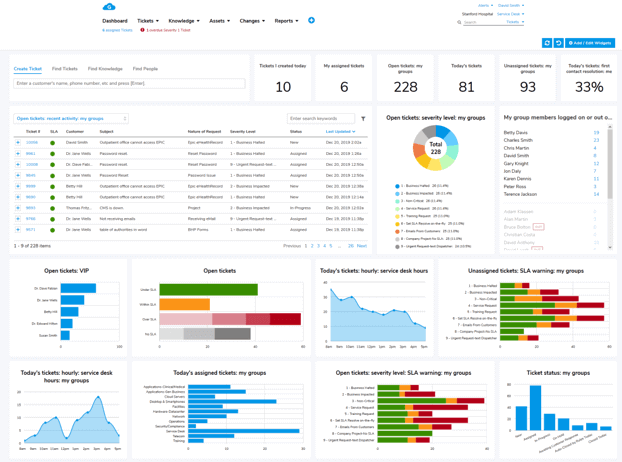
Great soft skills require great support structures. Giva's Customer Service Software gives teams and their managers the infrastructure to help keep operations streamlined, so agents can stay focused on servicing their customers the right way.
Giva's platform includes the tools your agents depend on:
- Intuitive ticket management
- Real-time dashboards and reporting
- SLA tracking
- AI-Copilots that free your agents to focus on the interactions that matter most
Teams using Giva's software consistently report faster resolution times, better visibility across the support queue, and measurable improvement in customer satisfaction scores
Get a demo to see Giva's solutions in action, or start your own free, 30-day trial today!



Categories: Customer Service