15 Challenges in IT for 2026 and What Teams Can Do to Overcome Them
Technology affects nearly every part of a business now, and when something goes wrong, the impact is immediate and can be drastic. At the same time, IT leaders are being asked to move faster, control costs, manage risk, and support new tools like AI, often all at at the same time.
Some challenges haven't gone away, such as cybersecurity, legacy systems, and budget concerns. Others are newer, including AI governance, unapproved AI usage, and rising cloud costs. What has changed is how closely these issues are now connected, where a decision in one area can quickly affect security, compliance, productivity, or customer trust.
In 2026, the most pressing challenges for IT leaders center on rapid AI adoption, persistent cybersecurity threats, and a growing talent and skills gap often compounded by hybrid work demands, rising cloud costs, and mounting technical debt. Addressing them requires a combination of stronger security controls, targeted upskilling, smarter use of cloud-native tools, and where internal capacity falls short, managed service providers that can fill gaps quickly.
Below, we highlight the most important IT challenges organizations should be paying attention to in 2026. Each challenge focuses on real-world issues IT teams are facing today, along with practical steps you can take to address them. The goal isn't just to keep systems running, but to help IT leaders plan ahead, reduce risk, and support the business more effectively.
Top 15 Challenges in IT in 2026
-
Growing Cybersecurity and AI-Driven Threats
Cybersecurity threats are becoming harder to spot and faster to execute. In 2026, attackers are going beyond malware or stolen passwords to using AI to make scams look real, sound real, and feel trustworthy.
Deepfake voice messages, fake video calls, and highly personalized phishing emails are now common tactics. These attacks often target employees directly, especially executives, finance teams, and customer-facing staff. The goal is usually fraud, data access, or account takeover, and it only takes one convincing message to cause serious damage.
Further, he growth of connected devices has expanded the number of attack vectors available. For example, IoT vulnerabilities in everything from building systems to medical equipment give attackers new entry points that are often less monitored than traditional endpoints.
What makes this challenge harder is that many attacks don't rely on technical vulnerabilities but people instead. Even well-secured systems can be compromised if someone believes a request is legitimate. That means cybersecurity is no longer just a tools problem but also a training, process, and verification problem.
For IT leaders, the pressure is growing to protect systems while also helping employees recognize and respond to threats that look and sound human.
How to Meet This Challenge
- Strengthen identity checks for sensitive actions: Require extra verification for high-risk requests like payment approvals, password resets, or access changes. Simple steps, such as secondary approval or confirmation, can stop many attacks.
- Use multi-factor authentication everywhere it matters: Make MFA standard for email, remote access, admin accounts, and cloud systems. This reduces the damage even if credentials are stolen or tricked out of someone.
- Train employees on modern attack tactics: Update security training to include real examples of AI-based scams, deepfake voice calls, and executive impersonation. Focus on what to notice and question, not just what to click.
- Set clear verification rules: Create simple rules employees can follow, such as "no financial or access requests are approved without verbal confirmation." Clear rules reduce confusion.
- Monitor for impersonation attempts: Watch for fake domains, social media profiles, or email addresses that mimic executives or vendors. Early detection can prevent larger incidents.
- Update incident response plans for AI-based threats: Make sure your response plans include steps for handling impersonation, fraud attempts, and internal trust issues, not just malware or outages.
-
Protecting Sensitive Data Across AI, Cloud, and Distributed Work
Sensitive data is now spread across more systems, tools, and locations than ever before, a problem commonly called data sprawl, and no longer lives just in databases or file servers. It now also moves through cloud platforms, SaaS apps, AI tools, collaboration software, and remote devices every day, often collecting in data silos where different teams or platforms hold information that isn't visible or accessible across the organization.
Plus, AI adds another layer of risk. Employees may paste customer data into AI tools to summarize notes or draft responses without realizing where that data goes or how it may be stored. At the same time, cloud access and remote work mean data is often accessed outside traditional network framework.
More now than just locking down data, the challenge for IT leaders includes also knowing where sensitive data lives, who can access it, how it's being used, and whether it's being shared safely. A single gap such as an account with too much access, an unapproved AI tool, or a misconfigured cloud app, can expose critical information.
Protecting sensitive data now requires clear rules, consistent controls, and ongoing visibility, besides the standard security projects.
How to Meet This Challenge
- Know where your sensitive data is: Identify what data matters most, such as customer records, health data, financial details, or employee information. Map where it's stored, shared, and accessed across cloud apps, systems, and devices.
- Limit access based on role and need: Give users access only to the data they need to do their job. Review permissions regularly and remove access when roles change or employees leave.
- Set clear rules for AI tool usage: Define what types of data can and cannot be used with AI tools. Make it easy for employees to follow the rules and understand why they exist.
- Protect data wherever it's accessed: Use encryption, secure access controls, and endpoint protection for laptops, mobile devices, and remote systems. Data should stay protected whether users are in the office or working remotely.
- Monitor data movement and usage: Use monitoring tools to detect unusual access, downloads, or sharing activity. Early alerts can prevent small issues from turning into major incidents.
- Train employees on everyday data risks: Focus training on real situations employees face, such as file sharing, AI usage, and working from home. Practical guidance helps more than just generic security warnings.
-
Cloud Cost Control, Data Location and Vendor Lock-In
Cloud services make it easy to move fast, scale quickly, and launch new tools. Over time though, many organizations lose track of what they're paying for and how much control they still have. Today, cloud is not only a technical decision but a cost, risk, and compliance issue as well.
Many IT teams are dealing with rising cloud bills, overlapping services, and pricing models that are hard to predict. At the same time, regulations and customer expectations are pushing organizations to be more careful about where data is stored and who has access to it. Once systems and data are deeply tied to one vendor, switching or renegotiating becomes difficult.
The challenge is how to use the cloud without losing cost visibility, compliance control, or flexibility down the road.
How to Meet This Challenge
- Track cloud usage and costs closely: Maintain clear visibility into cloud spending by service, team, and application. Regular reviews help catch unused resources and unexpected cost spikes early.
- Determine properly what you're using: Scale resources to match actual needs, not peak estimates. Remove idle services, reduce over-provisioned storage, and shut down systems that are no longer in use.
- Understand where your data is stored: Know which regions and data centers your cloud providers use. Make sure data location aligns with regulatory, privacy, and customer requirements.
- Avoid unnecessary vendor lock-in: Use open standards, APIs, and portable architectures where possible. This keeps future migration or renegotiation options realistic.
- Review contracts and pricing models regularly: Cloud pricing changes often. Revisit contracts, reserved capacity, and long-term commitments to make sure they still make sense.
- Plan for exit and recovery situations: Document how data and systems could be moved if a provider becomes unavailable or no longer meets your needs. Even a basic plan reduces long-term risk.
-
IT Skills and Capability Gaps with Tech Changes and the Growth of AI
Many IT teams today have the headcount they need but not always the right mix of skills. New tools, AI features, security requirements, and cloud platforms are changing faster than organizations can fully staff.
AI is a big part of this shift. IT departments are now expected to understand automation, data quality, security risks, and oversight of AI-driven tools, even if they aren't building AI systems themselves. At the same time, everyday IT work still needs to get done. That creates pressure, burnout, and knowledge gaps across teams.
The challenge for IT leaders is keeping teams effective without constantly trying to get new hires onboard. Training, tool choices, and workload balance matter just as much as recruitment.
How to Meet This Challenge
- Focus on capability, not just job titles: Look at what your team actually needs to do over the next year. Identify skills tied to outcomes, such as security awareness, automation oversight, or vendor management.
- Increase existing staff's skillsets where possible: Training current employees is often faster and more practical than hiring. Short, focused learning tied to real tasks tends to work better than broad certification programs.
- Use tools that reduce complexity: Choose platforms that simplify workflows instead of adding more systems to manage. Fewer tools with clearer interfaces reduce the skills needed by teams.
- Match people with process and documentation: Clear processes, step-by-step guides, and knowledge bases help close skill gaps and reduce reliance on a few experts.
- Set realistic expectations around AI: Make sure teams understand what AI can help with and what still requires human judgment. This avoids confusion and frustration.
- Plan for knowledge sharing and coverage: Encourage cross-training and backup coverage so critical skills don't live with only one person.
-
Justifying IT Spending and Proving Business Value
IT leaders are under more pressure than ever to explain where the money goes and why it matters. Technology costs continue to rise, especially with cloud services, security tools, and AI-based platforms. At the same time, leadership teams expect clear, measurable results, not just functioning systems.
Many IT teams do valuable work that isn't always visible. Preventing outages, stopping security incidents, and keeping systems running smoothly often go unnoticed. When budgets are reviewed, this can make it harder to defend spending or request funding for new initiatives.
More than just managing cost, the challenge is clearly connecting IT investments to business outcomes in a way that non-technical leaders can understand and support.
How to Meet This Challenge
- Tie IT work to business goals: Explain projects and spending in terms of business impact, such as reduced downtime, faster service, improved security, or better customer experience.
- Use clear, simple metrics: Track and share a small set of meaningful metrics that show results. Avoid technical descriptions and focus on outcomes leadership cares about.
- Show the cost of inaction: Explain the risks of underfunding areas like security, system reliability, or compliance. This helps leaders understand what's at stake.
- Review and prioritize spending regularly: Revisit budgets to make sure funds are going to the highest-value areas. Move resources away from tools or projects that no longer deliver results.
- Communicate consistently, not just at budget time: Provide regular updates on progress, successes, and risks. Ongoing communication builds trust and avoids surprises.
- Link IT planning with business planning: Stay connected with other departments so IT priorities match changing business needs throughout the year.
Lastly, be sure to ask vendors whether they'll be providing updated software with AI integrations.
-
Integrating AI Automation Safely and Effectively
AI automation for many organizations now is being used in ticket management, chat support, monitoring, reporting, and decision support. When it works well, it saves time and reduces manual effort. When it doesn't, it can create confusion, errors, or trust issues.
The challenge is how to use AI knowing where it actually helps and how to keep humans involved where judgment is needed. Poorly implemented automation can frustrate users, introduce data risks, or hide problems instead of solving them.
IT leaders need to balance speed and caution. AI in IT should support teams, not replace thinking, oversight, or accountability.
How to Meet This Challenge
- Start with clear problems to solve: Identify specific tasks that are repetitive, time-consuming, or slow teams down. Avoid adding AI just because it's available.
- Keep humans in the loop: Use AI to assist but not decide for high-impact actions. Make sure people can review, override, and correct automated outcomes.
- Check data quality before automating: AI depends on good data. Clean, consistent inputs lead to better results and fewer surprises.
- Pilot before scaling: Test automation in a limited, low-risk area. Learn what works, adjust, and then expand gradually.
- Set clear expectations with users: Be open about what AI does and doesn't do. This builds trust and reduces frustration when automation has limits.
- Monitor results and adjust regularly: Track accuracy, time savings, and user feedback. Treat AI automation as something that evolves and isn't just a one-time setup.
-
Excessive Workload and IT Burnout
Workload has emerged as the top challenge for IT professionals, sometimes passing even budget and resource constraints. IT leaders are being asked to move faster, control costs, manage security risk, and support AI adoption often simultaneously and without additional headcount.
When workloads are consistently too high, the effects include stress, reduced performance quality, and ultimately, turnover. For a field already dealing with skills shortages, losing experienced team members to burnout makes every other IT challenge harder to manage.
How to Meet This Challenge
- Audit current workloads: Review across the IT team and identify where demand consistently exceeds available
- Prioritize strategically: Develop a clear process, given not all IT requests are equal
- Automate repetitive, easier tasks: Use to free up teams for higher-value work
- Examine using Managed Service Providers (MSPs): Consider these when routine or specialized functions workload for monitoring, patching, or help desk support consistently exceeds internal capacity, which also free internal staff to focus on higher-value and strategic work
- Communicate workload constraints clearly and quantitatively: Keep leadership informed with reports on ticket volume, response time trends, and backlog data
- Build proper on-call and escalation policies: Create to help protect off-hours recovery time
-
Legacy Systems Blocking Security, Integration, and AI Readiness
Many organizations are still running critical systems that were never designed for today's security threats, cloud environments, or AI-driven tools. These legacy systems often work "well enough," which makes them hard to replace, even when they create hidden risks.
In 2026, the problem is that older systems can limit visibility, slow down integrations, and make it harder to apply consistent security controls. Further, they may not support modern authentication, automation, or data access needs. Over time, this creates workarounds, manual processes, and growing technical debt.
For IT teams, legacy systems can quietly become the weakest link. They take up resource time, complicate upgrades, and restrict how quickly the organization can move forward.
How to Meet This Challenge
- Identify which legacy systems matter most: Not every old system needs to be replaced right away. Focus first on those that handle sensitive data, are connected to the internet, or block key integrations.
- Assess risk, not just age: Look at security exposure, support status, and the consequences of failures. A newer system with poor controls can be riskier than an older but well-managed one.
- Reduce dependency where possible: Use APIs, middleware, or phased migrations to limit how much other systems rely on outdated platforms.
- Plan gradual modernization: Break large replacement projects into smaller steps. This reduces disruption and makes progress easier to fund and manage.
- Strengthen security around what can't be replaced yet: Add extra controls at least temporarily such as stronger access rules, monitoring, and network isolation to reduce risk.
- Document and share system knowledge: Make sure workflows, dependencies, and fixes are well documented so critical knowledge doesn't live with only one person.
-
Too Many Tools, Higher Costs, and Vendor Risk
Over time, many organizations end up with far more software tools than they planned. Teams add new apps to solve specific problems, often without retiring old ones. This leads to higher costs, overlapping features, and growing security and support risks.
Each additional tool introduces another vendor relationship, another contract, another integration, and another potential point of failure. When ownership is unclear, tools can go unused while still renewing automatically. This makes it harder for IT teams to manage budgets, security, and user support.
The challenge from a growing number of tools is losing visibility and control over what's being used, why it exists, and whether it still delivers value.
How to Meet This Challenge
- Create a complete inventory of tools: Document all software in use, including purpose, owner, cost, and renewal dates.
- Identify overlap and low-value tools: Look for tools that solve the same problem or see little real usage. These are often the easiest places to reduce cost and complexity.
- Assign clear ownership: Make someone responsible for each tool's value, usage, and renewal decision. Ownership helps prevent spending lost in the background.
- Standardize where it makes sense: Choose platforms that support multiple needs instead of many single-purpose tools. Fewer systems are easier to secure and support.
- Review vendor risk regularly: Check security practices, support quality, and reliability of key vendors. Don't assume past performance guarantees future stability.
- Control how new tools are approved: Set a clear process for requesting and reviewing new software so growth stays intentional, not accidental.
-
Scaling IT Infrastructure
As organizations grow, IT infrastructure must scale to keep pace. This is easier said than done, especially when IT teams have limited budgets and are already managing capacity constraints. Outdated systems may not be upgradeable, and scaling on cloud platforms brings its own set of costs and complexities.
The goal isn't just scaling for current needs, but building infrastructure that can adapt to future growth without requiring a complete overhaul each time.
How to Meet This Challenge
- Choose proper platforms and architectures: Use ones built for horizontal scalability, such as cloud tools, which scale better than traditional on-premises systems
- Perform regular capacity planning reviews: Forecast them to business growth projections and not just current demand
- Avoid single-vendor dependencies: Implement to limit flexibility when scaling needs shift
- Use provisioning scripts: Create so environment replicating or reconstructing become repeatable and predictable vs. manually re-building
- Monitor performance under load: Set alerts before systems reach capacity thresholds
-
Remote and Hybrid Work IT Security
Remote and hybrid work has become the norm for many organizations, but it continues to create security and management challenges for IT teams.
Home Wi-Fi networks are rarely as secure as corporate networks, leaving devices and the sensitive data on them exposed. Employees working from multiple locations or across globally distributed offices also make it harder to maintain consistent security policies and system reliability.
The challenge for IT is managing infrastructure that crosses offices, homes, cloud platforms, and mobile devices without creating gaps in visibility or control.
How to Meet This Challenge
- Require VPN use for remote access: Set up secure access networks to internal systems and enforce endpoint security policies on all devices
- Use zero-trust access controls: Use to verify identity and device health regardless of location
- Provide clear guidance: Inform remote employees on home network security, including router configuration and device protections
- Use centralized device management and monitoring tools: Set up to maintain visibility across distributed environments
- Audit remote access permissions regularly: Monitor and remove access for employees who no longer need it
-
Maintaining Business Continuity Despite Outages and Disruptions
While business continuity is still concerned about natural disasters or hardware failures, it now must also plan for outages tha can come from cloud service failures, cyberattacks, vendor issues, or simple configuration mistakes. When systems go down, the impact is often immediate and visible to customers, employees, and partners.
Many organizations rely heavily on SaaS platforms and third-party providers to run daily operations. While this improves flexibility, it also means IT teams have less direct control when something breaks. A single disruption can affect multiple departments at once.
The challenge for IT leaders is making sure critical operations continue, even when systems, vendors, or networks fail.
How to Meet This Challenge
- Identify critical systems and processes: Know which services must stay online for the business to function. Focus continuity planning on what truly matters.
- Back up data and test recovery regularly: Automated backups are important, but testing restores is just as critical. Make sure data can actually be recovered when needed.
- Build redundancy where it counts: Use failover systems, backup connectivity, or alternative workflows for high-impact services.
- Plan for vendor and cloud outages: Understand how to operate if a key provider is unavailable. Even basic fallback plans reduce downtime and confusion.
- Document clear response steps: Create simple, easy-to-follow plans for outages and disruptions so teams know what to do under pressure.
- Practice and improve over time: Run drills, review incidents, and update plans regularly. Continuity improves when plans are tested and not just written.
-
Managing Change During Fast-Moving Digital Transformation
Technology changes are happening faster than many organizations can safely handle. New systems, updates, security controls, and AI-driven tools are often introduced in quick succession. Now, the volume of change itself has become a challenge.
Without a clear approach to change management, even good technology decisions can lead to confusion, resistance, or mistakes. Employees may not understand why changes are happening or how they affect their work. IT teams may rush updates to keep up, increasing the risk of outages or errors.
The challenge is to not slow down IT transformation innovation while making sure change happens in a controlled, understood, and sustainable way.
How to Meet This Challenge
- Connect changes to clear goals: Explain why a change is happening and what problem it solves. People are more open to change when it makes sense.
- Use a consistent change process: Apply the same basic steps for requesting, reviewing, approving, and rolling out changes. Consistency reduces confusion and risk.
- Assess impact before moving forward: Consider who will be affected, what could break, and how much support is needed. This helps avoid surprises.
- Communicate early and often: Share timelines, expectations, and updates in plain language. This keeps everyone on the same page.
- Balance speed with stability: Move quickly on low-risk changes, but apply more controls to complex or high-impact ones.
- Learn from each change: Review what worked and what didn't. Small adjustments improve future changes and build confidence over time.
-
Shadow AI and Unapproved Tool Usage
As AI tools become easier to access, employees are using them in ways IT teams may not see. This includes public AI chat tools, browser extensions, coding assistants, and data analysis tools. Many of these are helpful, but they can also introduce real risks.
Most employees are just trying to work faster or solve problems on their own, not bypass IT. The risk comes though when sensitive data is shared with tools that haven't been reviewed, approved, or secured.
Without clear guidance, organizations can lose visibility into how data is being used, where it's going, and whether it's being stored or reused. This creates compliance, security, and privacy concerns that are hard to track after the fact.
How to Meet This Challenge
- Acknowledge that AI use is happening: Start from a realistic place. Assume employees are already using AI tools and focus on guiding safe use instead of trying to ban everything.
- Set clear, simple usage rules: Define what types of data can and cannot be used with AI tools. Keep the rules easy to understand and easy to follow.
- Offer approved alternatives: Provide vetted AI tools that meet security and compliance needs. Employees are more likely to follow rules when safe options exist.
- Educate employees on real risks: Explain how data can be stored, reused, or exposed through AI tools. Practical examples help the message be effective.
- Monitor usage where possible: Use technical controls and monitoring to detect risky tools or behavior, especially around sensitive data.
- Review and update policies regularly: AI tools change quickly. Revisit policies often so they stay relevant and realistic.
-
AI Governance, Compliance, and Ethical Risk
AI is now part of how many organizations operate, from customer support and IT operations to HR and analytics. The focus now is shifting from whether AI can be used to whether it is being used responsibly, safely, and in line with regulations.
AI systems can make mistakes, reflect bias, or produce results that are hard to explain. When AI influences decisions that affect customers, employees, or regulated data, organizations need clear oversight. Regulators, customers, and partners increasingly expect transparency and accountability, not just innovation.
The challenge for IT leaders is putting guardrails in place without slowing progress. Governance needs to support responsible use while allowing teams to benefit from AI where it makes sense.
How to Meet This Challenge
- Define clear ownership for AI use: Assign responsibility for approving, monitoring, and reviewing AI systems. Governance works best when accountability is clear.
- Set standards for acceptable AI use: Document where AI can be used, what data it can access, and which decisions require human review.
- Ensure transparency and traceability: Keep records of how AI tools are trained, configured, and updated. This helps with audits, troubleshooting, and trust.
- Involve legal, compliance, and security teams early: Along with IT, AI governance should include cross-functional input to help address regulatory and ethical concerns.
- Review AI outputs regularly: Monitor results for errors, bias, or unexpected behavior. Adjust controls and processes as needed.
- Stay informed on regulations and expectations: AI rules are evolving. Keep up with changes so policies and practices remain aligned with new requirements.
How IT Leaders Can Respond: Key Solutions for 2026
Across these 15 challenges, a set of overall general responses to challenges emerge that apply broadly:
- Strengthen security infrastructure: Implement zero-trust access controls, multi-factor authentication, and continuous monitoring. Security improvements address cybersecurity, data protection, remote work, and legacy system risk simultaneously.
- Upskill employees and close skills gaps: Invest in focused, role-based training, particularly around AI tools, security awareness, and cloud platforms. Short, practical learning tied to real tasks outperforms general certification programs.
- Use MSPs strategically: When internal capacity or expertise falls short, MSPs can bridge gaps in monitoring, help desk support, or specialized functions, reducing workload and accelerating response without the lead time of hiring.
- Prioritize tech investment by operational impact: Focus IT spending on AI and analytics tools that deliver the highest measurable returns. Audit existing tools for overlap and low usage, and consolidate where possible.
- Adopt cloud-native tools with cost and compliance controls: Cloud flexibility is only an advantage when spending, data location, and vendor dependencies are actively managed. Build visibility into cloud usage from day one.
Conclusion: Overcoming IT Challenges for Business Success
In 2026, IT challenges are less about bringing on new technologies but more about managing them correctly. AI, cloud services, and security tools are now part of everyday operations, and the risks tied to them are more noticeable and more connected.
Success comes from clear priorities, strong controls, and practical processes. IT teams that focus on visibility, governance, and steady improvement are better equipped to reduce risk, manage costs, and support the business.
Progress doesn't necessarily mean performing major overhauls. Small, focused steps, such as tightening access controls, clarifying AI usage, reducing tool overlap, and improving change management, can make a real difference. With a careful, well-thought-out approach, IT leaders can proceed through 2026 with greater confidence and stability.
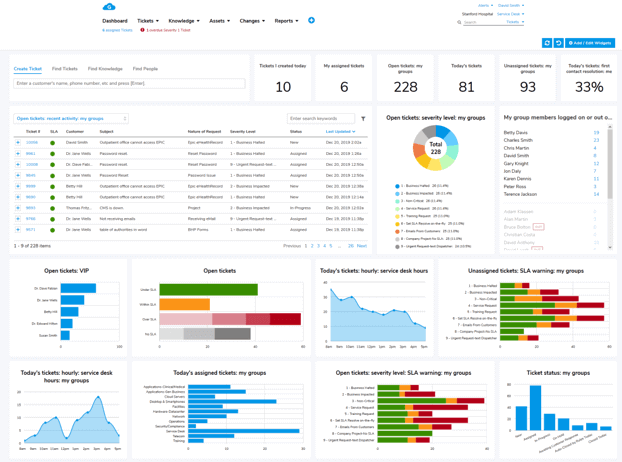
Giva Can Help Streamline Your Help Desk Operations
Giva has a suite of SaaS support applications for IT teams including:
Giva helps teams achieve Service Management excellence:
- Deploy in days, train in 1 hour
- Robust, fast and painless reporting for higher-quality decision-making
- Highly customizable without programming or consultants
Get a demo to see Giva's solutions in action, or start your own free, 30-day trial today!

Categories: IT