Customer Experience Strategy: How to Build, Measure, and Improve CX
 By Ron Avignone
Most companies assume that if their support team is responsive and their product is solid, customers will stick around. Often, they don't. Not because of any single bad interaction, but because the experience across every interaction (onboarding flows, product updates, marketing emails, invoices) never felt coherent or intentionally designed.
A customer experience strategy is a deliberate, organization-wide plan for shaping every interaction a customer has with your brand. It covers fully the customer relationship, spanning discovery and awareness, purchase and onboarding, ongoing use, support, and renewal. If it's done well, it turns individual touchpoints into a consistent experience that builds trust over time.
This guide covers what a customer experience strategy is and how it differs from customer service, what goes into building one, the metrics you need to measure it, and the mistakes most organizations make along the way.

What Is a Customer Experience Strategy?
A customer experience strategy is an overarching plan that defines how customers should feel at every stage of their relationship with your organization, and what systems, processes, and behaviors are required to make that happen consistently. It is more than a support playbook or a set of service standards. Where customer service addresses one moment, a customer experience (CX) strategy addresses the whole arc.
The distinction matters because customers don't evaluate their experience one interaction at a time. They form impressions across every touchpoint, such as taking in the clarity of a pricing page, the tone of an onboarding email, the speed of a support response, and the process of renewing a subscription. A customer experience strategy connects each of those into something coherent, cohesive, and more seamless for the customer.
Customer Experience vs. Customer Service
Customer service and customer experience are related but not interchangeable:
- Customer service is what happens when a customer reaches out with a problem and your team responds
- Customer experience is the total impression formed across every interaction, many of which involve no human agent at all
|
Customer Service |
Customer Experience Strategy |
Scope |
A single touchpoint or interaction |
Every interaction across the full customer relationship |
Nature |
Reactive |
Proactive |
Ownership |
Support or service team |
Entire organization |
Timing |
Triggered when a customer reaches out |
Active at all stages, pre- and post-purchase |
Goal |
Resolve an issue |
Build lasting loyalty and preference |
Proactive customer service, anticipating needs and addressing friction before a customer reaches out, is a mark of a strong CX strategy. Reactive customer service, by contrast, waits for the customer to initiate. Both matter, but a CX strategy that relies solely on reactive service leaves the majority of the customer's experience unmanaged.
A company can have an excellent support team and still deliver a poor customer experience. If customers find the website confusing, the onboarding process slow, and the billing communication unclear, they will form a negative overall impression even if every support call goes perfectly.
Customer service fixes individual interactions, whereas customer experience strategy addresses the space between them, which is often where the real problems are.
Why a Customer Experience Strategy Matters
The business case for customer experience investment is well established. The benefit is not only about satisfaction scores, but it shows up directly in revenue, retention, and competitive positioning:
-
Revenue and Growth Impact
Companies that invest in CX grow faster. Research from Bain & Company, which tracks Net Promoter Score (NPS) leaders across industries, finds that high-NPS companies grow at more than twice the rate of their competitors over a ten-year period. CX is not a soft discipline but a growth lever.
-
Customer Retention and Loyalty
Retention is more efficient than acquisition, and customer experience is the primary driver of whether customers stay. According to PwC's Future of Customer Experience survey, 32% of all customers would stop doing business with a brand they loved after just one bad experience.
Building a CX strategy around consistency and trust makes retention a system output, not just something that "happens". Customers who feel consistently well-served also tend to become advocates, referring others and amplifying positive word-of-mouth in ways that other marketing spending can't reliably duplicate.
-
Competitive Differentiation
Many businesses now say they compete primarily on customer experience rather than product or price alone. For organizations in markets where products and pricing are hard to distinguish, CX becomes the category differentiator. Customers who feel genuinely understood and well-served are less price-sensitive and more likely to recommend the brand to others.
-
The Cost of Poor CX
Poor customer experiences have a direct cost that compounds over time. A frustrated customer doesn't just leave, but they often leave without warning, after a series of small frictions that individually seemed minor. The damage shows up in churn metrics, support volume, and referral rates months before it shows up in revenue numbers. Understanding the cost of CX failures is often the clearest argument for investing in a formal strategy.
-
The Experience Economy
Customers increasingly choose brands based on how it feels to do business with them, not just on product functionality or price. This shift, commonly described as the "experience economy," means that the experience itself is part of the value proposition. Organizations that treat CX as a secondary concern are hampering their hopes of competing well in the marketplace.
Core Components of a Customer Experience Strategy
A customer experience strategy isn't a single initiative or a policy document. It's built from several interconnected components that, working together, make a consistent and intentional customer experience operationally possible:
-
Customer Journey Mapping
A customer journey map is a visual representation of every step a customer takes with your brand, from first contact through post-purchase. It reveals pain points, friction, and moments where expectations aren't met, and shows where the experience breaks down between teams. Journey mapping is usually the starting point for any serious CX effort because it makes invisible problems visible.
Organizations often discover that their journey maps reveal handoff problems, moments where the marketing team's promise doesn't match the product team's delivery, or where support lacks the context to continue a conversation the sales team started.
-
Customer Understanding and Personas
A CX strategy built on assumptions about who customers are rarely works in practice. Customer personas, which are profiles built from real behavioral data, interviews, and feedback, give teams a shared model of who they are designing for. Personas connect data to human context, making it easier for different functions to make decisions that serve the same customer.
For example, Chewy, the pet supplies retailer, is a well-known example of deep customer understanding translating into CX advantage. The company's practice of sending handwritten condolence cards to customers whose pets have died (often refunding recent orders without being asked) reflects a genuine operational investment in knowing what customers care about most.
-
Voice of the Customer (VoC) Program
A Voice of the Customer (VoC) program is the structured practice of collecting, analyzing, and acting on customer feedback across every channel. This goes beyond sending a satisfaction survey after a support call. A well-run VoC program pulls in data from surveys, support interactions, social listening, and direct interviews, then routes insights to the teams that can act on them.
-
Omnichannel Consistency
Customers don't experience your brand one channel at a time. They move between your website, your mobile app, your support team, and your social media presence, often within the same week. An omnichannel approach to CX ensures that the experience is consistent across all channels and that customer data moves with the customer so they don't have to repeat themselves. Consistency means the core experience, tone, and information available all align regardless of where the customer interacts with you.
-
Personalization
Personalization is the practice of tailoring interactions to individual customer needs, preferences, and history. Where omnichannel ensures consistency across channels, personalization ensures relevance within them, acknowledging who the customer is and adapting the experience accordingly. At scale, personalization depends on unified customer data and the systems to act on it in real time.
At its simplest, personalization means using a customer's name or recommending products based on purchase history. More sophisticated approaches use behavioral targeting that adapts offers and messaging based on a customer's specific journey stage and expressed preferences.
In the end, the goal at any level is to make the customer feel understood rather than processed.
-
Employee Engagement and Empowerment
The connection between employee experience and customer experience is direct. Frontline employees who feel informed, equipped, and empowered to make decisions consistently deliver better CX than those constrained by rigid scripts or unclear processes. A CX strategy that doesn't account for how employees are trained, managed, and supported tends to break down exactly where it matters most.
Ritz-Carlton is a frequently cited example. The company gives every employee a $2,000 discretionary budget per guest to resolve problems without requiring manager approval. The policy is notable not for the dollar amount but for what it signals, namely that the brand trusts its frontline staff to protect the guest experience on the spot.
-
Technology and Data Foundation
Technology enables CX strategy by making customer data accessible across the organization and by removing friction from common interactions. Having a supporting technology foundation relies on system design and not on individual effort.
-
Measurement Framework
A CX strategy without measurement is a CX best-intention. Defining which metrics matter, and how they connect to business outcomes, gives teams a shared standard for what good looks like and makes it possible to track whether the strategy is working. Metrics should cover the full experience, not just the support interaction.
How to Build a Customer Experience Strategy Step by Step
Building a customer experience strategy is not a one-time project. It's a structured process that starts with understanding where you are today and continues through an ongoing cycle of design, implementation, measurement, and refinement:
-
Audit Your Current Customer Experience
Before designing a better experience, you need an honest picture of the current one. Gather data from:
- Support tickets
- Customer feedback
- Churn interviews
- Behavioral analytics
Look for patterns in the data:
- Where do customers consistently run into trouble?
- What moments generate the most negative feedback?
- What are customers asking for that they aren't getting?
This audit should include both quantitative data (NPS scores, Customer Satisfaction Score (CSAT) ratings, and churn rates) and qualitative feedback from interview notes, support ticket themes, and social comments. The combination reveals not just what is breaking but why.
-
Define Your CX Vision and Goals
A CX vision is what guides every decision in the strategy. It defines how customers should feel at every stage of their relationship with the organization. SMART goals (Specific, Measurable, Achievable, Relevant, and Time-bound) translate that vision into targets the organization can actually track.
Common CX goals should connect to business outcomes, not just satisfaction scores.
- Improve NPS by a specific number of points within 12 months
- Reduce customer churn by a set percentage
- Reach a target First Contact Resolution (FCR) rate
-
Build Customer Personas and Empathy Maps
Customer personas are behavioral profiles built from real customer data that capture what customers are trying to accomplish, what frustrates them, and what makes them feel valued.
Empathy maps extend personas by helping teams understand what customers are thinking, feeling, seeing, and saying at key moments in the journey.
The practical value of personas is that they give cross-functional teams (product, marketing, support, and operations) a shared reference point. Discussions about experience design become less abstract when grounded in a specific, well-researched customer type rather than internal assumptions.
-
Map the Customer Journey
Journey mapping visualizes the customer's path through five core stages.
- Awareness: Discovering your brand or product
- Consideration: Evaluating options
- Purchase: Making the decision and completing the transaction
- Retention: Ongoing use and relationship management
- Advocacy: Recommending you to others
For each stage, map three key elements.
- Touchpoints: How the customer interacts with your brand
- Customer goal: What they are trying to accomplish
- Pain points: Where the experience could break down
Journey maps are most useful when built from real customer data rather than internal assumptions.
Running a cross-functional workshop where different teams contribute their piece of the journey often reveals disconnects that no single team was aware of, like a marketing campaign making a promise that the product team didn't know about.
-
Design for Every Touchpoint
With journey maps in hand, work through each touchpoint and define what a good experience looks like. This doesn't mean scripting every interaction. It means setting standards for response time, tone, information quality, and resolution approach that apply consistently across channels and teams.
Prioritize the touchpoints where customers report the most friction or where the gap between their expectation and the current experience is largest. Not every touchpoint needs to be redesigned simultaneously, and tracking improvements by impact and feasibility makes the work manageable.
-
Align the Organization
Customer experience is not a department's job but a shared responsibility that requires explicit ownership at each stage of the journey:
- Marketing owns the clarity and accuracy of the awareness and acquisition experience
- Product owns usability and onboarding
- Support owns issue resolution
- Finance owns billing clarity
Each team needs to understand how their work affects the overall customer experience and what they are accountable for.
Building a customer-centric organization means every team, not just support, makes decisions with the customer's experience in mind. The most common failure mode is diffuse accountability. As one Fortune 100 retailer put it, when everyone is in charge of CX, no one is in charge of it. Cross-functional ownership without defined accountability produces gaps, and customers experience those gaps as a broken experience.
-
Choose Your Metrics
Select metrics that cover the full customer experience, not just the support interaction. The core measurement set for most CX programs covers three categories.
- NPS for loyalty and overall sentiment
- CSAT for individual interaction quality
- Customer Effort Score (CES) for friction reduction
Supplement the core set with operational metrics, including churn rate, FCR rate, and Customer Lifetime Value (CLV), to connect experience outcomes to business results.
-
Implement, Measure, and Iterate
A customer experience strategy is an ongoing cycle of implementation, measurement, and refinement. Set aside regular time, quarterly at minimum, to review CX metrics, revisit journey maps, and assess whether the strategy is producing the intended outcomes.
The organizations that get the most value from CX investment treat it as a closed loop.
- Design an experience
- Deploy it
- Measure the result
- Learn from the gap
- Improve
As customer expectations shift, and they do shift continuously, the strategy needs to shift with them.
6 Key Metrics for Measuring Customer Experience
Measuring customer experience requires more than a single score. The most useful CX programs track a combination of Key Performance Indicators (KPIs) covering loyalty, transactional satisfaction, and friction, supplemented by operational data that connects the experience to business outcomes:
-
Net Promoter Score (NPS)
Net Promoter Score (NPS) measures customer loyalty by asking one question: "How likely are you to recommend us to a friend or colleague?" Responses are scored 0–10. Customers who score 9–10 are Promoters; those who score 7–8 are Passives; those who score 0–6 are Detractors. NPS is calculated as the percentage of Promoters minus the percentage of Detractors.
NPS is a strategic-level metric. It reflects the overall relationship rather than any single interaction, which is why it's often tracked at the board level.
Benchmarking your NPS against industry averages helps contextualize whether a score represents genuine strength or just an absence of active problems. In most B2B industries, an NPS above 30 is considered strong, though benchmarks vary significantly by sector.
-
Customer Satisfaction Score (CSAT)
Customer Satisfaction Score (CSAT) measures satisfaction with a specific interaction or touchpoint, typically by asking customers to rate their experience on a scale of 1–5 or 1–10. CSAT is a transactional metric, useful for evaluating individual support interactions, onboarding experiences, or renewal conversations.
CSAT is best used alongside NPS. A high CSAT on support calls alongside a declining NPS is a signal that the support team is doing its job but something else in the overall experience is eroding loyalty. That combination points directly to where to investigate.
-
Customer Effort Score (CES)
Customer Effort Score (CES) measures how much effort a customer had to put in to accomplish something, whether resolving an issue, making a purchase, or finding information. It is a strong predictor of future loyalty. Customers who find interactions effortless are significantly more likely to return and less likely to churn.
CES is particularly useful for identifying friction in specific processes. High effort scores on self-service tasks, billing inquiries, or onboarding steps point directly to where simplification investments will have the most impact.
-
First Contact Resolution (FCR)
First Contact Resolution (FCR) tracks the percentage of customer issues resolved in a single interaction, without the customer needing to follow up. High FCR correlates strongly with customer satisfaction. Customers who get their problem solved the first time are far more likely to report a positive experience than those who need to re-engage.
FCR is also an operational efficiency metric. Every follow-up contact represents a cost.
Teams that track and improve FCR tend to reduce support volume and improve satisfaction simultaneously, a rare combination of cost reduction and experience improvement.
-
Customer Lifetime Value (CLV)
Customer Lifetime Value (CLV) calculates the total revenue a customer is expected to generate over the course of their relationship with your organization. CLV connects the customer experience to financial outcomes, as customers who have consistently positive experiences tend to stay longer, spend more, and refer others.
Tracking CLV by customer segment can reveal which types of customers are most valuable and whether CX investments are disproportionately improving or neglecting those segments. It's the most direct line between CX quality and revenue.
-
Customer Churn Rate
Customer churn rate is the percentage of customers who stop doing business with you over a given period. It is one of the most direct signals that the customer experience is not meeting expectations. Churn often builds quietly, with customers reducing engagement before they cancel, so tracking it at regular intervals, not just annually, gives teams earlier warning.
Technology's Role in CX Strategy
Technology doesn't create a customer experience strategy, but it makes one executable. The right platforms give teams access to the customer data and workflows they need to deliver consistent, personalized experiences at scale. The wrong approach, or no approach at all, means that even well-designed CX programs break down in execution:
-
CRM Systems
A Customer Relationship Management (CRM) system is the foundation of any data-driven CX approach. It stores customer history, interaction records, purchase data, and account details in a single place, making that context accessible to everyone who works with customers, including sales, support, marketing, and account management. A shared CRM is what makes it possible for a support agent to pick up a conversation that started with a sales rep, without making the customer repeat themselves.
-
Help Desk and Customer Service Software
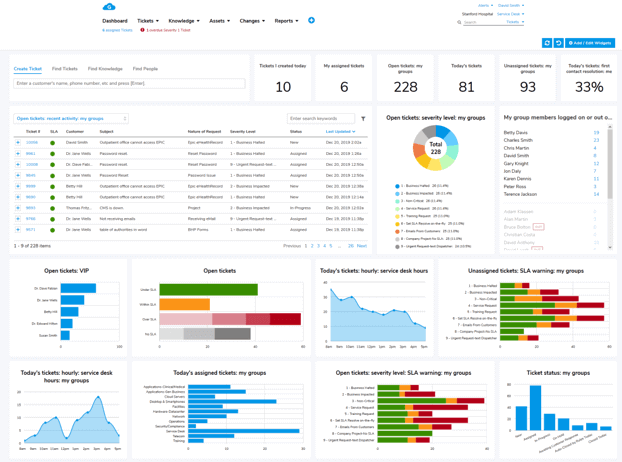
Help desk and customer service software is where CX strategy meets day-to-day support operations. Ticketing systems organize and track every customer request, making it possible to measure resolution times, SLA compliance, and satisfaction at scale.
Well-configured help desk software also gives CX leaders the data they need to measure resolution quality, response times, and satisfaction at the interaction level, feeding directly into CSAT and FCR tracking.
Platforms like Giva's Customer Service Software give support teams a unified view of every customer interaction so they can resolve issues faster and identify patterns that point to upstream CX problems.
-
Contact Center Software
Contact center software manages inbound and outbound customer communications across voice, chat, email, and messaging channels. Modern platforms combine these channels into a single agent interface, so customers don't need to repeat their history when they switch channels. This is one of the most concrete technological enablers of omnichannel CX consistency.
-
AI and Personalization Tools
Artificial intelligence and automation are reshaping what's possible in CX, from intelligent chatbots that handle routine inquiries to personalization engines that tailor content, recommendations, and communications to individual customer behavior. AI tools can also route tickets more intelligently, showing relevant knowledge base articles for agents, and flag at-risk customers based on behavioral signals.
The risk is real. AI-driven CX that feels scripted, impersonal, or incapable of handling anything non-standard can undermine trust faster than no AI at all. The organizations getting the most value from AI in CX are using it to reduce low-value work for their teams, not to replace human judgment in complex situations.
Data privacy is another important consideration as AI-powered personalization depends on access to customer data. Organizations that are transparent about how customer data is collected and used, and that give customers meaningful control, tend to earn higher trust and see better engagement than those that treat personalization as a black box.
-
Self-Service and Knowledge Bases
A well-designed self-service experience, including searchable knowledge bases, guided troubleshooting tools, and customer portals, reduces support volume and improves Customer Effort Score. Customers who can resolve issues on their own terms, at their own pace, often report higher satisfaction than those forced to contact support for routine questions.
Self-service is a CX investment, not a cost-cutting measure. When it's designed well, it delivers a better experience, but when it's designed primarily to deflect tickets, customers feel abandoned, and support volume often increases rather than decreases.
Common Customer Experience Strategy Challenges
Most CX strategy failures are the result of common, predictable mistakes that are worth knowing before you encounter them:
-
Treating CX as Customer Service
The most common mistake organizations make is scoping CX down to the support queue. When CX responsibility lives only in the support function, the experience outside of support interactions is effectively unmanaged, and customers notice the disconnect even if the company doesn't.
-
Siloed Ownership with No Clear Accountability
CX programs frequently stall because no one owns the outcomes. When CX is described as "everyone's responsibility," it typically means no specific team is accountable for specific journey stages. Gaps between functions (the handoff from marketing to product, from sales to onboarding, from onboarding to support) become nobody's problem until a customer complains.
Assigning explicit, function-level accountability is the fix. As covered in the Alignment step above, each function (Marketing, Product, Support, Finance) needs a clear line of sight from their work to a CX outcome.
-
Collecting Feedback Without Closing the Loop
Running surveys, gathering feedback, and then making no visible change based on it is one of the fastest ways to damage customer trust. Customers who take time to share feedback and see no response (no acknowledgment, no action, no communication about what changed) are more disengaged than customers who were never asked.
Closed-loop feedback, the practice of acting on customer input and communicating back what changed as a result, is one of the clearest differentiators between organizations that use feedback as a diagnostic tool and those that treat it as a metric to report. Even a brief acknowledgment of what changed is a meaningful trust signal.
The most effective closed-loop systems designate specific ownership. Someone is responsible for reviewing feedback, triaging it to the relevant team, and confirming what action was taken. Without that ownership, closing the loop stays aspirational.
-
Over-Relying on Technology
Technology accelerates CX programs that are strategically sound. It amplifies the problems in CX programs that aren't. Deploying a chatbot without clear escalation paths, personalizing emails without meaningful data behind them, or automating support interactions without adequate fallbacks for complex issues tends to create more frustration than it resolves.
The organizations that get technology right in CX start by defining the experience they want to deliver, then identify which technology makes it possible. Those that struggle tend to start with a tool they've purchased and try to reverse-engineer a CX benefit from it.
-
Neglecting Employee Experience
Frontline employees who feel poorly trained, under-supported, or unable to make decisions that serve customers cannot consistently deliver a great customer experience, regardless of how well the strategy is written. CX strategies that skip investment in employee training, tooling, and empowerment tend to produce inconsistent results, with a visible gap between what the strategy describes and what the front line actually delivers.
-
Failing to Connect CX to Business Outcomes
CX programs that don't show a clear connection to revenue, retention, or cost reduction tend to lose executive support during budget cycles. Teams that can draw that line find it much easier to compete for resources and sustain the program through leadership changes and budget pressures.
Building the business case for CX means tracking metrics like CLV, churn rate, and referral volume alongside satisfaction scores, and showing how movement in one drives movement in the other. Framing CX improvements in terms of ROI (reduced churn, higher average order value, lower support cost-per-contact) helps keep CX investment sustainable beyond the initial enthusiasm.
Frequently Asked Questions About Customer Experience Strategy
-
What is the goal of a customer experience strategy?
The goal of a customer experience strategy is to shape how customers feel about your brand at every stage of their relationship with it, from first encounter through long-term loyalty. In business terms, that translates into higher retention rates, stronger word-of-mouth, and a competitive advantage that is difficult for rivals to replicate quickly. Unlike individual CX initiatives, a strategy provides the structure that makes consistent improvement possible over time.
-
How is a customer experience strategy different from a marketing strategy?
A marketing strategy governs how you attract and communicate with customers before and during acquisition. A customer experience strategy governs how customers experience your brand across all interactions, including after they've purchased. Marketing creates the expectation, and CX either confirms or contradicts it. The two need to be aligned, since a marketing campaign that overpromises sets up the CX team to fail.
-
How long does it take to build a customer experience strategy?
Building a foundational CX strategy, including an audit, journey mapping, goal setting, and organizational alignment, typically takes three to six months for a mid-sized organization. Seeing measurable results from the strategy takes longer. CX strategy requires ongoing iteration as customer expectations and business conditions change.
-
What team or role owns the customer experience strategy?
Ideally, CX strategy is owned at the executive level, often by a Chief Customer Officer or VP of Customer Experience, with specific touchpoint accountability distributed across functions. Marketing owns the awareness experience, product owns usability, support owns resolution quality, and so on. The executive owner ensures those pieces connect into a coherent whole rather than operating as independent programs.
-
What tools support a customer experience strategy?
The core technology stack for CX execution includes a CRM system for unified customer data, help desk or customer service software for support operations, and measurement tools for tracking NPS, CSAT, and CES. Contact center software, AI-powered personalization tools, and self-service knowledge bases round out the stack for organizations with higher-volume customer interactions.
-
What is the difference between customer experience and customer satisfaction?
Customer satisfaction is a metric. It measures how satisfied a customer was with a specific interaction or aspect of your product. Customer experience is the broader condition that satisfaction scores reflect. A company can have high satisfaction ratings on individual support calls and still deliver a poor overall customer experience if the onboarding, billing, or product experience is frustrating. Satisfaction is one signal, and experience is what's being measured across all of them.
Related Giva Resources
- The 10 Top Customer Experience Statistics for 2026
- 5 Star Customer Service: Skills for Excellence & Examples
- 5 Essentials Every Customer Experience (CX) Strategy Needs
Building a Customer Experience Strategy That Lasts
A customer experience strategy doesn't improve anything on its own, but defines the target. What moves the needle is the sustained, cross-functional work of auditing, designing, aligning, and iterating that the strategy makes possible. The organizations that get the most from CX investment are those that treat it as a permanent operating discipline rather than a one-time initiative.
The bar is rising. Again, according to PwC's Future of Customer Experience research, 73% of customers cite experience as an important factor in their purchasing decisions, and that includes every touchpoint, not just the support call. A company that has optimized its support team but left the rest of the journey unmanaged is only winning part of the battle.
Start with an honest audit of what the current experience actually is. Map the journey, find the gaps, assign ownership, choose your metrics, and build the feedback loops that keep the strategy connected to reality. The technical details of CX strategy are not complicated. The organizational discipline required to sustain it is the hard part, and it is the part that creates durable competitive advantage.
Put Your Customer Experience Strategy into Action with Giva
Putting a customer experience strategy into practice requires the right systems behind it. When customers reach out for support, they expect fast responses, seamless handoffs, and agents who already know their history.
That's exactly what Giva's Customer Service Software is built to deliver, giving your team a unified view of every customer interaction so nothing falls through the cracks.
Giva's platform includes the tools your CX strategy depends on:
- Intuitive ticket management
- Real-time dashboards and reporting
- SLA tracking
- AI-Copilots that free your agents to focus on the interactions that matter most
Teams using Giva's software consistently report faster resolution times, better visibility across the support queue, and measurable improvement in customer satisfaction scores, the exact outcomes a well-executed CX strategy is designed to produce.
Whether you're building a CX program from scratch or tightening up an existing one, having the right help desk foundation changes what's possible.
Get a demo to see Giva's solutions in action, or start your own free, 30-day trial today!



Categories: Customer Service