Healthcare Account Call Center Sample Scripts and Best Practices
Call centers are the customer service interface between patients and healthcare organizations. Most modern healthcare call centers use Interactive Voice Response (IVR) systems. An automated IVR system allows callers to interact via voice commands or keypad input to route calls and provide information without a live agent. Some patients' needs can be handled 100% via IVR, but typically, an IVR interaction is just the first step toward a live call with a support agent.
The quality of the customer service a patient receives when interacting with a healthcare call center depends primarily on how quickly they receive help. The primary component of an efficient interaction is a call center script. Effective call center scripts are insightful, use clear language, and provide a clear path forward.
This article will highlight the important role call centers play in healthcare contexts. We'll accomplish this by discussing the importance of call center scripts specifically. We will share actual script examples for five different healthcare scenarios. And we'll finish with call center best practices to help you offer the best possible patient experience.

Why Are Effective Call Center Scripts Important?
A healthcare call center script is a structured guide that directs agents or automated IVR systems through patient interactions, ensuring every call is handled accurately, efficiently, and in compliance with HIPAA.
Hospitals, specialty clinics, and urgent cares all rely on call centers to field phone calls from patients. In the healthcare industry, call centers can serve many purposes. Via call centers, patients can:
- Coordinate appointments
- Process prescription requests
- Receive assistance with insurance questions
- Receive basic medical guidance
Regardless of the reason why the customer calls, call center scripts are important because they help improve accuracy, boost efficiency, streamline organizational messaging, increase customer satisfaction, and effectively manage healthcare emergencies.
Moreover, the impact of scripting is measurable. Research from the call center industry shows that organizations that implement structured call center scripts report higher First Call Resolution (FCR) rates, shorter Average Handling Times (AHT), and improved customer satisfaction (CSAT) scores. In healthcare specifically, well-scripted interactions reduce operator errors, improve patient safety outcomes, and increase both patient and employee satisfaction.
For healthcare organizations where every patient interaction carries clinical and regulatory stakes, scripting is an important quality-assurance mechanism.
Now let's look in more detail at some of the ways call center scripts benefit both the caller and the agent as mentioned above:
-
Improves the Accuracy of the Customer Service
There's no room for guesswork in healthcare. When a patient calls, whether it be something mundane like scheduling an appointment or more critical like reviewing test results, receiving and delivering accurate information is of the utmost importance.
Call center scripting helps ensure three things:
- The correct data is collected from the caller
- Accurate information is provided to the caller
- The ideal action is taken at the end of the call
-
Boosts the Efficiency of Agents and the Call Center
Healthcare call centers receive hundreds, if not thousands, of phone calls per day. The need to efficiently manage the onslaught of phone calls is paramount. And effective call center scripts are one strategy for maintaining, and even boosting, call center efficiency.
For example, introductory IVR scripts can quickly harvest data from the caller, such as the caller's name, date of birth, account number, or reason for calling. Then, when that customer reaches a human agent, the call center agent already has the information they need to assist the customer quickly.
In complex scenarios, call center scripts can help call center operators' decision-making. This is particularly helpful for newly hired and trained customer service agents who are still fine tuning how they deliver customer support.
In any case, scripts allow agents to answer phone calls, rapidly assess and respond to the customer's issue, and provide a consistent customer experience. Then, move on to the next customer waiting on hold.
-
Streamlines Organizational Branding
Call centers are the first impression patients have of the healthcare organization. What a human agent or IVR system says and how they sound will dictate not only the course of the interaction, but also the long-term perception the caller has of the organization.
Call center scripts can help dictate language that adheres to an organization's messaging policy. For example, a strategically placed empathy statement can alleviate some of the stress or anxiety a caller may be feeling and help them understand their needs are being tended to carefully. Or in a scenario with an angry or frustrated customer, scripts support agents to de-escalate the situation.
Scripts can also help call center agents avoid organizational messaging violations. The goal is to support agents in responding to common customer issues while maintaining a consistent customer experience.
-
Increases Patient Satisfaction
Efficient call centers are directly responsible for the perceived satisfaction a caller feels about the healthcare organization they are contacting. Short wait times, fast handle times, and effective first-call resolutions are vital to customer satisfaction (CSAT).
If you can keep your wait times down, handle your caller's needs efficiently, and do it all without transferring them or having them call back, CSAT scores will skyrocket.
Scripts can help make that happen. Callers don't need to wait longer than absolutely necessary. And call center agents can instill confidence in callers with succinct, helpful information.
-
Manages Emergencies Effectively
Healthcare emergencies are high stakes. The well-being of the person calling may depend on the effectiveness of their call center interaction. In an emergency scenario where the patient is interacting with a human agent, a call center script helps the agent remain calm, make decisions, and communicate information concisely.
On the other hand, in a call center situation where the patient may be interacting with an IVR telephony system, a well-designed script can quickly direct the caller to the help they require.
5 Critical Components of Call Center Scripts
Before we get into the sample scripts, we think it's important to highlight the critical components of an effective script. While every situation and related script is different, these five core components should always be present in the script to ensure the best customer service interactions.
-
Clear Objectives
For healthcare institutions that rely on IVR, scripts must provide clear options for callers, such as prescription refill and pickup, appointment scheduling, and contacting a specific service provider.
On the other side of the interaction, human call center agents must clearly understand why the customer is calling. They must be empowered in their role and express what they will do to help. While they are helping, it is critical to emphasize the use of empathetic language and to practice active listening.
-
Simple Navigation
Navigating the call center interaction must be simple for both the caller and the agent. What this means is that the script, whether read by an IVR system or a human agent, should provide simple instructions and next steps to the caller.
On the flip side, scripts should be easy for agents to navigate. This means the script is well-written and includes a robust array of options for the agent to use, depending on the wide range of outcomes that could arise throughout the conversation. Similarly, call center scripts should also support the agent in situations where specificity is required, particularly after they've drilled down to the precise reason a patient is calling.
-
Straightforward Language
Health care call centers are the last place for convoluted language. Leave that for inside the doctor's office. But all jokes aside, it's important to use straightforward language. This means eliminating jargon and avoiding acronyms. Clearly enunciating your words and using the NATO Phonetic Alphabet are best practices.
Multi-lingual options are also best practice. Patients from diverse backgrounds all deserve equitable access to healthcare, and being able to speak to them in their preferred language is the bare minimum.
-
HIPAA Compliance
In healthcare, HIPAA compliance and patient privacy are mandatory. You cannot ask for overly sensitive information. And it's helpful to reinforce to the patient that their information is secure.
Call center scripts should also align with organizational messaging. Every individual call center agent is a direct representation of the organization and, therefore, should be held to similar messaging standards.
-
Emergency Response
Emergencies can happen at any time. Therefore, callers must have directions for what to do if they are experiencing an emergency. For most non-emergency call centers, this means directing the caller to hang up and call 911.
9 Call Center Script Examples for Healthcare Account Customer Service
To demonstrate, we want to share script samples for a fictional patient named Pat Jones.
In the following scripts, you follow conversations between Pat and a customer service agent as he receives: an appointment reminder, refills a prescription, schedules a new appointment, inquires about a non-urgent health concern, and handles a billing-related inquiry.
As you read along, we want you to pay attention to:
- The obvious objective of the interaction
- The clear and concise language
- Presence of empathy statements
- Privacy considerations for HIPAA compliance
- Instructions for the emergency response
-
HIPAA-Compliant Patient Verification Script Example
Before discussing any medical information, healthcare call center agents must verify the caller's identity to comply with HIPAA privacy requirements:
Agent:Before we review your account, I need to verify your identity to protect your privacy. May I have your full name and date of birth?Patient:Pat Jones, March 4, 1985.Agent:Thank you. For additional verification, can you confirm the phone number or address we have on file?Patient:Yes, it's 123 Oak Street.Agent:Thank you. Your identity is verified, so I can now help you with your request.Best practices include:
- Only requesting minimum necessary information
- Avoiding full Social Security numbers
- Confirming callers are in a private environment before sharing sensitive details
-
New Patient Registration Script
Agent:Thank you for calling the clinic. This is Alex. How may I assist you today?Patient:I'd like to become a new patient.Agent:I'd be happy to help you get registered. First, I'll collect some basic information so we can create your account. May I have your full name, date of birth, and a phone number where we can reach you?Patient provides information.
Agent:Thank you. I'll also need your insurance provider and preferred pharmacy. Once we complete your registration, I can schedule your first appointment. You'll also receive an email with instructions for accessing our secure patient portal where you can complete additional intake forms. -
Appointment Reminder Script
Agent:Thank you for calling the clinic. This is Alex. How can I help you today?Patient:Hi, I missed a call about an appointment reminder.Agent:I can help with that. Before we review anything, I need to verify your identity for your privacy. May I have your full name and date of birth?Patient:It's Pat Jones, and my date of birth is March 4, 1985.Agent:Thank you, Pat. One more item to confirm - can you please verify your home address on file?Patient:Sure, it's 123 Oak Street, Albany, New York.Agent:Perfect, thanks. I see you're scheduled with Dr. Smith on Thursday, March 12, at 10:30 a.m. for a follow-up visit. Does that still work for you?Patient:Yes, that time works for me.Agent:Great. Please arrive 15 minutes early to check in, bring your photo ID and insurance card, and have a list of any medications you're taking.Patient:Okay, I can do that.Agent:If you develop urgent or worsening symptoms before then, please call us back or seek emergency care instead of waiting for this appointment.Patient:Got it.Agent:You're all set, Pat. Is there anything else I can help you with today?Patient:No, that's it. Thank you.Agent:You're welcome. Thank you for choosing our clinic. The sun is shining, and I hope you can get out and enjoy. -
Prescription Refill Script
Agent:Thank you for calling the clinic. This is Jordan. How may I assist you?Patient:Hi, I need a refill on my blood pressure medication.Agent:I can help with your refill request. To protect your privacy, I'll need to verify your identity before we discuss your prescription. May I have your full name and date of birth?Patient:It's Pat Jones, March 4, 1985.Agent:Thank you, Pat. Can you also confirm the pharmacy you use?Patient:Yes, it's the CVS on Central Avenue in Albany.Agent:Great. Which medication are you requesting a refill for, and what dose are you taking? Please only share the name and dose, and not any other medical details you're not comfortable sharing over the phone.Patient:It's Lisinopril, 20 milligrams once a day.Agent:Thank you. I see your last prescription was filled about 30 days ago, and you have no refills remaining, so I'll send a refill request to your provider for approval.Patient:Okay. How long will that take?Agent:It typically takes up to one business day for the provider to review and respond. The pharmacy will notify you when it's ready, but you can also call them directly to check. If you start to run out before then or feel any new or worsening symptoms, please contact us immediately or seek urgent care as appropriate.Patient:Understood.Agent:I've sent the request to your provider and confirmed your CVS on Central Avenue as the pharmacy. Is there anything else I can help you with today?Patient:No, that's all. Thanks.Agent:You're welcome, Pat. Have a wonderful day. -
Appointment Scheduling Script
Agent:Thank you for calling the clinic, this is Taylor. How can I help you?Patient:I'd like to schedule an appointment with a doctor.Agent:I'd be happy to help you schedule. Before we continue, I need to verify your identity to keep your information private. May I have your full name and date of birth?Patient:Pat Jones, March 4, 1985.Agent:Thank you. Are you a new patient to our clinic or an existing patient?Patient:I'm an existing patient.Agent:Great. Without sharing too many details, can you briefly tell me the main reason for your call today, such as follow-up, new concern, or annual check-up? This helps me schedule you with the right provider and time length.Patient:It's a follow-up for my blood pressure.Agent:Thank you. I see you usually see Dr. Smith. The next available follow-up with Dr. Smith is Monday, March 16, at 2:00 p.m., or Wednesday, March 18, at 9:30 a.m. Which works better for you?Patient:Let's do Monday at 2:00.Agent:No problem, you're scheduled with Dr. Smith on Monday, March 16 at 2:00 p.m. Please arrive 15 minutes early, bring your photo ID and insurance card, and bring an updated list of your medications and recent blood pressure readings if you have them.Patient:Okay, I'll bring those.Agent:As a reminder: if you develop chest pain, trouble breathing, or any severe or sudden symptoms before your visit, please call 911 or go to the nearest emergency department rather than waiting for this appointment.Patient:I understand.Agent:Is there anything else I can help with, such as directions or parking information?Patient:No, I'm all set.Agent:Wonderful. We look forward to seeing you then. Stay warm! It's frigid out there! -
Non-Urgent Health-Related Customer Service Script
Agent:Thank you for calling the clinic. This is Casey. How can I help you today?Patient:Hi, I have some questions about my ongoing fatigue and whether I should be seen sooner.Agent:I'm glad you called. I can help with general information and connect you with the right clinical team member, but I cannot provide a diagnosis or treatment over the phone. If this becomes urgent, please seek immediate care. First, I need to verify your identity with your full name and date of birth.Patient:Sure. Pat Jones, March 4, 1985.Agent:Thank you, Pat. Are you experiencing any severe symptoms right now, such as trouble breathing, chest pain, sudden confusion, or feeling like you might pass out? If yes, please hang up and call 911.Patient:No, nothing like that. I'm just really tired all the time.Agent:Thank you for clarifying. For your safety and privacy, I won't ask you to share a detailed medical history, but I can help you get a message to your care team or schedule an appointment. Would you prefer to send a message to your provider about your fatigue, or schedule the next available visit to discuss it?Patient:I'd like to send a message first.Agent:Certainly. I'll document that you're experiencing ongoing fatigue and would like guidance on whether you should be seen sooner. Your provider's team typically responds within one to two business days. If your symptoms worsen, please call us back or seek urgent care.Patient:Okay, that sounds good.Agent:I've sent the message to your provider's team. You'll receive a call back or a message through the patient portal with the next steps. Is there anything else I can help you with today, such as portal access or appointment information?Patient:No, that's everything. Thanks for your help.Agent:You're welcome, Pat. Take care, and please don't hesitate to reach out if your symptoms change. -
Insurance-Related Billing Inquiry Script
Agent:Thank you for calling the clinic billing department. This is Morgan. How may I assist you today?Patient:Hi, I have a question about a bill I received.Agent:I can look into that for you. To protect your information, I'll need to verify your identity first. May I have your full name, date of birth, and the account number or statement number from your bill, if available?Patient:Sure. Pat Jones, March 4, 1985; statement number is 456789.Agent:Thank you. Please hold for a moment while I pull up your account... Okay, I see a balance of 125 dollars related to a visit on February 10. What questions do you have about this bill?Patient:I thought my insurance would cover that visit. Why do I owe 125 dollars?Agent:I understand that billing can be confusing. This amount appears to be your responsibility after your insurance processed the claim and applied your copay and deductible. I'm not able to change your insurance coverage, but I can explain how the charges were applied and review payment options with you.Patient:Okay, please explain.Agent:Your total visit charge was 220 dollars. Your insurance paid 95 dollars, and 125 dollars was applied to your deductible, which means that portion is your responsibility. If you'd like, we can set up a payment plan so you can pay this balance over time.Patient:A payment plan would help.Agent:We can offer a plan of 25 dollars per month for five months. There are no additional fees as long as payments are made on time. Would you like to set that up today?Patient:Yes, that works.Agent:Great. For your security, please do not share your full card number or bank information out loud if you are on speakerphone or in a public place. Are you in a private setting where you feel comfortable sharing payment details now, or would you prefer to pay through our secure online portal?Patient:I'm at home, so I can pay by phone.Agent:Okay, I'll process your first 25-dollar payment today and schedule the remaining four monthly payments. I'll also send you a statement confirming the plan. Is there anything else I can help you with?Patient:No, that's all. Thank you.Agent:You're welcome, and thank you for calling. -
Handling a Patient Complaint Script
Agent:Thank you for calling the clinic. This is Jordan. How can I assist you today?Patient:I'm frustrated because my appointment was canceled.Agent:I'm sorry to hear that. I understand how frustrating that can be. Let me take a moment to review your appointment and see how we can resolve this. I see the appointment was canceled due to provider availability. Let's work together to find the earliest alternative appointment that works for you.Key communication strategies:
- acknowledge patient frustration
- avoid interrupting
- offer solutions quickly
- document the concern for quality improvement
-
Patient Portal Support Script
Agent:Thank you for calling the clinic support desk. This is Casey. How may I help you?Patient:I'm having trouble logging into the patient portal.Agent:I can help with that. First, I'll verify your identity to protect your account.Agent verifies identity.
Agent:Have you received an error message when logging in?Patient:Yes, it says my password is incorrect.Agent:No problem. I can send you a secure password reset link. You'll receive it by email within a few minutes. If you continue having trouble, you can also access your health information through our mobile portal app.
For more call center scripts across industries, see our article 20 Call Center Scripts with Examples and Templates.
Healthcare Call Center Best Practices
Every healthcare call center will operate differently based on its organizational mission, vision, and objectives, as well as the specific healthcare niche it serves. However, there are best practices that any call center can employ to strive for providing the best call center interactions.
Here are four call center best practices to strive for:
-
Use Empathetic Language
Empathetic language is critical for customer service. It strengthens bonds and deepens relationships with other people, however fleeting, such as on a phone call with a patient. The use of empathy statements can diffuse conflict, reduce burnout among call center agents, guide strategic decision-making, and foster more prosocial behavior.
-
Engage in Active Listening
Active listening helps you maintain focus. As a result, active listening helps you provide better solutions to customer inquiries.
Examples of active listening in healthcare call centers are:
- Validating the importance of the patient's experience
- Paraphrasing to confirm understanding
- Asking clarifying questions
- Telling the patient what you are doing as you are doing it
- Avoiding interrupting
-
Prioritize Metrics and Key Performance Indicators (KPIs)
Metrics and KPIs are important for call centers because they indicate overall performance. They can also reveal how individual agents are performing.
Identify and focus on the most important metrics and KPIs first. For example, the FCR rate. Call center IVR scripts can help boost your FCR by connecting the calling patient to the right representative. Furthermore, once a human-to-human interaction has begun, scripts can help the agent navigate the situation and arrive at the best possible outcome.
-
Embrace an Omnichannel Approach
Modern healthcare customer service is not limited to call centers. In other words, they are not single-channel. Instead, the best healthcare organizations offer an omnichannel customer service experience. This includes channels like online patient portals, email, chat messaging, and virtual telehealth.
The good news is that many of the scripting points we shared above can be utilized cross-platform, whether you're speaking to someone on the phone or interacting with them via a secure messaging app through their patient portal.
Healthcare Call Centers and Customer Service Software
Healthcare call centers are no longer rooms full of people waiting for phone calls. Nowadays, modern call centers are staffed by trained customer service personnel who use high-tech, HIPAA-compliant customer service software. These representatives may be in an office space. For example, think of the administrators who check you in and out of doctor's visits. But some of them may even be working remotely. And almost all of them use some form of AI automation.
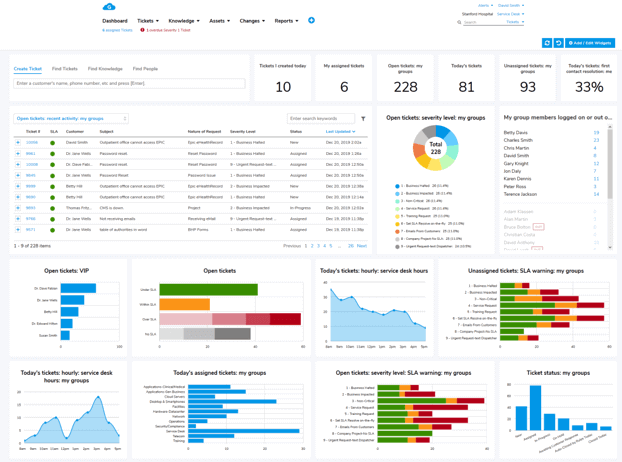
Giva's AI-powered, HIPAA-compliant customer service software application is a prime example of cutting-edge software used by customer service representatives. It's quick to set up, and during a 30-day trial, you'll receive free setup assistance from USA-based product experts. Before you know it, you'll be creating customer service tickets. It offers robust real-time monitoring and reporting, perfect for calibrating customer satisfaction.
Good Customer Service Can Result From Effective Call Center Scripts
Call centers receive thousands of calls per day. Every patient and subsequent interaction is unique. And each deserves to receive the best possible customer experience. One of the best ways to achieve that lofty goal is with effective scripting.
Call center scripts assist both the caller and the service agent in navigating the interaction. They aid in data gathering, decision-making, and maintaining alignment with organizational parameters and HIPAA compliance.
In doing so, scripts subsequently boost the efficiency of individual agents (and call centers in general) and improve overall customer satisfaction. After the hangup, a good script leaves the customer feeling heard and empowered to navigate the next steps in their healthcare journey.
Let Giva Be Your Partner for All Your Call Center Support Software Needs
Giva's Customer Service Software is built for quick deployment and ease of use. That way, you can start seeing value right away:
- Use Giva's AI Copilot to help agents craft the best responses to customers
- Help users find the best responses to questions from your knowledge base using Giva's Knowledge AI Copilot
- Get visual insights with real-time dashboards
- Make fast business decisions with out-of-the-box reporting and analytics
Learn how Giva can benefit your support organization. Get a demo to see Giva's solutions in action, or start your own free, 30-day trial today!
Frequently Asked Questions About Healthcare Account Call Center Scripts
-
What should a healthcare call center script include?
A healthcare call center script should include identity verification steps, clear instructions for the caller, empathetic language, and guidance for emergency situations. Scripts should also comply with HIPAA privacy rules and only request necessary information.
-
Why are scripts important in healthcare call centers?
Scripts help agents maintain accuracy, protect patient privacy, and ensure consistent communication. They also reduce call handling time and improve patient satisfaction.
-
Are healthcare call center scripts required for HIPAA compliance?
Scripts themselves are not required, but they help ensure agents follow consistent verification processes and avoid sharing protected health information with unauthorized callers.
-
What are healthcare call center scripts vs. call flows?
While a call center "script" is the most common term, many healthcare organizations use call flows instead of or with traditional scripts.
- A call center script prescribes exact language for the agent to read.
- A call "flow" is a more flexible framework: it defines the sequence of steps, decision points, and information to collect, but allows the agent to use their own words. Call flows tend to produce more natural patient interactions while still making sure no critical step, such as identity verification, emergency screening, or HIPAA disclosure, is accidentally skipped.
For most healthcare scenarios, a hybrid approach works best: scripted language for high-stakes moments (emergency redirect, HIPAA acknowledgment, billing disclosures) and call flow structure for the conversational portions in between.



Categories: Customer Service