AI in Call Centers: How It Works, Key Benefits, Trends and Step-by-Step Implementation
 By Ron Avignone
Call centers are the heartbeat of your customer service operation, and AI in call centers is quickly reshaping how they run. Customer expectations are higher than ever. Quick answers aren't a nice-to-have anymore, they're non-negotiable.
According to Sprinklr, over half of retail customers with urgent issues prefer phone support, and 76% get frustrated when they don't receive personalized attention. The practice of businesses making customers wait "2–3 business days" for an email reply are over.
That pressure has only increased strain on support teams. More inbound calls mean longer hours, rising stress, and tighter staffing budgets. Meanwhile, customers still expect fast, high-quality service. People want to call, speak with a live agent, and hang up with a resolution, all in the shortest time possible.
Enter Artificial Intelligence (AI) call center software. At its core, AI in a call center is the use of conversational AI, machine learning, and Natural Language Processing (NLP) to automate customer interactions, route calls intelligently, and support live agents in real time, delivering faster, more scalable service without replacing the human judgment that complex issues require. But is it truly a game-changer? Or just another buzzword? What does it actually look like in action, and what does it mean for agents?
Right now, there may be more questions than answers, but here's one thing we know: AI isn't a silver bullet for customer service. It is, however, a powerful tool. The real difference lies in how companies apply it strategically to support both agents and customers.
We'll break this down further in the post. For now, know that AI-powered call center solutions are already handling call routing, agent coaching, and customer insights. What's driving the shift? Which tools matter most? And how can call center leaders prepare for what's next? Let's dive in.

AI in Call Centers: What's Real, What's Hype, and What Matters
"AI" might be one of the flashiest buzzwords out there right now. While many people have their use cases and theories on future applications, not all claims are accurate. In business, some leaders worry about missing out, while others worry about a wasted investment.
To use AI effectively, pinpoint your pain points first. Then choose tools that can match or exceed the work of a skilled human agent.
What Is AI in a Call Center?
AI in a call center is where a customer service operation uses conversational AI, machine learning, and Natural Language Processing (NLP) to automate interactions, route inquiries intelligently, and support live agents in real time. The goal is to handle high-volume contacts 24/7, reduce operational costs, and deliver faster, more personalized experiences, without replacing the human judgment that complex issues require.
The Call Center Is at a Turning Point, With AI Advancements Giving Directions
Today, call centers are more than reactive problem solvers; they're an integral part of a brand's customer experience strategy. Businesses are reshaping the call center around three priorities: personalization, speed, and efficiency. They want every interaction to deliver a clear, well-thought-out solution - the first time around.
We know expectations and call volumes are rising. In fact, 71% of Gen Z customers and 94% of Boomers say live calls are the quickest and easiest way to get help with customer issues (McKinsey & Company). Staffing challenges are also real. While digital tools like AI chatbots are becoming more common, many customers still want a direct line to a live agent. They believe it's the quickest way to a resolution. As demand grows, quality of service can't be sacrificed. This is pushing businesses toward AI-powered contact center tools, whether they are immediately on board with them or not.
The numbers back this shift. The call center AI market is projected to reach $10.4 billion by 2032. And early performance data reinforces the case: a Stanford and MIT study of AI-assisted customer service found agents using AI tools handled 14% more customer inquiries per hour. Plus, Gartner projects that conversational AI will reduce global contact center agent labor costs by $80 billion in 2026, an estimate that reflects the scale of routine, automatable work still handled by human agents today.
You could argue that older, manual methods are tried and true, and in some cases that makes sense. But the reality is these methods can't keep up with modern demand.
Here are a few examples:
- In many call centers, manual call routing systems still dominate. Customers can end up with the wrong agent or waiting on hold far too long.
- Quality assurance often happens after the fact, which makes it harder to proactively address service gaps.
- Valuable insights from customer conversations often go undocumented. This is a missed learning opportunity that artificial intelligence is beginning to solve.
AI in call centers is emerging as a strategic response to these pressures. It offers scalable ways to improve both agent and customer experiences.
Moreover, some companies still outsource call centers overseas to reduce costs. While outsourcing can help with staffing, AI solutions often reduce costs without sacrificing control or quality. Compared with AI in customer service chat or email, call center AI focuses on real-time voice interactions, where speed and empathy matter most.
Lastly, industries with high call volumes, like healthcare, finance, telecom, and e-commerce, are leading adopters of call center AI. Each industry leverages AI differently — healthcare for compliance and patient privacy, finance for fraud detection, and e-commerce for faster order resolutions.
Call Centers' Actual Capabilities for Using AI
For those who aren't sure where to start, here are some of the most realistic capabilities of AI call center technology today:
- Real-time call summaries: Real-time transcription and call summaries reduce the need for handwritten notes that might miss key details.
- Intelligent call routing and skills-based matching: Move calls to the right person or team using your company's set process. No second-guessing whether the call should have been routed elsewhere.
- Sentiment analysis and tone detection: Understand a customer's mood from the start. This can help tailor your approach and even set your own expectations.
- Agent assist tools with suggested next steps: Not sure what to do next? AI tools can suggest the best course of action. For example, if a customer is experiencing a continuous reboot cycle, your AI-driven tool can quickly identify the solution. It can then pull a fix-it guide for the customer or provide an alternative contact for transfer.
- AI-powered call quality scoring and monitoring: Measure agent effectiveness using multiple factors. These include resolution time, average sentiment, and the types of issues encountered for trend monitoring.
Where AI is Not Really Helping a Call Center
What might be a stretch, at least for now...
- AI replacing all human agents: This is one of the most common fears experienced by those in the workforce. "Set it and forget it" AI platforms are not as common as you might think. Many still require training, oversight, and integration. Plus, not all customers want to interact with bots. A human touch is irreplaceable and reassuring.
- One-size-fits-all AI solutions: Every call center has unique needs, and AI may not be able to mold to your exact business. Many platforms are generic out of the box, requiring plenty of coaching.
- Inflated ROI claims: Some AI vendors promise results like "cutting costs in half" or "doubling customer satisfaction." They often skip over the realities of getting there. Leaders should request case studies and run a small pilot before rolling out the technology on a larger scale.
The bottom line is that it's important not to fall into the hype. Yes, AI can be a powerful tool for your business, but it's not right for everyone.
What is Important When Considering AI for a Call Center
Looking to get started? Think about these items first:
- Review your business goals and pain points.
- Identify AI tools that are easiest to integrate with your existing call center solutions.
- Ensure it meets local compliance requirements and protects customer data. Depending on your industry, that may include standards like HIPAA for healthcare, PCI-DSS for payment security, and GDPR for customer data privacy.
- Look for measurable results like faster handling time, higher CSAT scores, and better first-call resolution.
Cost is one of the first questions leaders ask, and the range is wider than most expect:
- Entry-level AI tools, covering intelligent routing, basic virtual agents, and call transcription, typically start at $50 to $200 per month for small teams
- Mid-market platforms with full conversational AI, agent assist, and CRM integration generally run $500 to $2,000 or more per month, depending on seat count and call volume
- Enterprise deployments with custom AI models, multi-channel analytics, and workforce management integration are typically negotiated directly with vendors
Most platforms offer a pilot period, so it's best practices do definitely use it. Validating performance against your specific call types before committing to a full rollout is worth more than any introductory discount.
5 Ways AI Is Changing the Call Center for the Better
Up to now, we've focused on how to decide if AI for your call center makes sense and what it can deliver versus what's still out of reach. That said, here are five guaranteed ways AI is already changing call centers for the better:
-
Smarter Call Routing
AI-powered call routing connects customers with the right agent faster. It uses skills-based matching, call history, and live queue data to prevent misrouting.
-
Real-Time Agent Coaching and Support
AI can listen in on phone calls or live chats, delivering real-time next-best-action prompts, suggested responses, relevant knowledge base articles, and guided next steps. This helps newer agents ramp up faster and get comfortable with typical call patterns and decision paths, while giving experienced agents an extra layer of support on complex or unfamiliar issues.
-
Predictive Analytics for Customer Needs
AI uses past data, behavior patterns, and sentiment to predict customer intent before the issue is explained. This helps agents act proactively, suggest solutions faster, and improve first-call resolution rates. In sales-focused environments, predictive analytics can spot upsell opportunities during or after a conversation.
-
AI-Driven Self-Service That Actually Works
AI powers self-service tools like virtual agents (chatbots) and Interactive Voice Response (IVR) systems. These tools can resolve issues, not just redirect calls. Natural Language Processing lets customers explain problems in plain speech and still get accurate help.
And Tier-1 queries, which are routine, high-volume requests like password resets, order status checks, or basic troubleshooting, can be handled autonomously by AI, freeing up live agents to focus on Tier-2 and Tier-3 interactions that require empathy, judgment, and deeper expertise.
-
Better Customer Insights for Continuous Improvement
AI reviews call transcripts to find trends, recurring issues, and customer sentiment. Are customers always frustrated when contacting your service team? AI can help you uncover why. These insights drive better training programs, knowledge base updates, and even product improvements.
Together, these improvements show up in measurable outcomes. AI often reduces Average Handle Time (AHT) by streamlining routing and agent assistance. First Call Resolution (FCR) improves as predictive analytics anticipate needs, and Customer Satisfaction Scores (CSAT) rise with faster resolutions. Even agent utilization rates can climb, since AI reduces wasted time on repetitive tasks. Further, according to McKinsey, organizations that apply AI and speech analytics strategically can add 20 to 30 percent in operational cost savings alongside customer satisfaction improvements of more than 10 percent.
Moreover, these improvements play out differently by industry:
- In healthcare, AI call center tools handle appointment scheduling, patient triage routing, and prescription refill requests, reducing call volume while maintaining HIPAA-compliant data handling.
- In e-commerce, AI deflects order status and return initiation queries autonomously, freeing agents for fraud disputes and complex fulfillment issues.
- In financial services, AI provides real-time compliance prompts during calls, reducing regulatory risk without slowing down the conversation.
In each case the pattern is consistent: AI takes the high-volume, predictable, process-driven work so human agents can focus on what genuinely requires judgment and empathy.
The Rise of Agentic AI: What's Changing in Call Centers Right Now
For most of the past decade, AI in call centers meant automation: rule-based chatbots, predictive routing, and post-call transcription. The AI assisted, humans decided. That model is shifting.
Agentic AI represents a fundamentally different approach. Where earlier AI tools respond to prompts or route calls based on pre-set rules, AI agents can reason through a problem, access multiple systems simultaneously, and take action autonomously and without a human approving each step.
For example, an AI agent handling a billing dispute does not just retrieve account information and hand it off. It can verify the charge, initiate a credit, update the CRM record, and send a confirmation email, all without transferring the call to a human.
Gartner predicts that agentic AI will autonomously resolve 80% of common customer service issues without human intervention by 2029.
Today, leading deployments are already handling appointment scheduling, order modifications, and basic complaint resolution end-to-end. This is a significant departure from the AI-as-assistant model most call centers have been running.
For leaders evaluating tools, the distinction between conventional conversational AI and agentic AI matters:
- Conversational AI / virtual agents: Respond to customer input, resolve pre-defined issue types, and escalate when needed. Well-established, widely deployed.
- AI Agents (agentic AI): Take multi-step actions independently, like accessing databases, processing transactions, updating records, with minimal human oversight. These are the newer tier, and the capability gap between platforms is significant.
When a vendor describes their platform as "agentic," ask specifically what actions the AI can complete independently versus what still requires a human handoff. The answer tells you more about real-world capability than any feature matrix.
How to Actually Use AI in Call Centers (Without Losing the Human Touch)
- As we've made clear, AI is a fantastic tool meant to enhance existing operations, not replace your live agents entirely. While you can lead with AI, preventing it from leading to a "dead end" is imperative.
-
AI should be able to handle the following without human intervention:
- Provide real-time suggestions for troubleshooting
- Link directly to relevant knowledge bases based on keyword prompts
- Transcribe calls for agent or team review afterward
- Organize and route tickets to the appropriate agent or department
-
If you're expecting most of the above to work "out of the box," think again. Successful AI call center deployments follow a phased approach. Here is a practical roadmap:
- Audit your current call types: Pull 30 days of call records and categorize by type, volume, and resolution pattern. Identify the top three to five call types that follow a predictable, repeatable script. these are your AI starting points.
- Define measurable objectives: Set specific targets before you deploy: target AHT reduction, deflection rate, CSAT floor, and pilot timeline. Without these baselines, ROI is unmeasurable and buy-in is harder to sustain.
- Select tools that fit your existing stack: AI tools that integrate natively with your CRM and telephony platform deploy faster and produce cleaner data. The most feature-rich platform that requires a full system replacement is rarely the right first move.
- Train the AI on your specific context: Feed the platform your call scripts, FAQs, compliance guidelines, and common escalation triggers. A generic AI model trained on someone else's call center data is a rough starting point, but your use cases require your data.
- 5. Run a controlled pilot: Deploy on one call type or one time window before going broad. Measure resolution rate, escalation rate, and customer satisfaction separately from the main queue.
- 6. Train your agents for the hybrid workflow: The most common deployment failures come from agents who are unclear on when to trust the AI and when to override it. Workflow training and not just software training is as important as the technical setup.
- Iterate based on data: Review AI performance against your targets every 30 days. AI improves with feedback loops. Platforms that learn from your corrections outperform those that operate as static tools.
- Finally, use AI to handle routine, repetitive and high-volume tasks so your team can focus on what really matters: empathy, problem-solving, and making sure customers feel heard. Plus, this can benefit your help desk agents reducing stress and helping prevent burnout, which improves morale and lowers turnover.
AI Technology Powering Today's Call Centers
Call center AI may look like a single tool, but in reality it's a suite of smart technologies working together to boost performance. Here are some of the most effective tools in use today:
-
Natural Language Processing (NLP) and Conversational AI
Helps AI understand and respond to customer inquiries in real time, spoken or typed. For example, when a call comes in, the customer can explain their situation to the automated system (IVR). The system can then route the call to the right agent or suggest next steps without human involvement.
Then, working alongside machine learning, NLP is the foundation of Conversational AI, which is the voice and chat interfaces customers interact with directly. This allows systems to continuously improve from historical interaction data.
-
Speech Analytics Applications
Breaks down recorded or live conversations to spot keywords, sentiment, and trends. This tool works in the background of the agent's duties and can share observations in real time or afterward for analysis.
-
Agent Assist Software
Works like speech analytics but focuses on helping in real time. It gives agents live suggestions, resources to share, or prompts during calls or live chat, so they can respond fast and accurately.
-
Predictive Analytics Systems
Reviews historical data to predict customer needs, ensure adequate staffing, and improve first-call resolution rates.
-
Quality Management Platforms
Score calls, flag compliance issues, and highlight training opportunities.
-
Workforce Management (WFM) Optimization
Analyze historical call volume patterns, seasonal trends, and real-time queue data to generate accurate staffing forecasts with AI in WFM. Agents then are scheduled when and where demand peaks, reducing both overstaffing costs and understaffing gaps that drive up wait times and hurt customer satisfaction.
Here is a quick-reference summary of how each technology maps to its primary function and typical benefit:
Technology |
Primary Function |
Best Used For |
Typical Benefit |
|---|---|---|---|
NLP / Conversational AI |
Understand and respond to customer queries in real time |
IVR, virtual agents, chatbots |
Handles Tier-1 queries autonomously; 24/7 self-service |
Speech Analytics |
Analyze recorded or live conversations for keywords, sentiment, and trends |
QA scoring, compliance, trend analysis |
Identifies patterns across 100% of interactions |
Agent Assist |
Deliver real-time suggestions and knowledge retrieval during calls |
Agent coaching, faster resolution |
Reduces AHT; accelerates new agent ramp-up |
Predictive Analytics |
Forecast customer intent, staffing needs, and call volume |
Workforce planning, upsell signal detection |
Improves FCR; reduces over/understaffing costs |
Quality Management |
Score calls and flag compliance issues automatically |
Call quality review, agent training |
Replaces manual QA sampling with full-call coverage |
WFM Optimization |
Forecast staffing needs from historical patterns and real-time queue data |
Scheduling, cost management |
Reduces labor cost waste from staffing inefficiency |
Did you know? Giva's AI Copilots, powered by OpenAI and hosted on Microsoft Azure, helps agents draft better responses, summarize tickets with key details, refine tone, and stay compliant with company policies. It's a practical example of AI support working hand in hand with the human touch. Ready to dive in? Check out our AI Copilot and KB Copilot videos to learn more.
The Upsides, Downsides, and Tradeoffs of Call Centers Integrating AI Capabilities
You've made it this far, so now it's time to look at the pros, cons, and tradeoffs of using AI in your call center and decide if it's right for you now or later.
-
Benefits of AI in Call Centers
- Faster response times: AI call center technology can route calls, provide quick answers, and analyze customer conversations in seconds. Think about the last time you sat on hold for 15 minutes. AI can cut that wait down to seconds by sending you straight to the right person. This can reduce call volume for human agents and give them extra context before or during the call.
- Consistent quality: Quality management platforms can score call performance. Timing, language, routing, and other factors can be analyzed to train or correct based on company standards.
- Deeper insights: Speech analytics and sentiment detection uncover patterns in customer conversations.
- Scalability: AI call center tools handle spikes in call volume without adding more agents. Many platforms also let you scale service add-ons as needed.
-
Drawbacks for Call Centers Implementing AI
- Upfront cost and integration: Adding AI contact center tools can require a big financial investment and technical setup. It's best to consult providers about your goals so you only pay for what you need.
- Training requirements: AI systems need to be "taught" with your call scripts, knowledge bases, and compliance guidelines. This takes time, and AI won't be able to hit the ground running if you want it tailored to your business.
- Customer resistance: Some customers prefer speaking to a live agent and may get frustrated if forced to use self-service.
- Data privacy risks: AI systems handle sensitive data, so your agreement should guarantee compliance with location regulations and contain other safety best practices.
-
Cautions for Using AI in Call Centers
- Human touch vs. automation: AI can speed up processes, but it can't replace the empathy, trust, or judgment that come from live agents.
- Ongoing oversight: AI is not "set it and forget it." It needs regular updates, monitoring, and adjustments to stay effective and relevant to your business.
- ROI expectations: Results take time. Gains like better first-call resolution or higher satisfaction scores depend on proper setup and use.
- Customer trust: People can appreciate AI efficiency, but they want transparency. If customers know when they're talking to AI but then can easily escalate to a human, satisfaction scores tend to rise. Lack of transparency, on the other hand, risks damaging trust.
What's Next for AI in Call Centers and How to Stay Ahead
The direction of travel is clear, with AI in call centers is shifting from assistance to action. Conversational AI is already handling Tier-1 queries at scale. Agentic AI is beginning to complete multi-step transactions end-to-end without human handoffs. The Gartner 80% autonomous AI prediction noted above would have seemed implausible just two years ago.
For call center leaders, the practical question is not whether this technology will reshape operations, but at what pace to adopt it and at what depth.
And the answer is different for every team.
What is consistent though across successful deployments: they start with clearly defined call types, measure relentlessly, and treat AI as a system that requires ongoing training and oversight, not a deployed-and-forgotten tool.
The call centers that stay ahead will not necessarily have the most AI. They will have the clearest understanding of which problems AI solves well in their specific context, and they will build the human oversight structures that let them extend AI's reach safely over time.
Giva Brings Streamlining to Your Support Teams
Giva's Customer Service Software is worry-free software so you can focus on delivering customer happiness.
- Use Giva's AI Copilot to help agents craft the best responses to customers
- Help users find the best responses to questions from your knowledge base using Giva's Knowledge AI Copilot
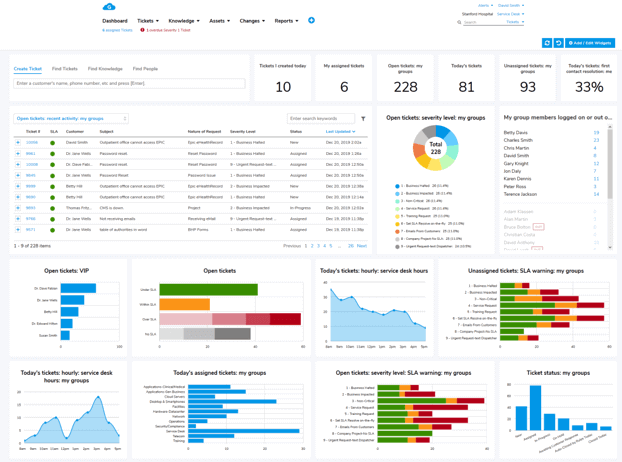
- Get visual insights with real-time dashboards
- Make fast business decisions with out-of-the-box reporting and analytics
Learn how Giva can benefit your support organization. Get a demo to see Giva's solutions in action, or start your own free, 30-day trial today!



Categories: Customer Service