The Healthcare Contact Center Fully Explained Plus Challenges With Solutions and Trends
What is a Healthcare Contact Center?
A healthcare contact center serves as a regulatory-compliant, centralized, multi-channel communication hub for a healthcare institution, like a doctor's office or hospital.
Unlike traditional call centers, these operations handle not just phone calls. Healthcare contact centers can also handle:
- Text
- Live chat
- In some cases, social media
For calls, trained staff use advanced technology to manage both incoming and outgoing, even through call-volume fluctuations, along with other interactions related to patient care.
Healthcare contact centers' responsibilities often include:
- Coordinating appointments
- Processing prescription requests
- Assisting with insurance questions
- Offering basic medical guidance
Healthcare contact centers support a wide range of organizations, including:
- Health systems
- Hospitals
- Specialty clinics
- Government agencies
- Healthcare providers offering financial services support such as billing and insurance coordination
Any organization responsible for managing patient communications at scale can benefit from a centralized, secure contact center model.
Contact centers are the frontline of engagement between healthcare customers (patients) and the institution itself. When they operate efficiently, healthcare contact centers offer many benefits, such as timely access to care, improved patient communication, and enhanced overall healthcare experiences. And they can solve problems for healthcare providers and patients.
Healthcare Contact Center vs. Traditional Call Center
While traditional call centers primarily focus on customer service or sales, a healthcare contact center supports clinical, administrative, and care-related interactions. These centers must handle sensitive patient information, follow strict healthcare regulations, and support care delivery workflows such as scheduling, billing, prescription management, and telehealth coordination.
Types of Healthcare Contact Centers
Understanding which type your organization operates or needs shapes decisions about staffing models, technology stack, compliance requirements, and workflow design.
While all healthcare contact centers interact directly with patients, they differ in scope and specialization. The most common types include:
- Health Insurance: Handle claims processing, benefit explanations, prior authorization requests, and premium inquiries on behalf of payers. These centers serve both patients and healthcare providers.
- Centralized Hub: Serve health systems and hospital networks as a single point of entry, routing patients to the right department, provider, or service line. They reduce fragmentation and give patients a consistent starting point for any need.
- Specialty or Pod-Based: Staff trained specifically around a clinical service line, such as cardiology, oncology, behavioral health, or orthopedics, to handle condition-specific scheduling, triage, and follow-up conversations.
- Revenue Cycle Management (RCM): Focus on billing, insurance verification, financial counseling, and claims resolution, supporting patients through the administrative side of care after a clinical visit.
Healthcare Contact Center Compliance and Patient Data Protection
Healthcare contact centers handle Protected Health Information (PHI) during nearly every interaction. As a result, compliance and security are foundational requirements.
Effective healthcare contact centers rely on the following to protect patient information:
- Encryption
- Access controls
- Audit logs
- Role-based permissions
Many organizations also use formal security frameworks, such as HITRUST CSF certification, to strengthen governance and reduce the risk of data breaches.

7 Challenges Healthcare Contact Centers Overcome With Solutions
Contact centers serve as the primary point of contact for patients seeking assistance or information regarding their health needs. They offer round-the-clock support and personalized care to enhance the patient experience, improve outcomes, and foster patient satisfaction.
-
Inefficient Provider Schedules and Long Wait Times
Contact centers can streamline appointment scheduling through better call routing, getting patients to the right department or provider faster. This has benefits for both healthcare providers and patients. Mainly, providers can operate more efficiently, and patients can wait less for their appointments.
Metrics Healthcare Contact Centers Can Improve
- Average in-clinic patient wait time: The mean time from check-in or scheduled appointment time to when the patient is seen by a clinician.
- Median patient wait time: The midpoint of all individual wait times, often used in emergency departments and public reporting because it is less skewed by outliers.
- Total Length of Stay (LOS): Time from arrival to departure from the clinic or emergency department, capturing both waiting and treatment time.
In addition to appointment scheduling, healthcare contact centers can help with appointment changes and cancellations, and follow-ups.
-
Messy Insurance and Billing Processes
It's no secret that navigating healthcare insurance and medical bills can be overwhelming and complex. Contact centers can help alleviate the stress of managing insurance and paying bills by managing insurance and billing processes.
Contact centers can manage insurance inquiries, claims processing, and billing support. The primary goal is to help patients resolve issues and maximize their insurance benefits after they've received medical care.
Medical Billing Metrics Contact Centers Can Improve
- Clean Claim Rate (CCR): Percentage of claims submitted without errors that require correction or resubmission. A higher CCR means fewer delays and lower rework costs.
- First-pass Resolution Rate (FPRR): Share of claims paid on first submission without appeals or additional documentation, often targeted at 90% or higher.
- Claim denial rate: Percentage of submitted claims that are denied by payers, used to monitor coding, documentation, and authorization issues.
-
Inadequate Patient Outreach
The best medical care is ongoing and preventative. Healthcare contact centers can provide ongoing medical care through effective patient outreach programs. For example, contact centers can improve patient education by providing information on medical conditions and treatment options. Contact centers can also improve preventive care through wellness initiatives and healthcare service reminders.
- Reminders for annual wellness visits, Medicare Annual Wellness Visits, and routine primary care checkups via phone, SMS, email, or patient portal messages.
- Campaigns prompting patients to schedule cancer screenings (e.g., mammograms, Pap tests, colorectal screening), vaccinations, and age or risk-based preventive services
-
Inefficient Emergency Response
Health care organizations like emergency departments are constantly dealing with fluctuating patient volumes. Ineffective emergency response affects how quickly, safely, and effectively they can manage patients.
Contact centers can serve as hubs for coordinating emergency response efforts. They can disseminate critical information and provide reassurance and support to affected individuals.
Emergency Response Metrics Contact Centers Can Improve
- Door-to-triage time: Minutes from arrival to initial triage, indicating how quickly patients are clinically prioritized in an emergency.
- Door-to-provider (door-to-doctor) time: Time from arrival to being seen by a qualified clinician is a central indicator of Emergency Department (ED) responsiveness.
- Emergency department length of stay (ED LOS): Total time from arrival to discharge, admission, or transfer; prolonged LOS is linked to crowding, higher costs, and worse outcomes.
- Waiting time in ED: Time before treatment begins. Excessive waits are associated with lower satisfaction and increased risk of patients leaving without care.
-
Unsustainable Chronic Disease Management
Chronic conditions like diabetes and hypertension require a special kind of sustainable medical care. Without adequate, ongoing medical care, patients dealing with chronic conditions can suffer.
Contact centers can offer telephone or telehealth-based chronic disease management programs for conditions like diabetes, hypertension, heart failure, and depression. These programs can include coaching and self-management support.
In addition, contact centers can support patients with chronic medical conditions with medication refill reminders, post-discharge medication reviews, and check-ins to address barriers to taking prescribed therapies.
-
Inequitable Healthcare Access and Service To Patients of Diverse Backgrounds
Patients of all backgrounds deserve proper medical care. Regrettably, language and cultural barriers can prevent medical professionals from providing the best possible care.
However, with modernized contact centers, healthcare institutions can equip themselves with multilingual staff and interpretation services to overcome the barriers traditionally associated with treating a diverse patient population.
-
Insufficient Access to Telehealth Services
Access to telehealth services has become the norm in modern healthcare. And healthcare contact centers are at the core of why that's possible.
With contact services offering modernized telehealth services, patients can attend virtual consultations, remotely monitor their health, and receive telehealth support.
Telehealth services are utilized by individuals in both rural and urban areas. The vast majority of patients use telehealth from the comfort of their own homes. This underscores the importance of telehealth, especially for senior and differently-abled patients.
Future Trends In The Healthcare Call Center Industry
The healthcare industry is forever changing. This includes not only new science on how healthcare organizations provide medical care, but also how they stay in touch with their patients to improve the patient experience.
Here are five trends to look out for in the future.
-
Telehealth Will Become More Critical
Looking toward the future, telehealth will transform from being a niche offering to a critical service.
Recent data from the Association of American Medical Colleges suggests that the United States will face a physician shortage of up to 86,000 physicians by 2036. Therefore, telehealth will be a critical supporting element in addressing the growing physician shortage, or even more general staffing shortages. And for providing a more equitable access to patients and improving the overall patient experience.
-
AI Assistance and Analytics Are Growing
AI technologies are projected to grow at a Compound Annual Growth Rate (CAGR) of over 20% through 2030.
In particular, AI chatbots are gaining traction in the healthcare industry and are being utilized to improve customer engagement and experience. Chatbots can use sentiment analysis to deliver personalized experiences, which can enhance patient engagement and satisfaction. Chatbots can also gauge customer satisfaction levels and adjust their responses accordingly.
However, and most importantly, chatbots can efficiently direct dissatisfied customers to specialized support teams for human assistance, when necessary.
From the support side in healthcare contact centers, AI is most effective when applied to high-volume, low-complexity workflows such as repetitive tasks. Examples include appointment reminders, insurance verification, case routing, and follow-up outreach.
AI-powered automation allows live agents to focus on complex patient needs while analytics provide actionable insights into patient behavior, call patterns, and service gaps.
Moreover, healthcare contact centers are beginning to explore Agentic AI, which are systems that go beyond answering questions to autonomously completing various tasks, all within the same interaction.
For example, an Agentic AI might do the following steps in a contact process:
- Accept the inbound request
- Check appointment availability in the EHR
- Verify insurance eligibility
- Confirm the booking
- Send the patient a reminder
As the technology matures, it is expected to take on more complex workflows, with human agents shifting toward oversight and handling issues that arise.
-
Omnichannel Communication Is Becoming The Norm
Without a modernized omnichannel approach to communication, healthcare organizations struggle to meet changing patient expectations and preferences, and they may end up seeking care somewhere else. This underscores the importance of omnichannel communication strategies in healthcare.
Research from the Journal of Medical Internet Research notes that omnichannel engagement can significantly improve patient engagement and satisfaction by making access more flexible and personalized. This includes integrating web, mobile apps, portals, and offline channels.
With better omnichannel solutions, the healthcare sector is investing more in improving customer experience.
-
More Operations Will Move to Contact Center as a Service (CCaaS) Platforms
The shift to cloud-based infrastructure has increased healthcare's adoption of Contact Center as a Service (CCaaS) offerings. CCaaS gives organizations enterprise-level omnichannel capabilities, built-in compliance, and AI enhancements without requiring on-premise hardware or large IT implementations.
For healthcare contact centers managing continuously changing call volumes, such as for seasonal times, public health events, or enrollment periods, CCaaS provides the ability to scale quickly while maintaining data security and HIPAA compliance. It is now a standard consideration when evaluating healthcare contact center software.
-
There Will Be More Hybrid Staffing and Better Workforce Optimization
Healthcare organizations are transforming their contact centers by focusing on workforce optimization. In particular, hybrid staffing, where the workforce is blended with both full-time and part-time, and even standalone contractors, will become the norm.
In addition, healthcare organizations are increasingly becoming more reliant on advanced forecasting and performance analytics to give actionable insights and align staffing with demand, agent performance, and maintaining service levels.
Further, healthcare contact centers face persistent staffing shortages, driven by burnout, fluctuating call volumes, and increasing patient expectations. To address this, organizations are investing in better workforce planning tools, ongoing training programs, and AI assistance that reduces repetitive tasks.
Training agents to handle both clinical and administrative conversations helps maintain service quality even during staffing constraints.
The end goal is to manage quality, staffing, and compliance across on-site and remote agents to improve both employee and customer satisfaction.
4 Best Practices in Healthcare Call Centers
- Use Patient-Centric Communication: Research shows that high-quality and patient-centric communication is critical for a positive patient experience. Practicing empathy statements and active listening, along with clear, jargon-free explanations, improves patients' perception of the service.
- Embrace omnichannel access: Access to healthcare should be simple and timely. Modern, omnichannel contact centers can enable that. Evidence shows that omnichannel contact centers with coordinated access across phone, SMS, chat, portal, and email offer the most consistent experience.
- Manage performance with data: Core determinants of a contact center's overall performance are setting measurable goals, collecting and analyzing data. KPIs such as speed to answer, abandonment rate, first-call resolution, and patient satisfaction are critical indicators of patients' access to and experience with the contact center.
- Integrate with EHR and other software systems: Connect contact centers with Electronic Health Records (EHR). Contact center agents can have real-time access to customers' appointments, medical histories, and preferences in a single view. And other software systems for scheduling, billing, etc.
How Can Software in Healthcare Call Centers Help?
Healthcare call center software enables faster patient access, easier communication, and more efficient operations:
-
How Software Benefits Support Processes
- Improves patient access and convenience
- Streamlines workflows, particularly with AI automation
- Reduces human errors by enabling certain AI tools
- Enhances patient engagement and communication
- Maintains HIPAA compliance with encryption, access controls, and audits
-
What to Look for In Healthcare Call Center Software
Healthcare call center software should combine secure, omnichannel communication with deep integration and strong analytics to truly improve patient access and experience.
- Secure, private, healthcare compliance: HIPAA-ready capabilities are non-negotiable, along with HIPAA training and clear policies aligned with healthcare regulations and data protection measures for handling sensitive data.
- Omnichannel, patient-centric communication: Single-platform software that supports phone, SMS, email, chat, and portal messaging, including self-service options.
- Integration with other core systems: Seamless integration with EHR, scheduling, billing, and patient engagement platforms.
- Automation and analytics using AI: Automation of high-volume tasks and reporting to track KPIs.
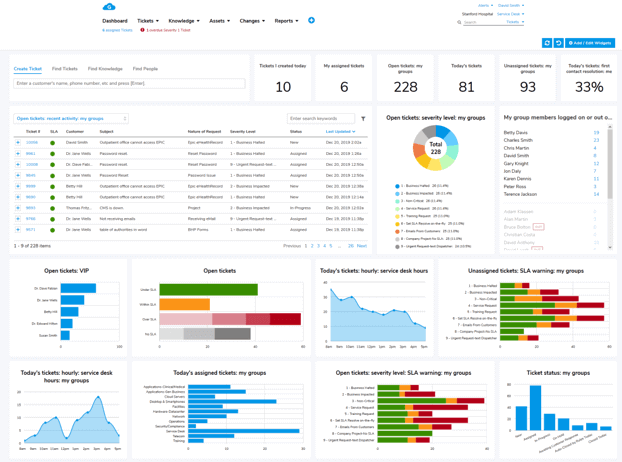
Giva has created customer service software that is ideal for organizations requiring high security and compliance in the healthcare industry.
With Giva, you can transform patient support with a secure, AI-driven service that's HIPAA compliant without extra costs.
Get a demo to see Giva's solutions in action, or start your own free, 30-day Giva trial with free setup assistance and see how quickly your team can be up and running.
Healthcare Contact Centers are Indispensable
Healthcare contact centers are becoming indispensable to how organizations manage patient access, coordinate care delivery, and support a consistent, high-quality experience. They reduce friction around scheduling, insurance, outreach, emergencies, chronic disease management, and telehealth by consolidating fragmented touchpoints into a single, coordinated care offering.
Organizations that embrace patient-centric communication, data-driven performance management, and modern platforms like Giva's AI-powered, HIPAA-compliant applications will be best positioned to deliver safe, efficient, and compassionate care at scale.


Categories: Customer Service