31 IT Asset Management Best Practices: Complete Guide to Maximize Value, Security, and Compliance
Effective IT Asset Management (ITAM) is the practice of maintaining an accurate, automated, and real-time inventory of all hardware, software, and cloud assets across their full lifecycle, from procurement to disposal. This is so organizations can maximize value, control costs, and maintain compliance.
IT environments are increasingly complex, making ITAM an integral part of IT Service Management (ITSM) and Information Technology Information Library (ITIL®) practices.
IT Asset Management is about much more than simply managing hardware, software, AI tools, APIs, vendor licenses, and software subscriptions. ITAM requires more than just an inventory list.
ITAM demands a strategic, integrated, and continuously improving approach.
The importance of ITAM becomes evident when considering that the cost of unused software licenses alone runs into the millions annually for mid-size organizations. Beyond license waste, teams with accurate asset records resolve incidents faster because diagnostics no longer start from scratch. Organizations with audit-ready asset documentation also avoid the significant cost and disruption of unplanned vendor software audits, which can consume weeks of IT team time to navigate. And these savings compound, where the same data that reduces license spend also accelerates change management decisions, improves hardware refresh planning, and reduces compliance exposure simultaneously.
In this article, there's a breakdown of the 8 most useful ITAM best practices. These will help your organization control costs, improve security, and maintain security compliance.

31 IT Asset Management (ITAM) Best Practices
IT service delivery, budgets, and security depend on a successfully managed IT asset inventory.
With these comprehensive set of best practices, grouped by categories and aligned with ITIL 4 principles, organizations can maximize asset value and manage IT assets proactively.
-
Build a Comprehensive and Accurate Inventory
The cornerstone best practice in ITAM is having a complete and accurate inventory of all IT assets. This needs to be a list of hardware and software, including databases, data storage, and things like AI tools and APIs.
This database serves as the single source of truth for all asset-related decisions. It should include multiple layers of information answering the following questions, such as but not limited to:
- Do we own or lease (subscribe to) this asset?
- When did we buy, develop, or subscribe to it?
- What is the expected lifecycle timescale?
- What is its worth (or what does it cost)?
- Who is responsible for upgrades and maintenance?
- If it's a subscription: Who is the vendor, and when do we need to review the contract?
Here's how to compile your comprehensive asset management database:
-
Use Multiple Discovery Sources
Automated asset identification tools can combine with manual IT asset audits and integrations with other systems. Use ITSM software or procurement platforms to ensure no assets are missed.
It can be easy to miss software because not every SaaS tool in use goes through official procurement channels. That's why manual audits are always essential. Cross-check and verify asset inventory alongside network scanners, agent-based tools, and API integrations.
This multi-layered approach to asset discovery will prevent assets from being overlooked.
-
Create a Centralized Asset Database
Now that you have this information, consolidate all asset data into a single, centralized database.
This should include everything, such as:
- Hardware specifications
- Software licenses/subscriptions
- Ownership information
- Financials, like SaaS pricing, build costs, depreciation, and flexible use costs
- For example, if it's a cloud-based storage with costs that go up or down depending on usage
- Maintenance records
- License details
Integrate with a Configuration Management Database (CMDB) to maintain consistency across ITSM operations.
-
Maintain Accurate Asset Records
Update asset records regularly to the current status of each asset, like the location, usage, ownership, and condition. Assigning each asset to a specific user, department, or cost center creates a clear line of accountability that makes audits faster, lifecycle decisions more deliberate, and offboarding workflows more reliable. Without named ownership at the asset level, accountability gaps compound quickly as environments grow.
This also makes it easier to support better decision-making. Implement automated workflows that trigger updates when assets are moved, modified, or retired. Make sure these automatic triggers are connected to subscriptions. If one is activated or cancelled, the database remains accurate.
-
Eliminate "Ghost" Assets
There's always going to be something in the inventory that isn't actually being used. Automated checks can't make up for actual human eyes verifying that an asset exists and is still in use.
Confirm digital inventories with physical checks to remove obsolete, misplaced, or duplicated entries. A distorted asset picture is an inaccurate one. This could impact ITSM budgets if financial planners are still factoring in assets that don't exist anymore.
Regular reconciliation processes help maintain data integrity and prevent budget confusion.
-
Start with Critical Assets First
When building or overhauling an ITAM program, avoid trying to inventory everything at once. Prioritize your highest-value, highest-risk assets first, such as servers, enterprise software licenses, and core cloud infrastructure. Then extend coverage to peripherals and lower-priority items.
This phased approach keeps early milestones achievable, surfaces the biggest cost and compliance risks quickly, and prevents the program from stalling under its own scope before foundational processes are in place.
-
Address Shadow IT and Unmanaged Cloud Assets
Shadow IT, which is software, SaaS subscriptions, and cloud services adopted by teams outside official procurement channels, is one of the fastest-growing blind spots in modern ITAM inventories. When a team starts using new SaaS tool without an IT request, the asset is invisible to standard network scans yet is consuming budget, processing company data, and potentially violating compliance requirements.
Controlling shadow IT requires three integrated steps:
- First, deploy discovery tools that surface unapproved apps by monitoring network traffic and SSO login patterns, not just the managed endpoints where approved software lives.
- Second, maintain a sanctioned software catalog so employees can find approved alternatives without going rogue.
- Third, build a lightweight intake workflow that lets teams request new tools through official channels, bringing shadow tools into the asset record rather than simply blocking them, which reduces friction while restoring IT visibility. Cloud-native ITAM tools increasingly automate this intake by integrating with procurement systems to flag and route new SaaS requests as assets from the moment they are approved.
-
Track the Full Asset Lifecycle
Managing the full lifecycle of an IT asset brings efficiency and cost-effectiveness, from procurement to retirement. This aligns directly with ITIL 4's holistic approach to creating ITSM value within every stage of service delivery.
Here is how to track and manage an asset throughout its lifecycle. Remember, software (SaaS), platforms (PaaS), and infrastructure (IaaS) are all assets, even if they're not physical like computers and data centers.
-
End-to-End Asset Visibility
Track every asset across its lifecycle, which means:
- Purchase (either buying, subscribing, or building in-house)
- Deployment
- Operation
- Support
- Disposal
This 360, end-to-end visibility improves forecasting and helps manage refresh cycles effectively. Implement status tracking that provides real-time insight into asset health and performance.
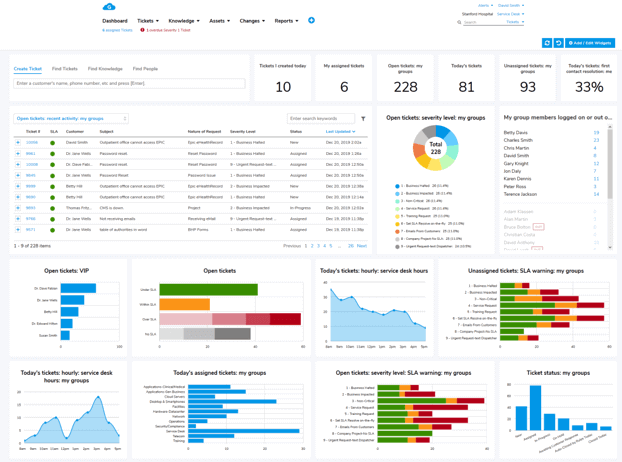
For example, within an ITAM dashboard there should be information about when an update is needed, or when a contract is coming to an end.
-
Plan for Lifecycle Transitions
Include proactive planning for End-Of-Life (EOL) events, upgrades, and decommissioning. This reduces unplanned downtime and makes sure that IT assets are managed better.
Create automated alerts for software contract expiration dates, lease renewals, and hardware EOL notifications. This could be a chance to move an on-premises solution to the cloud, for example.
-
Manage Software Subscriptions Proactively
Implement Software License Management (SLM) processes to avoid SaaS bloat. According to Zylo's SaaS Management Index, organizations waste an average of $18 million annually on unused SaaS licenses, and climbs sharply for larger enterprises. Proactive reclaiming of unused licenses, utilization reviews, and subscription rationalization directly address this cost and are main functions of a mature SLM practice.
SLM should also help to maintain license compliance, and improve usage efficiency. Regular license harvesting and reallocation can significantly reduce software costs.
Make sure to include every subscription, to keep track of the real cost of SaaS, PaaS, and IaaS being used, and to prevent duplication.
-
Track Contracts and Renewals
Monitor software and hardware contracts, support agreements, and warranty expiration dates. This helps prevent service interruptions or unbudgeted costs. Integrate with procurement systems to streamline renewal processes.
-
-
Integrate the Right Tools and Automate with AI Agents
Efficiency and accuracy in ITAM improve significantly when systems are integrated, and repetitive tasks are automated. AI tools make this even easier, and can be done with most ITAM software.
It also prevents mistakes. We do recommend though doing physical asset checks too, to avoid ghost tech hanging around your budgets and spreadsheets.
-
Choose the Right Categories of ITAM Technology
ITAM programs typically rely on several distinct tool categories, often integrated within a broader ITSM platform:
- Asset discovery tools: Automated network and endpoint scanners that identify connected hardware and installed software in real time, including new devices as they join the network. RMM (Remote Monitoring and Management) platforms, network scanners, and agent-based tools all fall into this category
- Software Asset Management (SAM) / license management platforms: Tools that track license entitlements, monitor actual usage against purchased seats, flag compliance gaps, and automate renewal alerts. For SaaS specifically, dedicated SaaS management platforms provide usage analytics across the entire SaaS portfolio
- Configuration Management Databases (CMDBs): Relational stores that map how assets connect to and support IT services, providing dependency context for incident, change, and problem management
- IT Financial Management (ITFM) tools: Platforms that track asset acquisition costs, depreciation schedules, and total cost of ownership to support budget planning and investment decisions
- Endpoint management platforms: Tools that handle hardware configuration, software distribution, patch management, and remote device control across the managed device fleet
-
Integrate with ITSM Systems and IT Help Desks
Link your ITAM solution to your ITSM platform to enable consistent workflows, better service delivery, and a complete 360 overview. Make sure this is integrated with the following:
- Internal knowledge bases
- External self-serve portals
- FAQs, troubleshooting
- AI agents
- IT Help Desk
These integrations support incident resolution with asset context, and this enables better change management decisions.
Many modern ITSM platforms integrate ITAM functions directly, so that discovery data, asset records, and service management workflows live in a single system rather than requiring separate tools to be maintained in parallel.
-
Automate Asset Discovery
Real-time discovery tools reduce manual data entry, catch changes instantly, and keep the asset inventory current. Dedicated ITAM tools such as Asset Panda support mobile auditing and barcode scanning for hardware reconciliation. RMM (Remote Monitoring and Management) tools provide continuous monitoring to detect new assets, configuration changes, and unauthorized software installations.
At the same time, check off every automated entry with manual verification, whenever possible.
-
Automate Routine ITAM Tasks
Automate time-consuming manual tasks such as tagging, inventory updates, license reconciliations, and notifications to reduce the burden on IT teams and improve consistency. Workflow automation helps make sure standard processes are followed and helps reduce human error.
-
Use AI Agents for Continuous ITAM Automation
AI Agents in ITAM go further than rule-based automation, where they operate continuously and proactively rather than on a schedule. Before, automation would handle preset tasks, such as nightly inventory syncs, scheduled license reports, but AI Agents can monitor asset health in real time, detect configuration drift as it happens, flag idle licenses to be reclaimed, and trigger provisioning or decommissioning workflows without waiting for a human to raise a ticket. The practical effect is that the asset inventory stays current between audit cycles rather than degrading and then being corrected periodically.
Despite these gains though, physical asset checks remain essential. Automated discovery cannot fully replace on-the-ground verification, and actual human confirmation is the final accuracy layer for eliminating ghost assets.
-
-
Conduct Regular Audits, Focus on Continuous Improvement
A successful ITAM strategy is not static. IT purchasing decisions happen faster than an IT team can track. ITAM requires ongoing validation and refinement, supporting ITIL 4's continual improvement practice.
-
Run Regular Audits
Schedule internal or external audits to verify data accuracy, highlight potential compliance gaps, and find underutilized or shadow IT assets. Use both scheduled audits and surprise spot-checks to keep data integrity high.
For hardware, barcode scanning and RFID tagging accelerate physical reconciliation, making it straightforward to confirm that every asset recorded in the system physically exists in the environment and is accounted for.
-
Track Key Performance Indicator Metrics (KPIs)
Use KPIs like the following:
- Asset utilization
- Total Cost of Ownership (TCO)
- License/software subscription compliance rate
- Mean time to retirement to evaluate ITAM program effectiveness
Establish benchmarks and track trends to identify improvement opportunities. Integrate these into ITSM and ITIL best practices, and even SLA-based KPIs.
-
Implement Automatic Feedback Loops
Use audit results, stakeholder input, and data insights to fine-tune how you manage IT assets. Regular review meetings with key stakeholders ensure the ITAM program evolves with organizational, operational, and budgetary needs.
-
-
Strengthen Security and Compliance
ITAM plays a vital role in strengthening your organization's cybersecurity posture. In turn, this impacts regulatory compliance, and directly supports ITIL 4's risk management principles.
-
Implement Comprehensive Security Rules
Define and enforce access controls, encryption standards, and acceptable use policies for all IT assets. Your IT assets and data are not secure unless there are robust rules for each asset, so that only the right team members have access to what they need. This also better maintains compliance, especially in regulated sectors.
Implement role-based access controls and regular security assessments to maintain asset security throughout the lifecycle.
-
Meet Regulatory Requirements
Keep your ITAM practices aligned with compliance frameworks relevant to your industry, such as but not limited to the following:
- ISO/IEC 19770
- GDPR
- SOX
- HIPAA
This is critical when working with vendors, because even if they fail compliance, it could impact your organization, and your security posture. Regular compliance reporting and audit trails demonstrate adherence to regulatory requirements.
-
Protect Asset Data
Secure all data related to every ITAM solution, including configurations, license keys, and location data.
With robust controls to prevent unauthorized access or loss, this is vital in this era of AI deepfakes, and more sophisticated cyberattacks. Implement data classification and protection measures appropriate to asset criticality.
-
-
Align People with Processes
ITAM programs only succeed with buy-in and training for the right people, with clear ownership, and well-defined processes.
-
Establish a Dedicated ITAM Function
Whether a small team or a full department, clear leadership and ownership brings accountability. Define roles and responsibilities clearly, including asset custodians, data owners, and process managers.
-
Define and Document Asset Policies
Standardize processes for asset acquisition, deployment, tracking, maintenance, and disposal with clearly written and enforced policies. Regular policy reviews keep procedures relevant and effective.
A thorough ITAM policy covers six key components:
- Asset classification standards: What constitutes an IT asset and how assets are categorized by type, criticality, and owner
- Procurement controls: Who is authorized to acquire new assets, through which channels, and what documentation is required
- Deployment and configuration standards: How assets are configured before entering service, including security hardening and access provisioning
- Acceptable use rules: What employees may and may not do with company-owned or company-licensed assets
- Maintenance and update schedules: Who owns patch management, hardware servicing, and subscription renewals, and at what intervals
- Disposal and data destruction procedures: How assets are decommissioned, data-wiped, and retired or recycled in line with security and environmental policy
Documenting these six elements and enforcing them through tooling closes the accountability gaps that surface during audits and offboarding events.
-
Promote Cross-Team Collaboration
Coordinate between IT, finance, procurement, and operations to maintain transparency and data consistency across teams. Regular cross-functional meetings and shared KPIs promote collaboration.
-
Train Staff and Stakeholders
Provide ongoing training and support to everyone involved in the asset lifecycle to maintain compliance with policies and reduce mistakes. Implement role-specific training programs and regular refresher sessions.
Training is even more important when new hardware or software is introduced. Make sure everyone knows how to use anything new being integrated into your existing IT systems.
-
-
Implement Strategic Financial Management
Effective ITAM requires sophisticated financial management that goes beyond basic cost tracking to support strategic business decisions.
-
Establish Total Cost of Ownership (TCO) Models
Develop comprehensive TCO models that include acquisition costs, operational expenses, maintenance, support, and disposal costs. This approach enables better investment decisions and budget planning.
It's also why ITSM leaders need the complete picture of every IT asset being used, to budget accurately.
-
Implement Automated Asset Depreciation Tracking
Track asset depreciation according to your organization's accounting standards. Make sure they're in-line with business policies. Accurate depreciation models support financial reporting and help identify optimal refresh cycles.
-
Conduct Regular Cost Optimization Reviews
Regularly analyze asset utilization and costs to identify optimization opportunities. This includes license harvesting, hardware consolidation, and renegotiating vendor contracts based on actual usage patterns.
-
-
Optimize Service Delivery with ITAM Integration
Align ITAM practices with ITIL 4 and ITSM best practices to enhance service delivery and customer satisfaction.
-
Support Incident and Problem Management
Have asset information readily available to support teams during incident resolution. Rich asset data including configuration details, warranty status, and maintenance history accelerates problem diagnosis and resolution.
-
Enable ITIL-Empowered Change Management
Provide change management processes with accurate asset dependency information and impact analysis capabilities. Understanding asset relationships and configurations supports better change planning and risk assessment.
-
Support Capacity and Availability Management
Provide capacity planning teams with accurate asset utilization data and performance metrics. This information supports infrastructure planning and helps prevent service degradation due to capacity constraints.
-
Let's now look at how ITAM and ITIL connect and interact with one another, and then we've provided more useful information with FAQs.
ITIL 4 and ITAM Combined to Improve Service Value
IT Asset Management in ITIL 4 is not a standalone practice but an integral part of the service value system. Here's how ITAM connects to key ITIL 4 concepts:
ITAM supports the following value chain activities:
- Plan: Asset data informs strategic planning and investment decisions
- Improve: Asset performance metrics drive continual improvement initiatives (an integral part of ITIL4)
- Engage: Asset information supports customer and stakeholder engagement and buy-in
- Design and Transition: Asset capabilities and constraints shape and modify service design, including continual improvement initiatives
- Obtain or Build: Asset procurement and deployment processes
- Deliver and Support: Asset information supports ITSM service delivery and support ticket resolutions
At the same time, ITAM needs to be integral across all 4 ITIL dimensions:
- Organizations and people: ITAM and ITSM roles, responsibilities, and competencies
- Information and technology: Asset data, discovery tools, inventory management, and ITAM platforms
- Partners and suppliers: Vendor management and 360 contract oversight, with budget control
- Value streams and processes: ITAM workflows integrated with ITSM at every stage of service delivery
The following ITIL 4 guiding principles as they apply and interact directly with ITAM:
- Focus on value: Align asset decisions with business outcomes
- Start where you are: Assess current ITAM maturity before transformation
- Progress iteratively: Implement ITAM improvements in manageable stages, according to continual improvement initiatives
- Collaborate and promote visibility: Share asset information across teams (don't silo key asset information)
- Think and work holistically: Consider asset impact on the entire ITSM service ecosystem
- Simple and practical: Whenever you can, avoid over-complicating ITAM processes
- Optimize and automate: Keep using technology, like AI, to improve ITAM efficiency
Careful IT Asset Management Planning Now Brings Less Care Later
Implementing strong IT Asset Management best practices is essential for modern ITSM teams. The goal with this is to stay efficient, secure, and compliant.
With a structured, data-driven approach to ITAM — supported by integration, automation, and collaboration — organizations can reduce risk, lower costs, and make smarter IT asset purchasing, building, and buying decisions.
When integrated with ITIL 4 practices, ITAM becomes a strategic enabler that supports the entire service value system. From incident resolution to strategic planning, accurate and comprehensive asset information drives better decisions, and improved outcomes.
Whether you're optimizing a mature ITAM program or building one from scratch, these best practices serve as a reliable foundation for success.
Remember that ITAM is not just about tracking assets — it's about enabling business value through intelligent asset optimization and management.
Useful IT Asset Management Resources
- IT Asset Management (ITAM) in the Cloud
- Get helpful ITIL resources with insights from our industry experts and best practices
- AI-Powered Knowledge Article and Ticket Copilots
- Tough Questions to Better Select, Compare and Evaluate Any Software or Cloud Vendors
Giva's IT Asset Management is Seamlessly Integrated with Our Full-Function ITSM Software
Let Giva be your partner for all of your IT Service Management needs, including our seamlessly-integrated and ITIL®-aligned IT Asset Management application with Software Management:
- Gain total visibility into your IT assets — no more guesswork
- Speed up compliance and audits with centralized asset data
- Reduce manual effort with easy asset management workflows
- Make smarter IT decisions with actionable asset reporting
- Help safeguard hardware and software with little effort
Get a demo to see Giva's solutions in action, or start your own free, 30-day trial today!
IT Asset Management (ITAM) Frequently Asked Questions (FAQs)
-
What are the 5 P's of Asset Management?
The 5 P's of asset management are a strategic framework used to guide effective asset management:
- People: Individuals and teams responsible for managing and maintaining assets, including their skills, training, and where they sit in an organizational structure.
- Processes: Workflows, policies, and procedures governing how assets are handled throughout their lifecycle, from acquisition to disposal. In many ways, the processes are the most important part of all of this. If you have solid processes in place, then everything else is organized accordingly.
- Products: Tools, software, and other tech used in asset management, including discovery tools, CMDB systems, and ITAM reporting platforms. All of this needs to be integrated with ITSM, change management, and IT support ticket software. Nothing about ITAM should sit in isolation.
- Partners: External vendors, service providers, and stakeholders involved in IT asset and software procurement, support, and management activities.
- Performance: Various metrics and KPIs used to evaluate asset utilization, cost-efficiency, compliance, and ITSM program effectiveness. All of which is influenced by ITAM, in the same way that ITAM impacts ITSM and ITIL.
These 5 elements help align asset management with organizational goals, and ensure sustainable program success.
-
What are the 4 pillars of Asset Management?
The 4 pillars of asset management provide a structure for building a reliable and sustainable ITAM strategy:
- Governance: Establishing clear ownership, accountability, compliance standards, and decision-making frameworks that align with business objectives.
- Lifecycle management: Managing assets comprehensively from acquisition through to disposal, including planning, deployment, maintenance, and retirement.
- Information management: Maintaining accurate, complete, accessible, and timely asset data that supports informed decision-making across the organization.
- Risk management: Identifying and mitigating risks related to asset loss, non-compliance, security vulnerabilities, and business continuity threats.
Combined, these 4 pillars support informed decision-making, value optimization, and sustainable asset management practices across an IT team, or several teams.
-
What is Asset Management in ITIL 4?
In ITIL 4, ITAM supports the overall service value system. It involves the planning and management of the full lifecycle of all IT assets to:
- Maximize value realization from asset investments
- Control and optimize costs throughout the asset lifecycle
- Manage risks related to compliance, security, and business continuity
- Support informed decision-making about purchases, reuse, and disposal
- Keep regulatory and contractual compliance
- Enable effective service delivery and customer satisfaction
ITAM in ITIL 4 is closely integrated with other practices like Configuration Management, Change Enablement, Financial Management, and Supplier Management, creating a holistic approach to IT service management.
-
What is the difference between ITAM and a CMDB?
ITAM and a Configuration Management Database (CMDB) are related but serve different purposes:
- ITAM tracks assets from a financial and lifecycle perspective, such as what you own or subscribe to, what it costs, who is responsible for it, and when it needs to be retired or renewed. ITAM is strategic and financial.
- A CMDB tracks Configuration Items (CIs) and their relationships, like how assets connect to and support your IT services. A CMDB is operational and relational.
In practice they work best when integrated, where the CMDB uses ITAM asset data as its foundation, and ITAM benefits from the service dependency context a CMDB provides. When an incident is raised, the CMDB maps which services are affected. When a renewal decision is needed, ITAM provides the cost and lifecycle data. Most mature ITSM platforms surface both within a unified service management environment so asset records and service dependency maps stay in sync.
-
What is the IT Asset Management lifecycle?
The IT asset management lifecycle refers to the end-to-end stages an IT asset goes through during its time within an organization:
- Procurement: Acquiring the asset through purchase, leasing, or other acquisition methods, including vendor selection and contract negotiation.
- Deployment: Installing, configuring, and implementing the asset for productive use, including user training and initial support setup.
- Usage and operation: Day-to-day utilization and support, including performance monitoring, user support, and ongoing optimization.
- Maintenance: Ongoing updates, repairs, performance monitoring, and lifecycle management activities to offer continued value delivery.
- Retirement and disposal: Secure decommissioning, data sanitization, and disposal or recycling according to security and environmental policies. This stage needs to be done well with hardware to make sure an asset is either getting recycled, or disposed of without doing further environmental damage.
Effectively managing this lifecycle keeps assets optimized for maximum value, risks are minimized, and costs are controlled. All of this also makes sure that compliance requirements are met throughout an IT asset's useful lifecycle.
-
How is ROI achieved with IT asset management?
The return on investment from ITAM comes from several measurable streams:
- Software license reclaiming is typically the most immediate, as unused licenses are one of the highest-cost ITAM inefficiencies. A disciplined reclamation process with tracking usage, reclaiming idle seats, rationalizing redundant subscriptions delivers savings that often pay for the ITAM program itself.
- Faster incident resolution is the second major ROI stream. When accurate asset records exist, incident diagnosis no longer starts from scratch, and resolution times drop accordingly.
- Audit readiness is the third. Unplanned vendor software audits are expensive and time-consuming to navigate without a clean asset record, and organizations with mature ITAM programs handle them with far less disruption.
- And hardware lifecycle optimization for extending asset life through planned refresh cycles rather than reactive replacements adds a fourth stream.
Taken together, most ITAM programs break even within the first year through license savings alone, with operational and compliance benefits compounding as the program matures.


Categories: IT