Giva Blog

Help Desk, Customer Service, IT & Security Expert Insights

How to Apply the Pareto Principle in ITSM (80/20 Rule Guide)

80 20 Rule Pareto Principle

The 80/20 Rule is the principle that 80% of the effects come from 20% of the causes. It's often used in business to help identify how to operate more efficiently. It can be applied to almost every area of business, including IT Service Management (ITSM).

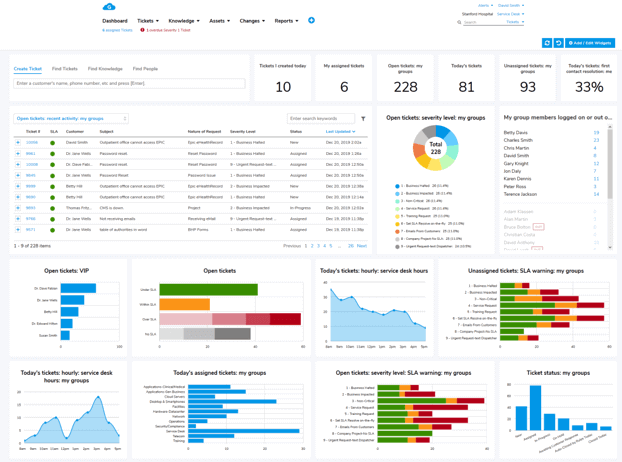
IT service organizations and teams are focused on providing the best possible service to their internal customers. Efficiency has always been integral to ITSM. Monitoring Key Performance Indicators (KPIs) and dashboards, and adherence to Service Level Agreements (SLAs) is essential to producing successful outcomes in ITSM.

[Read More]

Are IT Certifications Worth It? Plus Our Guide to the Top IT Certificates

IT Certifications

Deciding whether an IT certification is worth your time and money isn't straightforward. The value varies significantly by career stage, the role you're targeting, and which certificate you choose. What makes sense for someone breaking into IT for the first time is very different from what a mid-career professional needs to specialize, or what a senior leader should consider when adding credentials to an already strong track record.
[Read More]

Master Service Agreement (MSA) or Service Level Agreement (SLA): Which Do You Need in Business?

Master Service Agreement (MSA) vs Service Level Agreement (SLA)

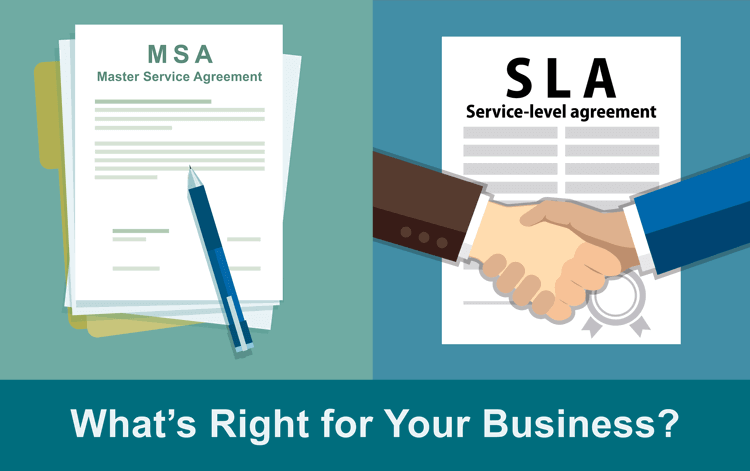
In the IT sector, internal and external relationships are often governed by legal or quasi-legal documents. In IT and ITSM, the terms "Master Service Agreement" and "Service Level Agreement" are often used interchangeably. 

However, there are differences between the two kinds of agreements that can impact how you want to use them in your organization. While both can be used for similar purposes — such as establishing clear expectations for internal IT service providers or external vendors — what separates them and how they're used are sufficiently different that it's worth taking the time to understand why this is important.

[Read More]

What Is a Service Level Agreement in Business? SLA Meaning and Definition

SLA Meaning and Definition

So, what is the meaning of an SLA, or what does SLA stand for, anyway?

The term Service Level Agreement (SLA) is basically self-defining: two parties (service provider and customer) officially agreeing on the level of service by which they both are willing to abide. However, defining and creating an effective SLA between an ITSM team and the rest of the organization, or between a third-party provider and a business isn't always that easy.

[Read More]

IT Asset Management Lifecycle: Tools, Processes and Best Practices

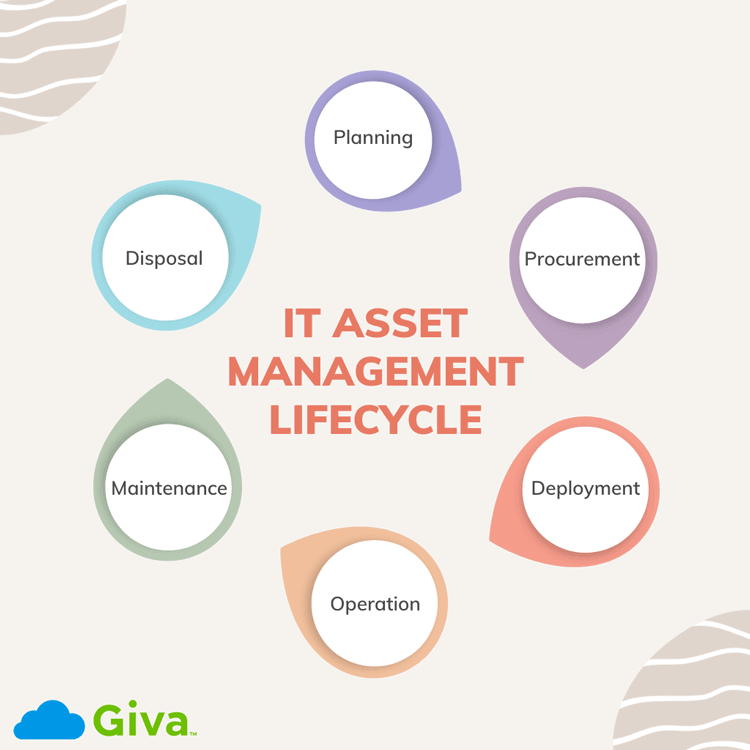
IT Asset Management Life Cycle

IT asset life cycle management is a mission-critical function for every business.

Whether those IT assets are cloud based from software vendors, hardware, or on-site systems, the planning, procurement, management, and maintenance of them is crucial to the operational success of an organization.

[Read More]

What Are the Most Important Key Performance Indicators (KPIs) & Metrics for IT Operations Managers?

ITIL Iterative Process

IT and IT Service Management (ITSM) is a data-intensive business and operational function. In most cases, everything that can be measured is measured in some way. 

Key Performance Indicators (KPIs) and other metrics play a mission-critical role in the management of an IT team. It's also the main way IT operations managers can show senior business leaders how their team is performing.

[Read More]

IT Business Continuity Plan (BCP): Step-by-Step Guide and Checklist for IT Teams

IT Business Continuity Plan (BCP)

Every IT organization faces disruptions, from natural disasters and power failures to ransomware attacks and unplanned outages. An IT Business Continuity Plan (IT BCP) is the structured strategy that keeps your technology operations running, or recovers them quickly, when those disruptions occur. Without one, organizations are left improvising under pressure, and downtime can cost far more than the immediate repair bill. It can also damage client trust and your organization's long-term reputation.

[Read More]

What Is an IT Operating Model, and Why Does “Everyone” Need One?

Operating Models

New and seasoned businesspeople know that a well-thought-out business model and strategy are two key ingredients needed to create a successful company. 

However, something discussed less frequently is an operating or operational model. This outlines important details about a company, including those regarding employees, processes, systems and technology.

[Read More]

What is ITIL Compliance vs. ITIL Alignment? How Are Organizations Achieving Either?

ITIL Compliance vs Alignment

In most organizations there is a generic form of the Information Technology Infrastructure Library (ITIL®), that provides a detailed outline and operating procedure for IT operations and activities.

[Read More]

How Does the Responsibility Matrix (RACI) Work in ITIL?

Responsibility Matrix (RACI)

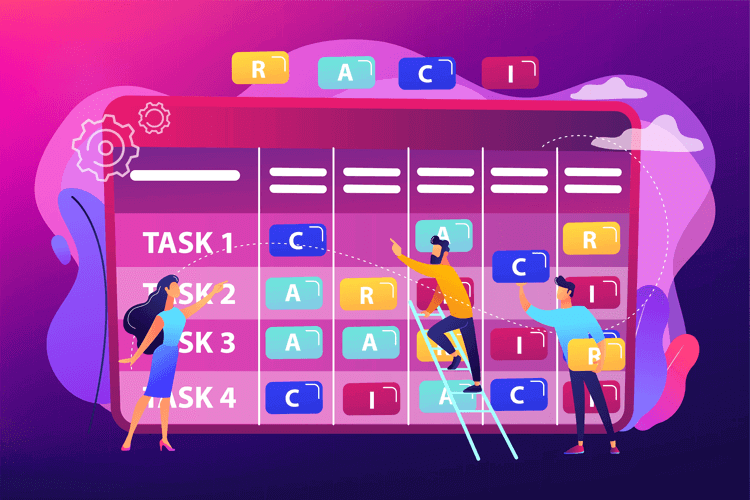
In ITIL and ITSM, it's mission-critical that everyone has a clear understanding of their roles, responsibilities, and how this aligns with business objectives and Key Performance Indicators (KPIs).

One way for IT leaders and CIOs to manage and monitor this is using a Responsibility Matrix, also known as a RACI Matrix. Other names for the same tool include a Linear Responsibility Chart (LRC) and a Responsibility Assignment Matrix (RAM).

[Read More]


Newer Entires     1   ...   22   23   24   25   26   27   28   ...   30     Older Entries