Contact Center Trends in 2026 Plus Planning Strategies for Success
 By Ron Avignone
Contact centers aren't there to simply handle as much volume as possible. At least not anymore. Today's call center impacts customer experience, data collection, and the level of trust customers place in a brand. Rising expectations are pushing these changes faster than most operating models can adapt. It's no surprise that legacy call center structures, such as phone and email-only support, can't keep up with modern demands.
As a result, contact center leaders must rethink how teams, technology, and data work together across the customer journey. Today, the real challenge is speed. Not just when it comes to picking up a phone, but how organizations can adapt to new trends without disrupting service.
As organizations move through 2026, understanding these shifts is the first step toward building a contact center that's prepared for what comes tomorrow.

Contact Center Trends: Defining What Comes Next
Contact center trends explain how modern customer support is evolving, including the use of new technology, data, and smarter workflows. The focus is shifting away from call volume and toward better customer experiences.
-
AI-Native Contact Centers Become the Standard
Many contact centers still treat AI as an add-on to existing workflows. Adding intelligence to legacy systems can create overlap and slow decisions instead of improving them.
AI-native contact centers take a different approach. Intelligence is built into routing, quality assurance, forecasting, and support workflows from the start. This enables real-time decisions and reduces reliance on rigid scripts.
For example, common AI-driven contact center capabilities now include:
- Intelligent routing based on intent and sentiment
- Real-time agent guidance, including relevant context and next-best actions, during live interactions
- Automated quality assurance and performance analysis
- Predictive forecasting for staffing and demand planning
-
Agentic AI Adoption
A more advanced form of AI is being implemented, called Agentic AI. Unlike conversational AI that helps agents or answers simple queries, Agentic AI refers to systems capable of completing tasks from start to finish. Some examples are:
- Resolving a billing dispute
- Updating account details
- Processing a return
And, they would operate within clearly defined approval and governance boundaries.
Gartner predicts that by 2029, agentic AI will autonomously resolve 80% of common customer service issues without human intervention, driving a 30% reduction in operational costs.
For contact center leaders, this is a fundamental shift from AI not only being a support tool but also being actively engaged in customer resolution workflows.
-
Cloud Migration and CCaaS Become the Default
Contact Center as a Service (CCaaS) are cloud-based platforms that deliver routing, Interactive Voice Response (IVR), analytics, workforce optimization, and integrations without on-premises infrastructure. This architecture has moved from an emerging option to the standard deployment model for large organizations.
Market projections show CCaaS revenue growing from $7.91 billion in 2025 to $9.4 billion in 2026, and to $18.83 billion in 2030.
This trend has direct strategic implications for classic call centers, with cloud platforms offering faster deployment of AI capabilities, easier integration with CRM and digital channels, and greater scalability during demand spikes.
-
Experience Orchestration Replaces Channel Management
It's widely understood that phone and email-only customer service is no longer enough. Multi-channel support has become an important part of the equation. Expanding access through text messaging apps, chatbots, and social platforms is key. While this shift helps address availability, it doesn't solve the full experience problem.
Each channel still operates with partial context. Customers often have to repeat themselves when they move from a call to chat for follow-up. The experience feels fragmented, even when more options are available.
This is where experience orchestration comes into play. Experience orchestration goes beyond omnichannel by connecting systems, data, and workflows so the customer journey feels continuous. Orchestration focuses on continuity, intent, and outcomes across the entire customer journey. Context follows the customer, not the channel.
In the end, customers judge experiences holistically, not per interaction.
-
Digital-First Engagement Overtakes Voice-First Models
Customer behavior continues to shift, and the way support interactions begin is changing with it. Starting a customer service interaction by phone is becoming less common. More customers prefer messaging as an entry point. Convenience, control, and the ability to multitask all play a role in this shift.
This doesn't signal the end of phone support. Instead, voice is being repositioned as a channel for escalation rather than entry. That change has operational implications. An agent can manage multiple ongoing live chats at once, while phone support limits agents to a single interaction. As a result, staffing models, training requirements, and performance expectations are being redefined.
Did you know? According to a survey of U.S. consumers, 72% said real-time text support improves customer service experiences, often outranking traditional phone support in preference.
-
The Human + AI Agent Workforce Takes Shape
There is real concern among many in the workforce that artificial intelligence will replace roles. That fear goes beyond frontline agents in contact centers to roles across industries. That said, when AI is applied effectively, it can actually have positive benefits to employees and customers alike.
In a human-plus-AI model, agents become decision-makers instead of script followers. Real-time guidance gives agents clearer direction during interactions and reduces mental strain. It empowers them to make their own calls based on verifiable data. Over time, this shifts the role toward stronger judgment, problem-solving, and customer understanding.
As a result, contact center workforce trends are shifting toward higher-skilled roles focused on judgment, empathy, and problem-solving. AI reduces repetitive tasks, allowing agents to focus on meaningful customer outcomes instead of rigid scripts.
This creates a workforce that is better supported and more capable. Customer interactions also become more relevant and personal. A real win-win.
-
Proactive and Predictive Support Becomes Expected
Customers don't want to spend time explaining problems they're already experiencing. As a call center agent, you might be thinking, "We're not mind readers." That's fair. But customers still expect some level of initial understanding before they reach out.
That understanding often comes from signals businesses already have, such as:
- Behavioral patterns
- Historical interaction data
- Operational signals
Customers tend to respond well to proactive communication. Let's say several customers report random device reboots within a short period. Sending a proactive email acknowledging the issue can go a long way. Letting customers know the issue is being investigated before they contact support helps reduce inbound volume.
Proactive actions based on past behavior and real-time signals help prevent repeat inquiries.
Take this in...research shows proactive service can boost customer confidence and engagement, with 66% of B2C customers contacting support after proactive outreach.
-
Trust, Security, and Compliance Move to the Forefront
More than ever, customers are paying attention to how their personal data is handled during support interactions. Asking customers to share credit card details verbally, for example, often creates hesitation. Secure voice or digital systems are typically preferred. As digital channels expand, more data is shared in more places. This makes customers more aware of how often, and where, their information is being exchanged.
From a business perspective, strong call center security has become part of the customer experience itself. Transparency around data handling matters. Explaining how information is used helps customers feel more at ease. Secure authentication and consistent policies across channels also build confidence during interactions.
-
Personalization Evolves Into Real-Time Adaptation, Including Sentiment Analysis
Scripts are outdated and frustrating. Customers see right through them. The same goes for customer service interactions that feel designed for a wide audience instead of the individual. Customers want to feel like they're being spoken to directly.
As expectations evolve, personalization is becoming more dynamic. Instead of relying on static scripts, conversations are beginning to adapt in real time as interactions happen. Context and intent direct how responses are delivered.
Moreover, there is a growing use of sentiment analysis, which is the application of Natural Language Processing (NLP) to evaluate a customer's tone, emotions, and attitudes during an interaction. Sentiment analysis tools can grade interactions as positive, neutral, or negative in real time, giving agents immediate insight into how a customer is feeling and whether their concerns are being addressed effectively.
As AI capabilities advance, sentiment analysis is becoming a standard feature in contact center platforms. These enable supervisors to flag at-risk interactions, adjust the workflow, and deliver more targeted training to agents.
-
Contact Centers Emerge as Revenue Drivers
Call centers have traditionally been measured by efficiency and volume rather than impact. How many calls can they take in a day? What is the average resolution time? That mindset is starting to shift. Service interactions increasingly influence whether customers stay or look elsewhere.
Contact centers now play a different role in the customer lifecycle. Often they have a greater influence in trust, purchase decisions, and long-term loyalty.
When issues are handled well, customers are more likely to remain loyal, expand their usage, or advocate for the brand later on. In this way, the contact center moves away from immediate sales. It focuses instead on protecting long-term value through repeat business and referrals.
-
Bonus Tech Trend: AI-to-AI Interactions Emerge as a New Dynamic
One of the more novel trends defining 2026 is the rise of AI-to-AI interactions in contact centers. Customers, and in some cases, bad actors, are increasingly using their own AI tools to navigate IVR systems, summarize issues before escalation, and automatically interact with automated support systems.
For contact center operators, this means reviewing how automated systems perform when the "customer' is indeed an AI agent, making sure fraud detection systems can identify AI-assisted manipulation, and designing IVR and chatbot flows that remain effective in situations where AI-assisted customer interactions very likely become normal.
How to Plan Your Contact Center for Modern Success
-
Design for Continuous Change
Traditional contact centers were designed to handle high volumes through a limited set of channels. They often relied on a single workflow regardless of context. That approach works until something unexpected happens. When systems are built for static scale, disruption follows. Scripts break down, or demand spikes beyond what workflows can handle.
Designing for continuous change requires a different mindset. Processes, policies, and systems should be built to absorb change rather than fail under it. This includes using call center quality assurance to measure performance and spot stress points early. The goal is to keep service stable as conditions and expectations change.
Customers only see the surface. Maintaining everything behind the scenes is up to you.
-
Invest in Intelligence Over Isolated Tools
Adding more tools does not make a contact center more capable. What matters is whether call center technology shares context and insight across workflows. For example, when customer history is available in one place, agents spend less time searching and more time resolving the issue at hand.
-
Redefine the Role of the Contact Center Agent
Contact center agents are moving beyond scripts and taking on more decision-making responsibility. As systems provide more context and guidance, agents spend less time navigating processes. They can focus more on resolving customer issues. Redefining the role means giving agents the ability to use judgment, not just work faster. This also benefits employee retention by allowing your agents to feel a better sense of importance and pride in their work.
-
Build Trust Into Every Interaction by Design
Customers like a predictably good experience. Trust grows when information is handled the same way across support requests. It's not that customers doubt the legitimacy of your business. They want to trust that your processes are secure, whether by phone, email, chat, or text.
-
Align Contact Center Strategy With Business Outcomes
Measuring success by volume and speed only tells part of the story. Modern contact centers influence outcomes that matter to the business. This includes customer retention, loyalty, and confidence. You should be able to measure how much an impact your contact center had (or didn't) on each of these areas.
Turning Contact Center Trends Into Competitive Advantage
Contact center change is ongoing, but the shift underway is structural, not temporary. Moving from a volume-driven operation to a more holistic role changes how contact centers support the business.
Trends alone do not create advantage. What matters is how organizations respond and how well they adapt to each customer situation. Execution, not adoption, is what separates strong contact center strategies from the rest.
When contact centers align with business goals, their impact extends beyond individual interactions. The focus moves away from speed and volume and toward retention, repeat business, and long-term customer trust.
Contact Center Trends FAQs
-
What is the biggest trend in contact centers today?
The shift toward AI-native, experience-driven contact centers that prioritize context, continuity, and proactive support over call volume.
-
Are contact centers moving away from phone support?
Phone support remains important, but it is increasingly used for escalation, while messaging and digital channels are the primary entry point.
-
How does AI change the role of contact center agents?
AI supports agents with real-time insights and automation, allowing them to focus on decision making, empathy, and problem resolution.
Explore More on the Future of Contact Centers with Giva
- 11 Key Contact Center Automation Trends: Future-Proofing Service Plus Challenges and How-To's - a deep dive into automation trends that shape modern contact centers.
- How to Use & Implement Predictive Analytics in Your Contact Center: Transforming Support Performance - use data and predictive models to anticipate needs and improve performance.
- Contact Center Analytics: What It Is & How to Use It Most Effectively - explains analytics' role in insight, optimization, and customer satisfaction.
- Contact Center Transformation Fully Examined: How to Build the Future of Customer Engagement - strategic guidance on evolving contact centers beyond legacy models.
- Omnichannel Contact Center: What It Is, Features and Best-Practice How-To's - an overview of unified multi-channel customer support.
Let Giva Be Your Partner for All Your Call Center Support Software Needs
Giva's customer service software is built for quick deployment and ease of use. That way, you can start seeing value right away:
- Use Giva's AI Copilot to help agents craft the best responses to customers
- Help users find the best responses to questions from your knowledge base using Giva's Knowledge AI Copilot
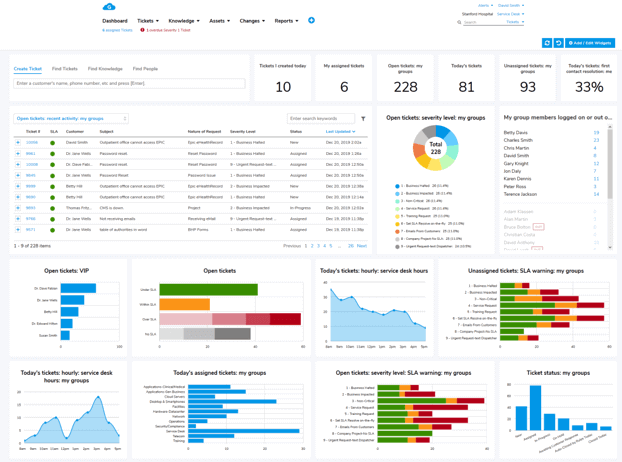
- Get visual insights with real-time dashboards
- Make fast business decisions with out-of-the-box reporting and analytics
Learn how Giva can benefit your support organization. Get a demo to see Giva's solutions in action, or start your own free, 30-day trial today!



Categories: Customer Service