Customer Satisfaction Score (CSAT): What It Is, How to Calculate It, and How to Improve It
 By Ron Avignone
Businesses often assume they understand their customers. That is, until data proves otherwise. Organizations rely on feedback to evaluate performance. Without consistent measurement, it becomes guesswork.
A Customer Satisfaction Score (CSAT) is one of the most widely used customer satisfaction metrics. Used effectively, CSAT helps improve service quality and customer loyalty. It also enables teams to make better decisions. In the sections that follow, we'll break down how CSAT is calculated, what qualifies as a good score, and how to improve it over time.
What Is a Customer Satisfaction Score? (CSAT)
A Customer Satisfaction Score (CSAT) measures how satisfied customers are with a product, service, or specific support interaction, and measures that satisfaction as a percentage. It is usually collected through customer feedback surveys. Most surveys include a single satisfaction question, such as "How satisfied were you with your experience?", sometimes followed by additional questions for more context.
Customers respond using a rating scale, often from 1 to 5 or 1 to 10. These responses are used in the CSAT score calculation, which focuses on the percentage of positive ratings.
CSAT focuses on a single interaction. It captures immediate customer sentiment, not long-term perceptions. This helps teams evaluate service performance and identify pain points.
How to Calculate Your Customer Satisfaction Score (CSAT)
CSAT is simple to calculate, but it provides meaningful insight into how customers feel about their experience. This is one reason the score calculation is widely used in customer-focused businesses.
It starts with a post-purchase survey. Customers are asked to rate their experience. Only positive responses count toward the final score, meaning CSAT is based on the percentage of satisfied customers, not an average.
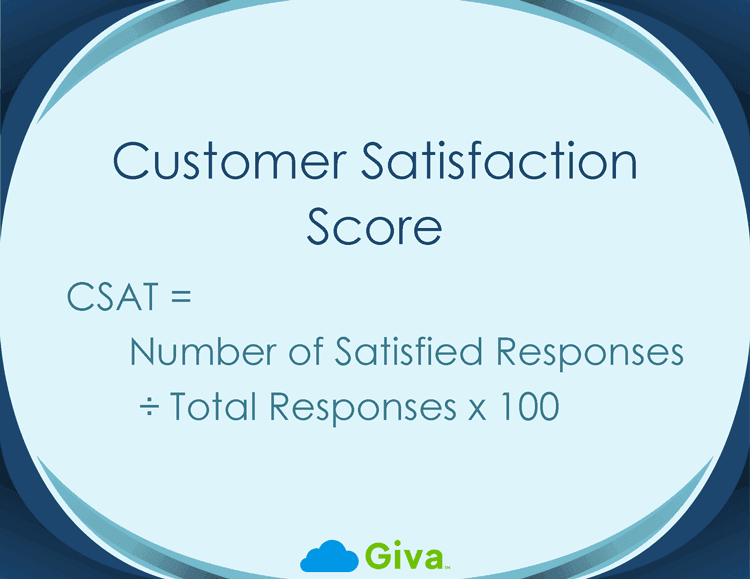
Once survey results are collected, the next step is to identify the number of satisfied responses. This usually includes the top two scores, such as 4 and 5 on a 5-point scale. The CSAT formula is:
Number of Satisfied Responses / Total Responses x 100
For example, if you receive 100 total responses and 80 are positive, the result is an 80% CSAT score.
What Is a Good Customer Satisfaction Score?
In most cases, a CSAT score above 75% is considered good, while scores above 85% are considered strong. However, there is no universal benchmark for what qualifies as a "good" score. Results can vary based on industry, customer expectations, and the type of interaction being measured.
If you are unsure where to start, use the following ranges as a general guide for evaluating customer satisfaction levels:
- Below 70% → needs improvement
- 70–80% → acceptable
- 80–90% → strong
- 90%+ → excellent
Industry benchmarks, such as those from the American Customer Satisfaction Index (ACSI), show that average satisfaction scores tend to fall in the mid-to-high 70s. For example, the ACSI reported a national score of 76.9 (out of 100) in late 2025, reinforcing that strong CSAT performance sits above this range.
Industry-level benchmarks vary meaningfully:
- Consulting and professional services tend to score the highest, averaging around 84%, in part because the work is relationship-driven and highly tailored
- E-commerce and retail businesses average approximately 82%
- Banking and financial services typically fall in the 75–85% range, where regulatory complexity and security requirements create inherent issues
One additional factor worth noting is geography. Customers in North America tend to rate experiences more positively than those in Europe, even when service quality is equivalent. If your customer base spans multiple regions, consider setting region-specific CSAT targets rather than a single global benchmark.
How to Interpret Customer Satisfaction Score (CSAT)
Customer satisfaction scores are only useful if you know how to interpret them. Looking at a single percentage without context can lead to incorrect conclusions:
- Start by analyzing trends over time rather than focusing on a single data point. A consistent decline in CSAT may indicate deeper issues, even if the score still appears acceptable.
- Next, review open-ended feedback alongside your score. Customer comments often explain why satisfaction levels changed and can highlight specific pain points.
- It is also important to compare CSAT across different touchpoints. For example, support interactions, onboarding, and product usage may produce very different results. Identifying these differences helps pinpoint where improvements are needed most.
- Finally, consider external factors. A sudden drop in CSAT may be tied to a product issue, service outage, or seasonal spike in demand rather than a long-term trend.
CSAT vs. NPS vs. CES: Which Metric Should You Use?
CSAT, NPS, and CES are three of the most commonly used customer satisfaction metrics. While they are often grouped together, each one measures a different part of the customer's experience:
- A Customer Satisfaction Score (CSAT) measures how satisfied a customer is with a specific interaction. It is typically used right after a support interaction or service event. This makes it useful for understanding short-term satisfaction and identifying immediate issues.
- The Net Promoter Score (NPS) measures customer loyalty. It is based on a single question: how likely a customer is to recommend your business to others. Unlike CSAT, NPS surveys are usually sent at set intervals to track long-term sentiment.
- The Customer Effort Score (CES) measures how easy it was for a customer to complete an action, such as resolving an issue. It focuses on effort rather than satisfaction, making it useful for identifying friction in the customer's journey.
- Use CSAT to understand how customers feel about specific interactions.
- Use NPS to measure long-term loyalty and identify potential brand advocates.
- Use CES to identify pain points and reduce effort in key processes.
-
Window #1: Post-Interaction (Most Important)
After a customer support call, live chat, or support ticket, sending a request for feedback immediately makes sense. The interaction is still fresh, which increases the likelihood of accurate and real-time feedback.
When to send: Within minutes of the interaction (not hours or days)
-
Window #2: Post-Lifecycle Moment
This applies to key milestones, such as a product rollout, new feature adoption, or onboarding process. Collecting feedback at this stage helps capture initial experiences within a reasonable timeframe.
When to send: 1–2 weeks after adoption or completion of the milestone
-
Window #3: Pre-Renewal / Retention
Reaching out before a subscription renewal or contract renewal helps identify issues that can lead to customer churn. It also gives customers a chance to share concerns before making a decision, which can improve your customer retention rate.
When to send: Timing varies by product or service, but around one month prior is a strong starting point
-
Keep It Short and Focused
CSAT surveys work best when they are brief. In most cases, a single satisfaction question is enough to measure how a customer feels about an interaction. Adding too many questions can lead to survey fatigue and lower completion rates.
-
Choose the Right Survey Scale
The most common approach is a 1–5 rating scale, but 1–10 numeric scales and star rating systems are also widely used. Many teams use a Likert scale to keep responses consistent. The exact scale matters less than using the same format across surveys. This makes results easier to compare over time.
-
Include Open-Ended Questions
A score alone does not explain why a customer felt a certain way. Including optional open-ended questions or text boxes allows customers to provide honest feedback.
-
Avoid Leading Questions
Questions should be neutral and easy to understand. Leading or biased wording can influence responses and introduce response bias. This makes results less reliable and harder to act on.
-
Use Templates to Standardize Surveys
Many teams rely on survey templates to ensure consistency across different types of interactions. Templates make it easier to scale feedback collection while maintaining a consistent structure.
- How satisfied were you with your support interaction?
- How would you rate the quality of the support you received?
- Was your issue resolved to your satisfaction?
- How satisfied are you with this feature?
- How would you rate your overall experience with the product?
- Does the product meet your expectations?
- How satisfied are you with the onboarding process?
- How easy was it to get started?
- Did you receive the support you needed during onboarding and beyond?
- What could we have done better?
- What did you find most helpful about your experience?
- Is there anything else you would like to share?
- Captures immediate feedback after interactions
- Typically delivers strong response rates
- Helps identify issues quickly
- Simple to implement across different touchpoints
- Supports a continuous feedback loop
- Reflects only a single point in time, not long-term sentiment
- Does not explain "why" without open-ended follow-up
- Can lead to survey fatigue if overused
- May not accurately predict customer churn
- Context can skew results (e.g., isolated negative experience)
- Prone to extreme response bias, where customers who had very good or very bad experiences are more likely to answer, skewing results
-
Response Time
Customers expect fast service. Delays in response times can quickly lead to frustration and lower satisfaction scores.
-
First Contact Resolution (FCR)
Resolving issues in a single interaction is one of the strongest predictors of high CSAT. Multiple handoffs or repeated follow-ups tend to reduce satisfaction.
-
Agent Communication
Clear, empathetic communication plays a major role in how customers perceive their experience. Even when issues take time to resolve, strong communication can maintain positive sentiment.
-
Expectation Setting
Misaligned expectations often lead to dissatisfaction. Being transparent about timelines, limitations, and next steps helps prevent negative feedback.
-
Product or Service Reliability
Even with excellent support, recurring product issues can lower CSAT scores. Addressing root causes is critical for long-term improvement.
- Start by breaking down results by support channel, such as email, phone, or live chat. This can reveal which channels perform best and where improvements are needed.
- Next, segment by customer type. For example, new customers may report different satisfaction levels compared to long-term users.
- You can also analyze CSAT by issue type, agent, or product area. This helps identify recurring problems and high-performing team members.
-
Improve Response Times
Customers expect quick service. Long wait times and repeated transfers can lead to frustration. Improving response times is one of the fastest ways to increase satisfaction.
-
Resolve Issues on First Contact
Customers want their issues resolved in a single interaction. Delays, follow-ups, and unresolved tickets often lead to lower satisfaction scores.
-
Train Customer Service Representatives
Consistency matters. Customer service representatives should be aligned on product knowledge, policies, and communication standards to avoid conflicting responses during separate calls.
-
Personalize the Customer Experience
Avoid generic responses. Address customers by name and tailor support to their specific situation. Small details can have a meaningful impact on the overall customer experience.
-
Act on Customer Feedback
Collecting feedback is only the first step. Acting on collected customer feedback and communicating improvements back to customers helps strengthen trust and keeps the feedback loop active.
-
Identify and Fix Recurring Issues
Patterns in support tickets can reveal deeper problems. Use customer insights to identify recurring issues and address them at the source.
-
Set Clear Expectations
Misalignment between service delivery and customers' expectations often leads to dissatisfaction. Be clear about response times, support channels, and what customers can expect.
-
Improve Onboarding and Support Resources
A strong onboarding process and accessible support resources, like a well-stocked knowledge base, reduce confusion and prevent issues before they are brought to a live agent.
-
Watch Trends Over Time
Don't focus on individual scores alone. Look for trends in CSAT data, repeat issues, and changes in customer sentiment over time.
-
Follow Up with Dissatisfied Customers
Following up with dissatisfied customers shows that you take negative feedback seriously. It also creates an opportunity to resolve issues and rebuild trust.
-
Over-Surveying Customers
Sending too many surveys can lead to survey fatigue. When customers feel overwhelmed, response rates drop and feedback quality declines. Focus on key moments rather than every interaction.
-
Asking at the Wrong Time
Timing matters. Sending a survey too late can result in inaccurate feedback, while sending it too early may not capture the full experience. Align surveys with meaningful touchpoints, such as immediately after a support interaction.
-
Focusing Only on the Score
CSAT percentages are useful, but they do not tell the full story. Without reviewing trends and customer comments, it is easy to miss the real reasons behind customer sentiment.
-
Not Closing the Feedback Loop
Collecting feedback without taking action reduces trust. Following up and making improvements shows customers their input matters and encourages continued participation.
-
Using Inconsistent Survey Scales
Switching between different rating scales makes it difficult to compare results over time. Consistency is key for tracking trends and measuring progress accurately.
- Start by reviewing recent feedback and identifying common themes. Look for patterns in negative responses rather than focusing on isolated incidents.
- Next, analyze operational data such as response times, resolution rates, and ticket volume. Changes in these areas often correlate with shifts in CSAT.
- It is also important to communicate with your team. Frontline agents can provide valuable context about customer concerns and operational challenges.
- Finally, take action quickly. Addressing issues early helps prevent long-term declines in customer satisfaction and reduces the risk of customer churn.
-
What is the difference between CSAT and NPS?
A Customer Satisfaction Score (CSAT) measures how satisfied customers are with a specific interaction. The Net Promoter Score (NPS) measures long-term loyalty and how likely customers are to recommend your business. CSAT focuses on short-term feedback, while NPS looks at overall customer sentiment.
-
What is considered a good CSAT score?
In most cases, a CSAT score above 75% is considered good, while scores above 85% are considered strong. However, results can vary depending on industry benchmarks and customers' expectations.
-
How often should you measure CSAT?
CSAT should be measured regularly. Especially after key interactions such as support requests or large-scale ticket events. Teams can also collect feedback at important points in the customer lifecycle, such as onboarding or before subscription renewal.
-
Can CSAT predict customer churn?
CSAT can help identify customers at risk, but it should not alone predict customer churn. Consistently low scores, combined with negative feedback, can signal potential issues that may lead to churn if not addressed.
-
How do you increase CSAT survey response rates?
To improve response rates, keep surveys short, send them at the right time, and avoid over-surveying customers. Making surveys easy to complete and acting on feedback also encourages continued participation.
- Start serving customers after just 1 hour of training
- Resolve issues quickly and effortlessly with AI Copilots, automation, and smart workflows
- Get immediate and actionable customer insights with highly visual dashboards, reports, charts, and graphs
- Track satisfaction with customizable surveys
So which metric should you use?
It depends on what you are trying to measure:
In most cases, the best approach is to use all three together.
For a deeper look, see our blog post on CSAT vs. NPS vs. CES.
When Is It Best to Collect CSAT Feedback?
Timing plays a direct role in how effective your CSAT surveys are. Send a request too early or too late, and you risk lower CSAT response rates or feedback that no longer reflects the actual experience. The goal is to collect feedback while the interaction is still relevant and top of mind.
There are three key windows where CSAT feedback is most effective:
CSAT for Help Desks and IT Support Teams
For help desks and IT support teams, CSAT is a core performance metric.
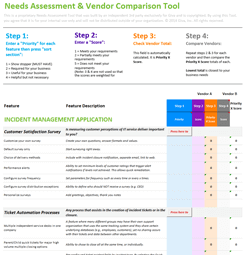
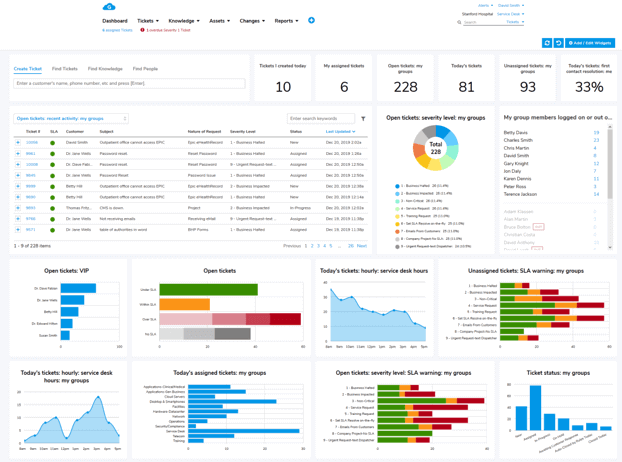
In most ticketing systems, CSAT is collected automatically after a ticket is resolved. Once a request is closed, the user receives a short survey asking them to rate their experience. For example, Giva's Help Desk Software includes user satisfaction surveys, allowing teams to collect CSAT feedback after support interactions and track results over time directly within the ticketing system.
Learn more: Giva's customer satisfaction surveys
CSAT is closely tied to First Contact Resolution (FCR). When issues are resolved in a single interaction, satisfaction tends to be higher. When users are passed between agents or need to follow up multiple times, scores often drop. This makes CSAT a useful way to identify gaps in both process and training.
Benchmarks can vary, but most help desks aim for strong CSAT score benchmarks above 80%. Top-performing teams can consistently reach 90% or higher.
Remember, tracking trends over time is just as important as the score itself.
How to Design an Effective CSAT Survey
A well-designed CSAT survey is simple, targeted, and easy to complete. Following a few core CSAT best practices can improve response rates and help you collect more useful feedback:
Example CSAT Survey Questions
Organizing questions by use case can make it easier to design effective surveys:
Support |
|
Product |
|
Onboarding |
|
Follow-Up (Open-Ended) |
|
Typical CSAT Response Rates
CSAT response rates can vary depending on how and when surveys are delivered. In most cases, response rates fall between 5% and 30%.
Higher response rates are typically seen when surveys are short, easy to complete, and sent immediately after an interaction. Lower response rates often result from survey fatigue or poor timing.
To improve participation, keep surveys brief, avoid over-surveying, and make it clear that feedback will be used to improve the customer experience.
Tracking response rates alongside CSAT scores helps ensure your data is reliable and representative.
Pros and Cons of Using Customer Satisfaction Score
CSAT is a useful metric, but it is not without limitations. Understanding both the advantages and drawbacks helps teams use it more effectively:
Advantages |
Limitations |
|
|
|
What Impacts Your CSAT Score?
Customer satisfaction scores are influenced by several key factors. Understanding these drivers makes it easier to improve performance:
How to Segment CSAT Data for Better Insights
Segmenting CSAT data allows teams to uncover insights that are not visible in overall scores:
10 Ways for How to Improve Your Customer Satisfaction Score
Improving CSAT requires consistent effort. It is driven by responsiveness, service quality, and a strong feedback loop. Improving lower scores starts with focusing on these areas:
Common CSAT Mistakes to Avoid
Even though CSAT is simple to implement, a few key mistakes can quickly reduce the value of your data. Focusing on the most impactful issues helps ensure your CSAT results reflect the true customer experience:
What to Do When Your CSAT Score Drops
A drop in customer satisfaction score can signal underlying issues that need immediate attention:
Frequently Asked Questions About Customer Satisfaction Score (CSAT)
Measuring Customer Satisfaction Effectively
A customer satisfaction score is a simple but powerful way to understand how customers feel about their experience. When used consistently, it helps teams identify issues and improve service quality. It also helps teams make better decisions based on real customer feedback.
Let Giva Help You Improve Your Customer Satisfaction Scores
Streamline your support processes with Giva's Customer Service Software. Giva comes with a simple, clean design:
Ready to see how the right software can transform your team's efforts? Start a free trial of Giva's customer service platform or get a demo to see Giva's solutions in action!



Categories: Help Desk, Customer Service