IT Demand Management: What It Is and How It Works
As the pace of innovation accelerates, companies must keep up with the latest trends to remain competitive. This, in turn, places a significant burden on the IT department to manage and maintain the technological infrastructure and to identify and implement new technologies. As a result, IT professionals are under mounting pressure to deliver high-quality services in a timely and cost-effective manner, all while ensuring the security and reliability of critical systems.
In this blog post, we'll explore the concept of Demand Management within IT, including the process, roles and responsibilities involved, and benefits for implementing Demand Management in your organization.

What Is Demand Management in IT?
IT Demand Management is the practice of forecasting, analyzing, and fulfilling requests for IT services, projects, and resources, making sure that IT capacity aligns with what the business actually needs. Rather than reacting to requests as they arrive, IT demand management gives technology teams a structured way to anticipate needs, prioritize incoming work, and allocate resources before shortfalls or backlogs occur. It is a foundational practice within IT Service Management (ITSM) and plays a central role in the ITIL® (Information Technology Infrastructure Library) framework.
How Does ITIL Fit into IT Demand Management?
In the ITIL framework, Demand Management is part of the Service Strategy lifecycle stage (ITIL v3) and is carried forward as a practice within ITIL 4's Service Value Chain. Its purpose is to understand, anticipate, and influence customer demand for IT services, making sure that service providers can meet that demand without over-investing in unused capacity.
Two key ITIL concepts apart of IT demand management in practice are:
- Patterns of Business Activity (PBAs): Recurring patterns in how business units consume IT services. For example, a finance department that spikes system load at month-end close creates a predictable PBA. IT teams map these patterns in advance to plan capacity, staffing, and maintenance windows around them rather than discovering the spike when a service desk queue unexpectedly triples.
- User Profiles (UPs): Structured profiles tied to specific user roles that capture the typical IT demand each role generates. A software developer and a customer service agent place fundamentally different demands on compute, storage, and helpdesk resources. User profiles translate those differences into concrete planning inputs.
By mapping PBAs and UPs, IT organizations move from reactive firefighting to a data-driven approach that matches IT supply to real, anticipated business demand. The result is fewer unplanned outages, more accurate budgets, and IT teams that can say yes to new business requests because capacity was planned, not assumed.
IT Demand Management vs. Capacity Management: What's the Difference?
Demand Management and Capacity Management are closely related ITSM disciplines that are often used interchangeably, but they operate at different points in the IT planning cycle:
- IT Demand Management focuses on the incoming side, by understanding, forecasting, and influencing what business units are asking IT to deliver. It answers the question, "What does the business need from IT, and when?"
- IT Capacity Management focuses on the supply side by ensuring that IT infrastructure lik servers, storage, network bandwidth, and personnel can meet the service levels the business requires. It answers the question, "Do we have enough resources to deliver what has been requested?"
The two practices work as a continuous loop. Demand management data feeds directly into capacity planning. If demand management reveals that a new application rollout will double support ticket volume in Q3, capacity management uses that input to plan staffing and infrastructure accordingly. Without demand management providing reliable forecasts, capacity management is reduced to reactive guesswork.
In ITIL v3, both practices sit within the Service Design lifecycle stage and are designed to work in tandem. ITIL 4 continues this relationship within the Service Value Chain, where demand signals flow continuously between the Engage, Plan, and Obtain/Build activities.
Benefits of IT Demand Management
IT Demand Management benefits organizations by helping them better manage services to meet the needs of the business and their customers. This can be whether you are a service provider or recipient:
- Better resource utilization: By forecasting and managing demand, IT organizations can improve resource utilization and reduce waste.
- Increased efficiency: By managing demand, IT organizations can reduce the need for reactive and unplanned work, allowing them to focus on proactive work. Think about running out of cloud storage space — IT departments should rarely find themselves in this situation!
- Improved financial management: Demand Management helps organizations understand the cost of IT services. This allows them to manage their budgets and investments more effectively. Whether providing or receiving, IT teams should know what their product is worth or how much needs to be ordered to be fiscally responsible yet functionally efficient.
- Improved service levels: Demand Management helps IT organizations better understand the demand for their services. This then allows them to ensure that service levels are appropriate and meet customer needs.
Good to know — Change Management vs. Demand Management: Change Management focuses on controlling and managing changes to IT services and infrastructure, while Demand Management focuses on forecasting and managing demand for IT services to meet business needs. Learn more: ITIL Change Enablement Framework
How Does IT Demand Management Work?
Putting an effective IT demand management process in place starts with these five steps:
- Forecast IT service demand: Analyze historical ticket volumes, project request data, and known business initiatives, such as planned system rollouts, headcount growth, seasonal peaks, to predict future demand for IT services and resources. For example, an IT team supporting a company planning to onboard 200 new hires in Q3 can use historical onboarding data to forecast the associated equipment provisioning, software licenses, and help desk volume well in advance.
- Map demand patterns (PBAs) and user demand profiles (UPs): Build a working picture of when IT resources are consumed and by whom, which business cycles drive spikes, and what different user roles actually require day to day. These two inputs together are what turns a rough headcount estimate into a forecast precise enough to plan against.
- Plan IT capacity and resource allocation: Using the demand forecast and pattern analysis, align IT resources, including infrastructure, software licenses, support staff, and project bandwidth, with anticipated demand. Work with capacity management to confirm that the necessary compute, storage, and personnel are available when and where they will be needed.
- Shape and prioritize demand: When demand for IT services exceeds available capacity, work with business stakeholders to score and prioritize requests based on strategic value, urgency, and resource availability. This may mean deferring lower-priority projects, directing non-critical requests to self-service channels, or establishing a formal intake and scoring process. The goal is to have the highest-value work receiving resources first.
- Monitor, review, and refine: Track actual demand against forecasts, measure where projections didn't occur in reality, and refine the forecasting models accordingly. Regular review cycles (typically monthly or quarterly) keep the demand picture accurate and surface emerging trends before they create capacity issues.
What to Look for in an IT Demand Management Tool
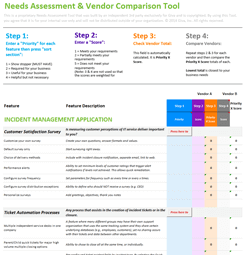
IT demand management works best when it is supported by a centralized platform rather than spreadsheets and email chains. When evaluating ITSM tools for demand management, look for these capabilities:
- Structured demand intake: A standardized request form that captures business justification, expected value, resource requirements, and priority level and not just a free-text description. Consistent intake data is what makes scoring and comparison across requests possible.
- Weighted scoring and prioritization: Configurable criteria (strategic alignment, cost, risk, urgency) with assigned weights so that requests can be compared objectively. This removes the "loudest voice wins" situation that hinders demand management in many organizations.
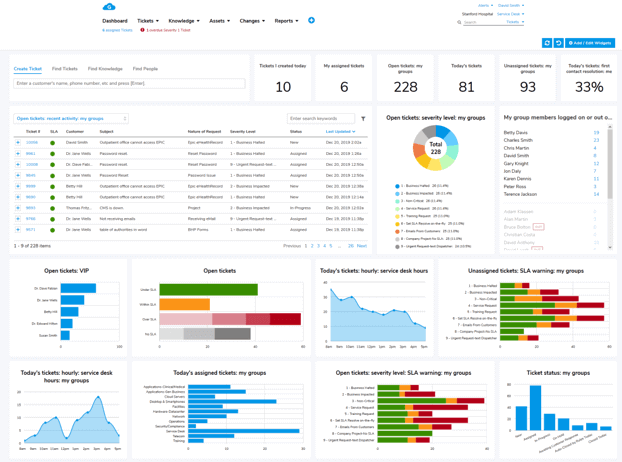
- Capacity visibility: A real-time view of team bandwidth and infrastructure load so that prioritization decisions are grounded in what is actually achievable and not optimistic estimates.
- Demand forecasting and reporting: Historical trend data and configurable reports that surface demand patterns over time. This is a critical input for the capacity planning cycle.
- ITSM integration: Native connection to incident, change, and service request management workflows so that demand data and operational data share a single system of record. Siloed tools produce siloed forecasts.
The Bottom Line: IT Demand Management is a Never-Ending Process
In today's fast-paced world, technology advances at an unprecedented rate while customer demands evolve in tandem. This dynamic creates a challenging and perpetual job for IT professionals. The task of keeping up with changing patterns and trends can become overwhelming for IT teams, particularly when they are already responsible for ensuring the security and reliability of critical systems.
However, implementing a Demand Management process, as described earlier, can help your organization stay competitive by leveraging the latest technologies and keeping your customers satisfied with a wide range of products.


Categories: IT