How to Improve Online Customer Service: 12 Strategies for an Exceptional Customer Experience
 By Ron Avignone
Customer service is a key ingredient in the recipe that creates overall customer satisfaction. In today's digital world, much of that customer service occurs online through contact centers.
Customer service online contact centers are online, digital platforms where customers can speak with service representatives. The contact centers are multi-channel, in some cases omnichannel, and are solely focused on answering customers' questions and solving their problems. The end goal? Provide assistance that sends the customer away satisfied and having learned or solved something.
In the article, we'll discuss online customer service. We'll present it from two angles, the customer side and service side, and then offer 12 strategies for improving it. To wrap up, we'll list top metrics to track in order to help you offer the best possible online customer support.

What Does High-Quality Online Customer Service Look Like?
High-quality online customer service combines technology such as AI tools, chatbots, and self-service portals with trained human agents to resolve customer issues quickly across contact channels. This keeps the experience as low effort as possible for the customer.
Online customer service is a nuanced, ongoing process, not a product you deliver once. And it's two-sided, looking different for customers compared to customer service staff.
For customer service teams, high-quality service is about doing. Online service teams target key customer service metrics, such as reducing time to resolution, improving first-contact success, lowering churn risk, and supporting overall revenue.
For customers, exceptional online customer service is about feeling perceived satisfaction. It's about whether the customer experience feels helpful and empathetic. And, most importantly, whether it solves a problem or answers a question.
There is a common thread, or threads, that weave together through the two-sidedness of effective online customer service. Regardless of whether you find yourself on the doing or feeling side of the equation, the highest-quality customer service always includes:
- Easy access: Customers can access support via convenient channels. The most modern online customer services are omnichannel.
- Responsiveness: Customer service staff are timely and forthcoming. And customers do not have to chase down answers to their questions.
- Empathy: Customer support actively listens to understand the customer's situation and uses empathy statements to relate and respond appropriately.
- Concise communication: Explanations and customer service scripts are simple, accurate, and free of jargon.
- Legit problem-solving: Customers' problems are not only acknowledged but actually solved. And questions are answered to the fullest extent.
Why is Excellent Online Customer Service Important?
High-quality customer service is fast, accurate, empathetic, and easy to access, and it must also solve the customer's problem in a way that feels respectful and trustworthy. Academic research links these components to higher customer satisfaction scores, lower employee churn (and greater engagement), and ingrained customer loyalty.
Research That Speaks to the Importance of Effective Customer Service Offerings
- Researchers from Purdue found that when a well-trained customer service agent delivers good service, the Net Promoter Score increases. In other words, customers are more likely to recommend the service to a friend.
- An academic study comparing public and private healthcare centers found that satisfaction and loyalty go hand in hand. This supports the idea that better support operations can influence retention, referrals, and repeat usage.
- A 2022 study of 366 customers found that service quality and customer experience significantly increased customer commitment. In addition, they found that service quality shapes the company's image and the customer's willingness to stay committed
- A recent Gallup study found that 69% of engaged employees strongly agreed they were much more likely to feel responsible for product and service quality. On the other hand, 31% of those who were not engaged or actively disengaged did not feel responsible for the service quality they delivered.
Online Customer Service Best Practices
Before getting into specific strategies, it's helpful to briefly understand the foundational best practices that high-performing teams consistently follow. These best practices act as guiding principles. The strategies below are how you put them into action:
- Prioritize fast response times across all channels
- Resolve issues on the first interaction whenever possible
- Maintain consistent communication across channels
- Personalize every interaction using customer data
- Combine human empathy with AI-driven efficiency
12 Strategies to Improve Your Team's Customer Service Quality
As with most things, there's no single solution that skyrockets your customer service department's success. Instead, offering effective online service and achieving higher customer service metrics is about blending multiple customer service improvement strategies into a single, overall experience. And doing that over and over again.
Let's look at 12 ideas to improve your service quality and build long-lasting customer relationships:
-
Expand the Service Channels You Offer
The best customer service teams are not one-dimensional. Instead, they are multi-channel. By going one step further and integrating the channels, you become omnichannel. Omnichannel online service includes email, text, chat, phone, in-app, and self-service options that are connected. That means customer history and context carry through regardless of the channel. This makes support faster, easier, and more consistent.
-
Operate With a Problem-Solving, Growth Mindset
A problem-solving, growth mindset enables customer service agents to learn and adapt rather than simply close tickets. In doing so, they will be more accurate and offer a better customer experience.
A growth mindset can also help customer service teams investigate patterns and share key takeaways. This analytical perspective can reduce customer churn and prevent ongoing and unnecessary frustration.
-
Empathize with Customers
Practicing empathy in the online customer service context means, first, understanding the customer's needs, feelings, perspective, and possible frustrations. Then, responding in a way that goes beyond simply addressing the issue, but that shows you genuinely care.
In practice, this means utilizing empathy statements as part of your active listening protocols. In doing so, you can improve satisfaction, loyalty, retention, and even churn. That's because customers tend to stay with companies that make them feel understood and respected, not the ones that just solve their problems.
-
Offer Continuing Education and Training
Continuing education for customer service personnel helps them stay up to date with product updates, channel changes, and evolving customer expectations. In turn, they'll be able to deliver faster, more accurate, and more consistent support.
You can accomplish this with quarterly refreshers on product changes, empathy, and de-escalation. This will enable your team to answer tickets more accurately and with less back-and-forth, translating to shorter resolution times and happier users.
-
Ask For and Analyze Customer Feedback
Your customers will tell you exactly what is working well and what's not. That's why customer feedback is the number one way to improve the quality of customer service– it's like having answers to the test.
You can accomplish this with short surveys and questions at different points throughout the customer journey. Negative reviews will help you learn and develop your processes. And positive feedback operates as social proof that you're on the right track.
-
Personalize Your Customer Service Interactions
Personalizing your interactions with customers based on who they are and their preferences can enhance customer loyalty and satisfaction, helping you retain them for longer.
Addressing customers by their names is an obvious one. You can also collect and save customer data. For example, personal details and preferences, purchase history, geographic location, past conversations, and purchasing behaviors. Doing so will enable you to provide tailored solutions.
Further, leading teams use behavioral and contextual data to anticipate customer needs to move their support from being reactive to predictive. For example:
- Recommending solutions based on past tickets
- Adjusting communication style based on customer preferences
- Proactively offering help based on browsing behavior
-
Practice Active Listening When Interacting With Customers
Active listening is the act of focusing on the speaker so as to understand their words, tone, and intent. Active listening goes beyond just listening to the speaker's basic message. You can do this by giving your undivided attention, avoiding interruptions, asking clarifying questions, and reflecting back what you heard.
In a customer service setting, active listening helps people feel heard, reduces miscommunication, and leads to better problem-solving. All of which can boost customer satisfaction.
-
Offer Proactive Communication
Proactive communication keeps your customer service team on the front foot while also ensuring your customers stay as informed as possible. For example, an automated and proactive live chat option that pings the customer when they visit your webpage.
In addition, automated alerts and status updates (normally via text or email, based on the customer's preferences) throughout the customer journey display accountability and reassure the customer that they are being taken care of.
-
Team Up Your Agents with AI Copilots
AI Copilots act like partners to human customer service team members. They can suggest replies, summarize cases, and show relevant details as agents deliver customer service.
And beyond in-queue support, AI-powered chatbots can handle routine inquiries instantly around the clock, giving customers 24/7 access to help even when your team is offline.
The next step then would be to equip your team with AI software. Agentic AI assistance doesn't just chat or make recommendations. They can complete real tasks, such as issuing refunds, changing orders, or updating records under your supervision.
-
Invest in the Right Tools
Online customer service is dynamic and complex. To keep up, service teams need to be equipped with cutting-edge hardware and software. Often, that means operating a Customer Relationship Management (CRM) system and/or Customer Service Software platform.
Equally important is keeping the customer-facing experience mobile-friendly. Customers who encounter broken navigation or non-responsive pages on mobile are more likely to abandon the interaction entirely without resolution.
-
Channel-Specific Planning
With the focus on omnichannel support, which creates consistency, each channel still requires its own unique approach:
- Live Chat: Focus on speed and clarity. Use short, direct responses and real-time updates.
- Email Support: Provide detailed, structured answers with clear next steps.
- Social Media: Respond quickly and publicly when appropriate, then move sensitive issues to private channels.
- Self-Service Portals: Build a detailed FAQ page alongside a searchable knowledge base. Make sure content is up to date, easy to navigate, and written in plain language.
-
Common Mistakes to Avoid
While the above strategies focus on positive actions you can take to improve your online customer service, there are several things you should not do:
- Slow response times: Delays create frustration and increase churn risk
- Over-reliance on scripts: Makes interactions feel robotic and impersonal
- Lack of follow-up: Customers feel forgotten after the initial interaction
- Poor handoffs between channels: Forces customers to repeat themselves
- Ignoring customer feedback: Misses opportunities for improvement
Avoiding these is just as important as implementing new strategies.
Key Online Customer Service Metrics to Track
Improving online customer service also requires measuring what matters as Key Performance Indicators (KPIs). The most effective teams track a combination of efficiency, quality, and experience metrics:
- First Contact Resolution (FCR): Percentage of issues resolved in the first interaction (target: 70–80%+)
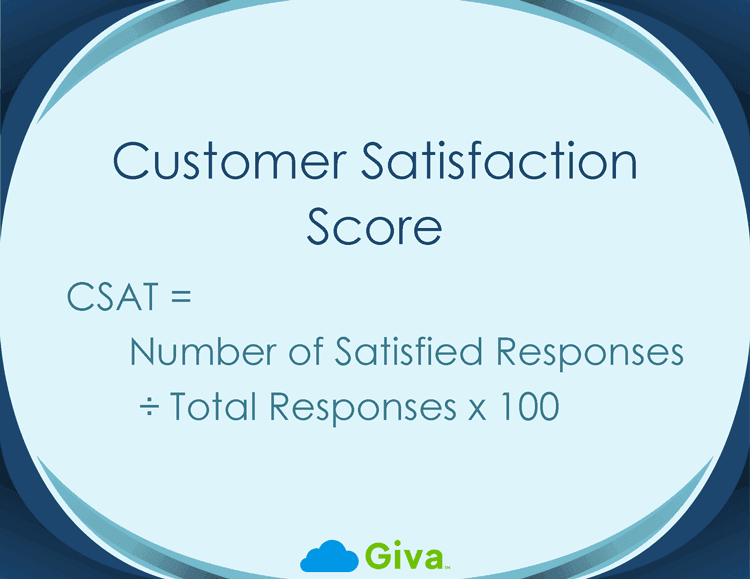
- Customer Satisfaction Score (CSAT): Measures how satisfied customers are after an interaction (target: 85%+)
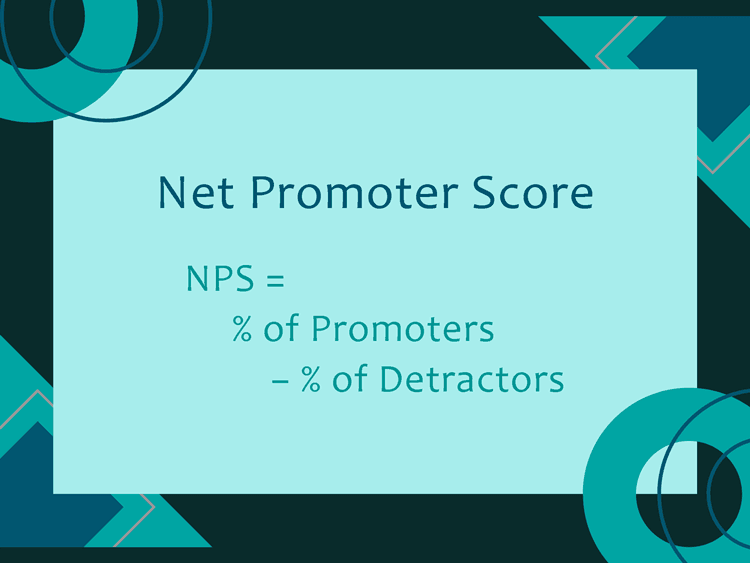
- Net Promoter Score (NPS): Indicates customer loyalty and likelihood to recommend
- Customer Effort Score (CES): Measures how easy it is for customers to get help (target: 2 or below on a 5-point scale)
- Average Response Time: How quickly agents respond to inquiries
- Resolution Time: Total time taken to fully resolve an issue
Tracking these metrics helps teams identify bottlenecks, improve workflows, and deliver consistently better customer experiences.
Your Team and Their Tools Create The Overall Online Customer Experience
Effective online service is all about getting the right people and equipping them with the correct tools. When you combine those two components, the service-side of customer service, the doing side, is improved. Subsequently, the customers on the other side of the relationship feel that their voices are heard and their needs are met.
As a result, customer service metrics, most importantly, satisfaction, reach new heights. And employee engagement and retention are established for the long haul.
There's no better time to be in the customer service industry than right now. Call center schedules are hybridized, offering better work-life balance. Online contact centers are integrated like never before, delivering a seamless customer experience across channels. And customer service teams are equipped with cutting-edge tools, such as AI, that boost their productivity.
Giva Can Help Achieve Higher Customer Satisfaction
Giva is right there, on the cutting edge of customer service. Especially for the high-security, highly regulated healthcare, banking, legal, and government industries. Giva's customer service software is HIPAA-compliant and AI-powered. Even better – it harnesses many of the strategies we discussed above.
- AI Copilots and one-click responses free agents to spend more time addressing complex inquiries, reducing routine tasks by 56%.
- Intuitive software design enables agents to learn our software in hours, not days, cutting training time by up to 70% and reducing burnout. An extensive library of training videos and how-to guides keeps employees engaged and up to date on best practices.
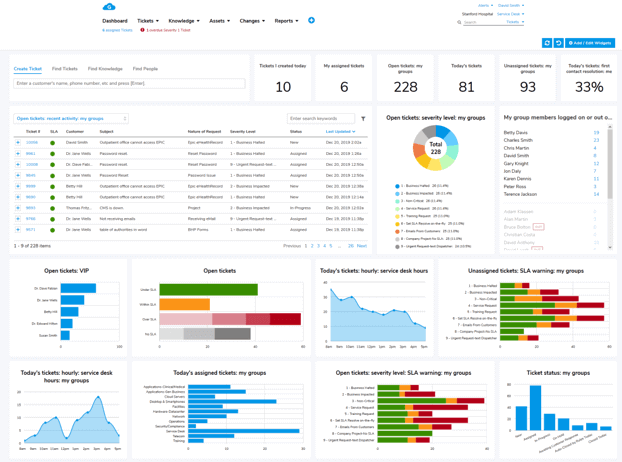
- Visual Insights with real-time dashboards facilitates higher first-contact resolutions and shorter response times, boosting customer satisfaction by 48%.
- Real-time reports empower supervisors to dynamically reassign tasks, adjust staffing, and optimize workflows, increasing agent productivity by up to 40%.
But don't just take it from us. Check out our customer testimonials and case studies.
Let Giva be your partner in providing the best customer service! Get a demo to see Giva's solutions in action or start your own free, 30-day trial today!

Categories: Customer Service