Call Center Compliance: Risks, Key Laws and Regulations, and Best Practices
Customers expect more than fast, helpful service. They also expect businesses to protect their personal information. Call center compliance is harder today than it was before. New rules, higher expectations, and closer oversight have raised the bar.
For businesses, compliance is no longer about avoiding fines. It helps protect brand trust, deliver consistent service, and keep operations running smoothly.
These higher standards come from real changes in how contact centers work. Many teams now use remote or hybrid agents. AI tools are also common. These tools can improve efficiency, but they can also create new risks. Customers now expect clearer rules, stronger security, and better control over their data.

What Call Center Compliance Really Means in Modern Contact Centers
Call center compliance is the practice of adhering to laws, regulations, and internal policies that govern how businesses communicate with customers, handle data, and manage consent across every interaction. It applies equally to inbound and outbound calls, digital channels, and text message campaigns. Compliance affects how calls are made, how data is handled, and how agents interact with customers, and requirements can vary by location and business type.
Compliance is not only a legal requirement. It also matters to customers. They expect businesses to protect sensitive information. This includes names, home addresses, and credit card details. Excessive follow-up emails or unwanted cold calls can feel intrusive and unethical. For businesses, compliance helps create clear and repeatable processes. These processes are easier for customers to follow and teams to manage. It becomes part of daily operations, not an audit task.
To understand what ethical compliance looks like in practice, consider a few basic questions:
- Do you get proper consent before calling or recording a customer?
- How do you verify customer identity, and is that information stored securely?
- Who can access sensitive customer data, and is that access necessary?
- When required, do agents follow call center scripts or disclosures to reduce risk?
Compliance has expanded as contact centers have changed. Three major factors drive this shift:
- Remote and hybrid agents: Businesses need clear oversight to ensure teams follow consistent standards, no matter where they are based.
- Cloud-based contact center platforms: Organizations must understand how automated workflows and decisions function in the cloud.
- AI-powered tools: Quality assurance, call monitoring, and analytics require clear accountability for AI-assisted interactions.
Modern contact centers should not wait for a complaint or a fine. Compliance works best when it is built directly into everyday workflows.
What Call Center Compliance Covers
Call center compliance applies across the entire customer interaction, which includes the technology, processes, and people. Some examples are:
- How and when calls are placed
- Whether consent is properly obtained and documented
- How customer identity is verified
- How call recordings and transcripts are stored
- Who can access sensitive customer or payment data
- How opt-out and preference requests are handled
Why Call Center Compliance Is No Longer Optional
In the past, many businesses treated compliance as a background task. Today, it directly affects how contact centers operate and grow. A single mistake can impact hundreds or even thousands of customer interactions. Not to mention your bottom line.
Compliance has evolved alongside changing regulations. Requirements now vary by region, industry, and communication channel (ex. phone vs. email). This makes it hard for contact centers to rely on outdated policies. Regulatory agencies such as the Federal Trade Commission and the Consumer Financial Protection Bureau actively enforce consumer protection and telemarketing rules that affect contact centers.
The cost of getting compliance wrong is higher than many organizations expect. Compliance costs can include regulatory fines, legal fees, and time spent investigating issues. In some cases, violations become public and cause long-term brand damage. This type of damage is often harder to recover from than financial penalties.
Key Benefits of Getting Call Center Compliance Right
When compliance is built into daily operations, the benefits extend beyond avoiding fines:
- Prevents fines and legal exposure: Avoids significant regulatory penalties from bodies like the FTC, FCC, and state attorneys general
- Protects reputation: Reduces the risk of public violations, customer turnover, and brand damage that often outlasts any financial penalty
- Improves operational efficiency: Clear, consistent compliance processes reduce errors, support audit readiness, and make onboarding faster
The Real Risks of Ignoring Call Center Compliance
Compliance issues don't just disappear. When compliance breaks down, the impact can be immediate and far-reaching. These risks affect finances, day-to-day operations, customer trust, and long-term growth.
-
Financial and Legal Exposure
One of the most serious risks of non-compliance is financial and legal exposure. Fines and legal action often scale based on the number of calls or consumers affected.
The financial stakes are significant: DNC violations can carry penalties up to $43,792 per call, while TCPA violations can reach $1,500 per call for willful violations. GDPR, HIPAA, and PCI-DSS infractions can result in fines reaching into the millions.
Example: In January 2024, the Federal Trade Commission (FTC) reached a settlement with Response Tree, LLC, a lead generation company. The company was accused of collecting consumer data without proper consent. They then sold this data for illegal telemarketing. As part of the settlement, Response Tree was banned from making or assisting telemarketing calls. This case shows how compliance failures can lead to more than fines. It can shut down core business activities.
-
Operational Disruption
Compliance issues also disrupt day-to-day call center operations. Investigations can force businesses to pause campaigns, change scripts, or limit outbound activity.
Example: In early 2024, the FTC took action against XCast Labs, Inc. The company was accused of allowing hundreds of millions of illegal robocalls through its network. This shows that compliance failures can lead to restrictions and ongoing supervision.
-
Damage to Customer Trust
Customers notice quickly when compliance breaks down. There is little tolerance for unwanted outreach or mishandled data. A single unauthorized call or one lapse in data handling can lead to turnover, negative reviews, and lost sales. When these issues become public, they often result in long-term brand damage. Many times, this is far harder to repair than the original mistake.
-
Data and Security Risks
Weak compliance controls also increase the risk of data theft. Customer records, payment details, and call recordings can be easily exposed by the "bad guys". Even when a potential infraction is caught early, organizations may still face audits and reporting duties.
-
Agent-Level Risk
Agents are on the front lines of compliance. Gaps often surface through daily interactions, even when mistakes are unintentional. Without clear rules and ongoing training, agents may unknowingly violate policies. This puts both themselves and the business at risk. Consistent compliance training helps reduce errors while giving agents more confidence.
Key Call Center Compliance Laws and Regulations You Must Follow
Call centers operate under a wide range of laws and regulations. These rules govern how calls are placed, how data is handled, and how customer consent is managed. Requirements vary by region, industry, and call type. This section will primarily focus on regulations that apply to call centers operating in the United States.
-
Telemarketing Sales Rule (TSR)
The Telemarketing Sales Rule sets standards for telemarketing activities in the United States. Its primary goal is to protect consumers from unwanted telemarketing calls. This includes those that contain deceptive and abusive telemarketing practices.
The TSR establishes requirements around calling hours, required disclosures, consent, and opt-out mechanisms. It also restricts certain sales tactics and mandates clear identification of the caller and purpose of the call. Call centers that use outbound sales or lead generation must follow TSR requirements.
-
TCPA (Telephone Consumer Protection Act)
TCPA requirements govern how businesses contact consumers by phone and text message. The law places strict limits on calls to cell phones, particularly those using pre-recorded messages, auto-dialers, or AI-generated voices. In February 2024, the FCC clarified that AI-generated voice calls made without prior express written consent are illegal under TCPA, extending the law's consent requirements to AI-powered outreach tools.
Under the TCPA, businesses must obtain prior express consent before making some types of calls. Violations can result in lawsuits and penalties. These penalties often increase with the number of calls made. Because of this, TCPA compliance is a major risk area for outbound contact centers and automated calling campaigns.
Note that TCPA compliance extends beyond voice calls to text message (SMS) also. The FCC treats text messages as equivalent to phone calls under TCPA, meaning all consent requirements, opt-out procedures, and restrictions on auto-dialed messages apply equally to outbound texting. Contact centers running SMS outreach programs must apply the same prior express written consent standards and honor STOP requests immediately.
-
National and State-Level Do Not Call Registries
The Do Not Call Registry allows consumers to opt out of receiving telemarketing calls. Businesses must "scrub" call lists against the federal DNC Registry and any applicable state DNC lists before placing calls. Several U.S. states including Indiana and Wyoming maintain their own separate Do Not Call registries with independent compliance requirements. Contact centers operating across state lines must account for both federal and state-level lists.
DNC scrubbing is the process of cross-referencing outbound calling lists against a Do Not Call Registry and removing any registered numbers before each campaign and honor all opt-out requests. Lists must be updated at least every 31 days, and DNC access requires a paid subscription to the national registry.
Calling numbers listed on the registry without permission can result in enforcement action.
-
GDPR (EU-Specific)
The General Data Protection Regulation legal framework applies to businesses that handle data from people in the European Union. GDPR compliance requires clear consent and transparency on how data is used.
While GDPR is EU-specific, U.S. call centers that interact with EU residents or process EU customer data may still be subject to its requirements.
-
PCI DSS (Payment-Related Calls)
Payment security is one of the most sensitive areas of call center compliance. PCI DSS governs how businesses handle payment information during transactions. PCI DSS compliance focuses on protecting cardholder data during processing, transmission, and storage.
Call centers that accept payments by phone must use security controls to protect credit card details. Failures in this area can lead to fraud and long-term trust issues.
-
HIPAA (Healthcare Contact Centers)
The Health Insurance Portability and Accountability Act (HIPAA) applies to healthcare providers and their partners. This includes contact centers that handle patient communications. HIPAA compliance regulates access to Protected Health Information (PHI), including patient records, diagnoses, treatment details, and any other individually identifiable health data, in healthcare communications.
Call centers that support healthcare organizations must limit access to sensitive health information. They must handle recordings and transcripts securely and keep proper documentation. Violations can trigger audits, fines, and mandatory reporting obligations.
Read more: Giva's Ultimate 10-Step IT HIPAA Compliance Checklist (Free PDF)
Read more: 5 Top HIPAA-Compliant Help Desk Software Solutions
-
FDCPA (Debt Collection Call Centers)
The Fair Debt Collection Practices Act (FDCPA) governs call centers that conduct debt collection on behalf of creditors. It prohibits harassment, threats, false statements, and deceptive practices when attempting to collect debts. Specifically, the FDCPA restricts calling hours, limits the number of contact attempts, requires agents to identify themselves and their purpose, and mandates written validation of debts upon request.
Call centers operating in collections must train agents on FDCPA requirements separately from general compliance protocols, as violations can result in statutory damages of up to $1,000 per violation plus attorney fees and class-action exposure.
Inbound vs. Outbound Call Center Compliance
It should be noted that compliance requirements can often be applied differently based on whether the call is inbound vs. outbound:
- Inbound calls are usually less restricted, but still must comply with data privacy, call recording consent, and industry-specific regulations such as HIPAA or PCI DSS.
- Outbound calls typically face stricter rules around consent, disclosures, calling hours, and opt-outs. Laws like TCPA, TSR, and Do Not Call apply most heavily here.
State and International Compliance Variability
Moreover, call center compliance requirements vary significantly not only by state but by country as well:
-
In the United States, federal regulations like the TCPA and TSR establish a national baseline, but individual states may impose stricter rules.
For example, California's two-party recording consent law requires all parties on a call to be notified that the conversation is being recorded.
The California Consumer Privacy Act (CCPA) also imposes additional data rights and disclosure obligations for California residents that go beyond federal law.
- For contact centers serving customers across state lines, the safest approach is to follow the strictest applicable standard for each interaction.
- Internationally, call centers handling EU resident data must comply with GDPR regardless of where the business is based, and the UK has its own equivalent framework post-Brexit. A call center that is fully compliant in the United States may still be non-compliant under UK or EU rules -- making jurisdictional awareness a mandatory part of any compliance program.
How AI and Automation Are Changing Call Center Compliance
Artificial intelligence is changing the world of work and this is also true for today's contact centers. It can be argued that not embracing AI may even lead to competitive disadvantages.
AI in contact centers can assist or fully control how calls are monitored, routed, recorded and reviewed afterwards. The main benefit is that automation allows contact centers to handle more interactions at a faster pace.
The risk? Small compliance errors can now affect many customers at once.
However, it's not all negative. When used for call monitoring and quality assurance, AI tools can change how teams identify potential issues or business trends. In fact, this technology can automate both processes when implemented correctly.
While it can surface risks and trends, it does not replace accountability. Therefore, human oversight is still important and necessary.
Best Practices for Building a Sustainable Call Center Compliance Program
Compliance works best when it is built into daily operations, not treated as a one-time project. A sustainable compliance program relies on clear processes. These processes must be consistent and visible.
- Assign clear ownership. Every compliance program needs a defined owner. This may be a compliance officer or another designated leader. That person handles enforcement and oversight.
- Document policies and keep them current. Written compliance policies should reflect current laws, internal standards, and operational realities. Review these documents regularly as regulations and processes change.
- Train agents early and often. Initial onboarding is not enough. Ongoing compliance training helps agents stay informed. It also helps them keep up with changing workflows and regulations.
- Track interactions consistently. Regular call monitoring and review can help identify issues before they become violations. Consistent oversight also reinforces expected behavior and policy adherence across teams.
- Audit processes, not only outcomes. Internal audits should happen quarterly or more frequently. They should focus on how work is done, not only on incidents or complaints. Reviewing workflows, scripts, and access controls helps uncover hidden risks.
- Implement litigator mitigation. Some individuals and law firms are known serial TCPA litigants who file or fund lawsuits against businesses that call them. Outbound contact centers can reduce potential legal issues by cross-referencing call lists against databases of known litigators before each campaign. Specialized compliance services offer litigator identification alongside standard DNC scrubbing, allowing teams to remove high-risk numbers from outbound lists before they become legal liability.
-
Use software to centralize and automate compliance efforts. Compliance becomes harder to manage as call volume and complexity increase. Call center software can help centralize documentation, automate monitoring, and maintain audit trails.
Also, look for platforms that support role-based access controls, strong authentication, and encryption of data at rest and in transit. These are key data security protocols that regulators look for during audits.
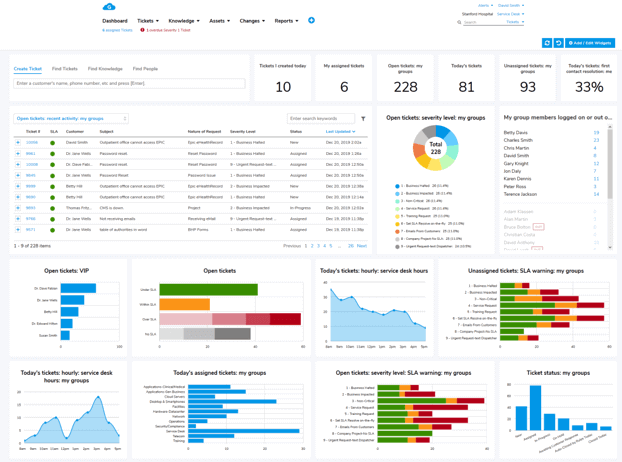
For example, Giva's Customer Service Software allows teams to document requests, track actions over time, and control access based on role. This creates a clear record of how issues are handled. It's a great way to support process reviews and audit readiness.
Basic Call Center Compliance Checklist
While requirements vary by industry and region, most compliant call centers implement these processes, although regulated industries often require additional measures:
- Clear consent for calls and recordings
- Accurate caller identification and disclosures
- Secure storage of call recordings and transcripts
- Role-based access to customer data
- Strong authentication controls and encryption for customer data at rest and in transit
- Regular agent compliance training
- Ongoing call monitoring and QA reviews
- Documented opt-out and preference management
- Internal audits of scripts, workflows, and access controls
Frequently Asked Questions About Call Center Compliance
-
What is call center compliance?
Call center compliance means following laws and internal rules. These rules guide how customer interactions are handled. This includes how calls are made, how data is stored, and how consent is managed.
-
Who is responsible for compliance in a call center?
Responsibility typically falls to a compliance officer or a designated leader. That role oversees policy enforcement, training, audits, and ongoing oversight across teams. However, senior leadership is ultimately accountable for ensuring compliance programs are in place and enforced.
-
Does call center compliance apply to remote agents?
Yes. Compliance requirements apply regardless of where agents work. Remote agents must follow the same policies as on-site teams related to the jurisdiction where services are offered.
-
How often should compliance training take place?
Compliance training should be ongoing. Initial onboarding is important. Regular refreshers help agents keep up with changes to regulations, scripts, and workflows. Aim for quarterly updates, though more frequent can be good too if possible.
-
Are outbound calls more heavily regulated than inbound calls?
In many cases, yes. Outbound calls are often subject to stricter consent, disclosure, and opt-out requirements, especially for sales and marketing activity.
-
What is required for call recording and monitoring compliance?
Call centers must notify customers of recording, secure the recordings and transcripts, restrict access to them by authorized users only, and follow defined retention and deletion policies.
-
Can AI tools be used in a compliant call center?
Yes, but businesses remain responsible for compliance. AI can support monitoring and quality assurance, but it does not replace human oversight or accountability.
-
What happens if a call center fails to follow regulations?
Non-compliance can lead to fines, legal action, audits, and reputational damage. In some cases, violations may also result in operational restrictions or increased oversight.
Final Thoughts: Creating a Culture of Call Center Compliance
Call center compliance is no longer a box to check or a task reserved for audits. It's an ongoing commitment that affects how teams operate, how customers are treated, and how businesses grow. Regulations change over time. AI and automation, while helpful, leave less room for error.
The most effective contact centers treat compliance as part of their culture. Clear ownership and consistent training help teams stay aligned. Regular monitoring and well-documented processes support confidence in daily work. When compliance is built into daily operations, it supports better customer experiences. It reduces risk and creates a stronger foundation for long-term success.
Giva Software Can Help Keep Your Call Center Support Compliant
If you're ready to take the next step, Giva's customer service solutions are automatically HIPAA compliant, with robust security measures, and built for quick deployment and ease of use. That way, you can start seeing value right away:
- Use Giva's AI Copilot to help agents craft the best responses to customers
- Help users find the best responses to questions from your knowledge base using Giva's Knowledge AI Copilot
- Get visual insights with real-time dashboards
- Make fast business decisions with out-of-the-box reporting and analytics
Learn how Giva can benefit your support organization. Get a demo to see Giva's solutions in action, or start your own free, 30-day trial today!
Categories: Security, Customer Service