Call Center Scheduling: Key Components and How to Optimize
Managing a call center is a difficult task. One of the most difficult components is scheduling the optimal number of employees at different times during the business day. You have to consider your employees' preferences and schedules, as well as your customers' expectations.
Everything hinges on the schedule. That's why we believe the foundation of a call center's overall performance is call center scheduling. If you get it right, your call center operates flawlessly. If you get it wrong, both your employees and customers suffer.
In this article, we'll discuss call center scheduling. We'll dive into why it's important and the advantages you get when you do it right. We'll also lay out the components of call center scheduling management and share best practices and tools you can deploy to create a perfect schedule.

What is Call Center Scheduling and Why Does It Matter?
Call center scheduling is a workforce management process that combines forecasting call volumes, determining staff requirements, and assigning work shifts that put the right agents with the right skills in the right seats to meet customer service levels across all channels.
The main purpose is to match agent skills and availability to the ever-changing, sometimes unpredictable demands of customers, while keeping agent workloads balanced so they stay productive and engaged, and not overwhelmed and not idle.
When you find the correct formula, you can keep customer wait times low and satisfaction high. However, if you cannot manage the numerous variables of the formula, you quickly run into problems.
How Call Center Scheduling Works
Generally, here are the steps involved:
- Forecast demand using historical call volume, seasonality, and business events
- Calculate staffing requirements based on service level targets and average handle time
- Create shifts that align coverage with predicted peaks and lulls
- Assign agents based on skills, availability, and performance history
- Monitor performance in real time and make intraday adjustments
- Review results and refine future schedules using KPI data
These steps repeat continuously, allowing call centers to adapt to changing customer behavior and operational needs.
Benefits of Good Call Center Scheduling
There are three major benefits of well-designed call center schedules:
-
Smooth employee workflows
Well-designed call center schedules facilitate smooth and efficient employee workflows. As a result, you accomplish your call center KPIs, such as First Call Resolution Rate (FCR), Average Handle Time (AHT), Average Speed of Answer (ASA), and Abandonment Rate.
-
Cost-Effective Operations
Effective call center management practices that maintain optimal staffing levels are cost-effective. With the ideal number of agents helping customers at certain times, you can offer excellent customer service without spending too much.
-
More Customer Satisfaction
When scheduling is done correctly, call centers can drastically reduce their customers' wait time. And reducing wait time is one of the most effective strategies for boosting Customer Satisfaction (CSAT) scores.
Disadvantages of Bad Call Center Scheduling
-
Damaged Morale and Job Satisfaction
Poorly crafted call center schedules can damage employee morale and overall job satisfaction. This occurs because employees can become too busy and bombarded with calls and unhappy customers during peak times. And on the flip side of the coin, they can become overly bored and sit idly when there isn't enough work during the lulls.
-
Overstaffing
When you overstaff your schedule, you're quite literally paying employees for idle time. Considering that labor is one of the largest expenses for contact centers, overstaffing is a major problem to avoid.
-
Understaffing
The opposite of overstaffing is understaffing. While overstaffing creates problems for your employees and budget, understaffing creates problems for customers. The result of understaffing your call center is longer wait times. And customers despise waiting, resulting in lost customers and, eventually, lost revenue from poor service.
Common Call Center Scheduling Challenges
Successful call center scheduling is a complex task. Some challenges that occur often across organizations are:
- Unpredictable call spikes: Sudden increases in call volume caused by outages, promotions, or external events can quickly overwhelm a schedule.
- Agent absenteeism and attrition: Last-minute absences create coverage gaps that lead to longer wait times.
- Over-reliance on historical data: Forecasts based solely on past performance can miss upcoming changes.
- Skill mismatches: Having enough agents scheduled does not guarantee the right skills are available.
Key Components of Call Center Scheduling
-
Forecasting
Accurate forecasting is the foundation of optimal call center scheduling. Forecasting involves predicting call volumes and scheduling staffing accordingly. The process is based on levels, trends, and seasonality.
- Levels: Your baseline volume of calls
- Trends: How the baseline changes over time
- Seasonality: The regular trends that occur over a year
Types of Forecasting
- Time Series Analysis: uses data from historical trends to identify patterns that will influence future scheduling.
- Predictive Analytics: uses algorithms and AI to predict future call center needs.
- Manual Adjustments: call center managers manually adjust the schedule based on their predictions of busy times or lulls.
Forecasting Factors
Historical data
- Frequency and volume of calls
Seasonality
- Peak times, like holidays and month-ends
- Lulls, like post-holiday or certain seasons
Business events
- Marketing events or promotions
- Product launches
The Erlang C Formula
The Erlang C Formula was developed by Danish mathematician AK Erlang over 100 years ago. Despite its age, the formula is still a helpful tool for call center scheduling.
The formula calculates the probability that a call will have to wait before being answered. Its main purpose is to help call center managers figure out how many call center agents they need to meet their KPIs.
It considers three components.
- Call Volume: For example, 200 calls per hour.
- Average Handle Time: The average duration of the call, plus additional time for after-call work.
- Service-Level Target or KPI: For example, answering 80% of calls within 30 seconds.
The formula itself is incredibly complex. Fortunately, call center managers don't have to manage it themselves. Managers can utilize an Erlang C Formula calculator to do the heavy lifting.
Staffing, Shift Creation and Agent Assignment
Staffing a call center is all about balancing agent availability and fluctuating customer demand. The goal is to maximize employee productivity, meet service-level objectives, and accomplish KPIs. To do so, you need strategically designed shifts and agents to cover them.
Shifts are created to cover the predicted call volumes. And staffing requirements are calculated to ensure all necessary shifts are covered.
Agent assignment is when call center agents are specifically assigned to specific shifts or schedules. Agent assignment is based on an agent's skills, their availability preferences, and their historical performance.
Compliance with Labor Laws and Agent Well-Being
Effective call center scheduling must account for legal requirements including mandatory break periods, maximum shift lengths, and overtime regulations that vary by location.
Beyond compliance, scheduling that respects agent well-being, which includes avoiding excessive consecutive shifts, honoring time-off requests fairly, and maintaining predictable schedules. These directly reduce absenteeism and turnover.
Schedule Adherence
Assigning agents to certain shifts is only effective if employees adhere to the schedule. Strong schedule adherence reflects high employee morale and a healthy workplace culture.
Ultimately, morale and a healthy culture are strongest when the call center schedule is well-designed, and employees work shifts that accommodate their lifestyles and preferences.
Real-Time Tracking and Performance Management
Call center scheduling involves continually tracking call center performance. Analyzing key metrics such as call abandonment rate and AHT tells you a lot about how your schedule is functioning.
For example, if you notice a spike in the abandonment rate at a specific time of day, that means customers are waiting too long and hanging up before being helped. It's safe to assume that you're understaffed.
Likewise, longer handle times amongst certain agents may signal they are not performing well. This could mean they are improperly trained or that they do not possess the necessary skill set for the shift they've been assigned.
How to Optimize Call Center Scheduling
Optimizing the schedule is an ongoing battle. Luckily, there are specific strategies you can deploy to optimize your carefully crafted schedule, making it even more effective than before.
-
Understand Modern Shift Patterns and When a Schedule Type Works Best
Gone are the days of purely traditional 9 AM to 5 PM call center shifts. Nowadays, call centers also use updated shift patterns that align with a modern workforce and individual employee preferences.
-
Split shifts: A split shift is when an agent's workday is interrupted by a non–paid, non-working period. For example, an employee works a morning shift from 8 AM to 11 AM and a night shift from 4 PM to 7 PM.
Split shifts can offer more flexibility to employees throughout the day. They can also position more call center personnel during peak times.
-
Publishing shift plans as far ahead as possible: This ideally should be around eight weeks before shifts begin, and gives agents the opportunity to plan their personal lives, arrange childcare, and manage other commitments.
Advance schedule publishing can bring improved agent well-being, higher productivity, better job satisfaction, and stronger customer experience outcomes. When agents know what to expect, they show up more reliably and are more engaged during their shifts.
-
Compressed work weeks: A compressed work week is when full-time call center staff work their 40 hours in fewer days than the traditional five days. The most common example of a compressed work week is working four 10-hour shifts.
Compressed work weeks allow for more days off, like three-day weekends. More days off can help employees create a better work-life balance and avoid burnout.
-
Part-time shifts: Part-time shifts allow some employees to work fewer hours than the traditional 40 hours per week. Oftentimes, a part-time schedule contains 25 to 30 hours.
Having some part-time staff can reduce unnecessary labor costs. Part-time shifts can also be helpful during the busiest times. For example, in retail e-commerce, a part-time workforce is perfect for seasonal fluctuations during the holidays.
-
Remote shifts: Call center employees no longer need to be in a specific place. The most effective call centers have a remote workforce that allows employees to take calls and offer customer service from the comfort of their homes.
Remote schedules also expand the talent pool and improve coverage across time zones.
-
Team-wide schedule visibility: Agents and supervisors should be able to see who is working on the same shift and what activities are planned throughout the day.
This improves coordination, enables faster response to unexpected demand surges, and helps agents self-organize for coverage during short-notice absences.
The most effective call centers use a mix of scheduling shifts rather than relying on a single one.
The big takeaway here is that you want to provide employees with options so they feel empowered to make choices that match their preferences. Empowered employees are the best at adhering to schedules and are the most satisfied with their work.
-
-
Leverage Skill-Based Scheduling
Accurate forecasting and scheduling can be based on your employees' skills. Skill-based scheduling assigns employees to shifts based on their skill sets and experience levels. This ensures that the right employees are at work during the right times.
For example, a call center manager can schedule the most experienced agents during the busiest times because they know their veteran employees can handle any problem. Or, if your call center uses skills-based call routing, you can ensure that properly trained and certified employees are available to handle specific customer requests.
-
Follow Service Level Agreements
The most effective call center schedules adhere to predefined Service Level Agreements (SLAs). An SLA is an agreement between a service provider and a customer or internal department.
For example, many businesses outsource their call center services to third-party vendors. Therefore, an SLA between the business and the vendor outlines the type and quality of service expected within the arrangement.
It's the third-party call center provider's responsibility to adhere to the SLA, and the best way to do that is with an aligned schedule. Efficient operations and a solid schedule will help the call center meet its expectations and avoid legal issues or service disruptions.
-
Take Feedback and Performance Evaluations
A perfectly optimized call center schedule doesn't exist. At least not for long. There is always something to adjust, an obstacle to overcome, or unexpected changes that disrupt the flow.
That's why taking customer feedback is so important. You can learn a lot about your services based on your customers' satisfaction, or lack thereof. You can gauge customers' satisfaction with surveys.
Call center agent performance evaluations are also critical for optimizing schedules. The data you garner from evaluating your employees can inspire you to make changes and further optimize the schedule.
-
Use Innovative Technology
Nowadays, call centers are no longer big buildings with hundreds of humans managing telephones. The most effective call centers offer omni-channel customer service, like AI chat bots, email, and text message, not just phone. And they are deploying innovative software tools that allow them to address most customer requests more efficiently.
How Call Center Scheduling Impacts Key Performance Metrics
Call center schedules directly influence the key performance metrics leaders care about most. The key is balancing cost efficiency with consistent service quality:
- Average Speed of Answer (ASA): Understaffed schedules increase wait times, while overstaffed schedules inflate labor costs.
- Abandonment Rate: Poor coverage during peak periods leads to higher call abandonment as customers hang up before being helped.
- Average Handle Time (AHT): Skill-based scheduling ensures experienced agents handle complex issues, reducing call duration.
- First Call Resolution (FCR): Scheduling the right skills at the right time increases the likelihood that issues are resolved on the first interaction.
- Agent Occupancy Rate: Scheduling directly controls occupancy, which measures agent active engagement, or how "busy" they are kept. Understaffing pushes the occupancy rate too high (ie. they are working most of the time without breaks), leading to agent burnout), while overstaffing pushes it too low, wasting labor cost.
Call Center Scheduling Tools
The cards are stacked against you in the call center management industry, especially when it comes to building an efficient call center schedule. Considering all the variables that could affect the schedule, perfection is nearly impossible.
And that's why you need helpful tools to pull it off.
-
Predictive Analytics
Predictive analytics allows you to make predictions about the future based on historical data, statistics, and AI intelligence.
The data sources AI can analyze include:
- Feedback
- Surveys
- Purchase history
- Peak call times
- Communication logs
- Website visits
- Customer engagement
For example, an AI algorithm notices low customer satisfaction in survey responses about call center service quality during peak times. Therefore, it suggests you adjust call center staffing in the future. In this case, the data you gathered is signaling to schedule more staff.
-
AI Support
AI support, for example, AI chatbots, can assist call center personnel. AI chatbots are ideal for handling routine customer service tasks and inquiries. With AI chatbots, your call center employees can focus on more complex tasks.
-
Mobile Apps With Self-Service Portals
Mobile applications and self-service portals empower call center employees to manage their schedules. Mobile apps can also streamline call center scheduling workflows by reducing friction points in the scheduling process:
- Update availability
- Request paid and unpaid time off
- Swap shifts with coworkers
- Access important information
-
Workforce Management Software
Workforce Management (WFM) software supports call center scheduling by combining forecasting, staffing calculations, and real-time monitoring into a single system.
WFM tools help managers:
- Forecast call volume more accurately
- Generate optimized schedules automatically
- Track schedule adherence in real time
- Adjust staffing levels during unexpected spikes
This software reduces manual effort and improves consistency across teams by bringing together each task into one system.
Not-So-Secret-Secret to Your Call Center's Success: Call Center Scheduling
Effective call center management hinges upon call center scheduling. Optimized schedules enhance call center efficiency and align with employees' preferences and lifestyles. All of which offers more satisfaction for customers.
On the other hand, ineffective call center scheduling can lead to understaffing and/or overstaffing. Call center staffing issues negatively impact the call center budget, affect employee morale and company culture, and lead to an unsatisfactory customer experience.
Giva Can Help Streamline Your Call Center Processes
Your customer service and call center personnel deserve the best technology. Likewise, your customers deserve the best possible customer service experience. To accomplish that, you need to be working with the best technology.
Giva offers a series of Customer Service Software. Giva applications are ideal for high security and compliance in healthcare, banking, legal, state, and local governments.
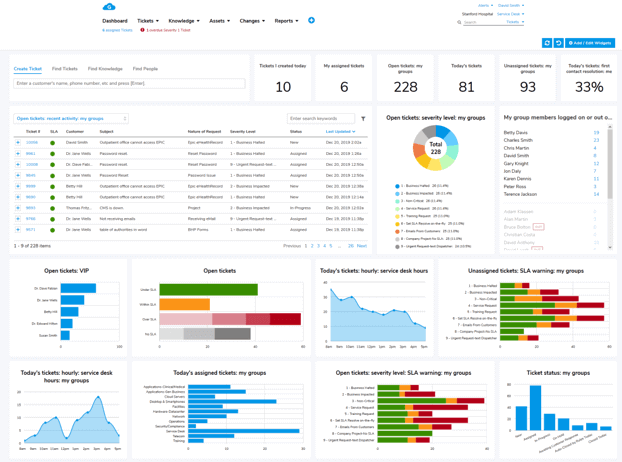
- Get visual Insights with real-time dashboards
- Spend more time assisting customers and less on setup and training
- Make fast business decisions with out-of-the-box reporting and analytics
- Answer custom questions quickly and precisely with Giva's AI Copilots for ticket response writing and summarizing, and knowledge base summary overviews
Giva's products come with free setup assistance. Giva's experts will offer configuration assistance and answer questions during your trial.
Ready to learn more? Get a demo to see Giva's solutions in action, or start your own free, 30-day trial today!
Categories: Customer Service

About the Author
Giva Authorship Team
Founded in 1999, with Giva's over-25-year history, our team of industry experts and luminaries is dedicated to sharing their insights and experiences in the areas of Artificial Intelligence, Information Technology, and Customer Service. Our expertise across many industries allows us to offer practical and actionable advice and solutions for challenges faced by organizations today.