Business Bytes: Unveiling Corporate Wisdom

Insights and smart tips to help you understand and succeed in the world of modern business

IT Organizational Charts: 11 Examples for Any Business
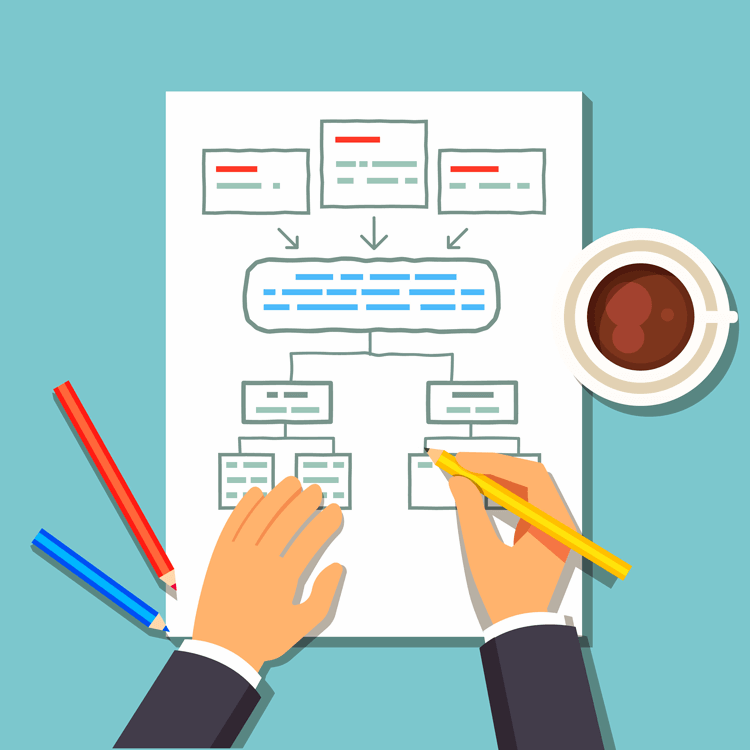
IT Organizational Charts

Nearly every business now relies on technology, and technologies never run absolutely perfectly. Maintenance is always necessary, which can include repairs, upgrades, and security fixes. These requirements and tasks fall under the category of Information Technology (IT). And so, any organization needs to consider IT initiatives when planning their business strategies.

[Read More]

Top 20 Tools of Communication: Business Success Today, Trends of Tomorrow

Verizon 2020 Data Breach Findings You Need to Know

Effective communication is the lifeblood of any successful business. Now with teams often dispersed globally, robust communication tools are even more critical. These tools streamline workflows and build a cohesive organizational culture. These in turn help companies better serve their customers.

[Read More]

What is IT Financial Management (ITFM): Best Practices and Tools

IT Financial Management

When it comes to drafting up the yearly budget, IT organizations are always looking to gain efficiencies. This could involve cuts to programs, salaries, or physical equipment. There is always more money to be saved.

[Read More]

What Does Business Relationship Management (BRM) Mean in ITIL?

IT Business Relationship Management

In any IT-based service operation, such as IT Service Management (ITSM), especially when they operate on ITIL principles, a Business Relationship Manager (BRM) is the go-between with the rest of the organization.

[Read More]

Remediation Planning: How a Backout Plan Differs from a Rollback Plan in IT

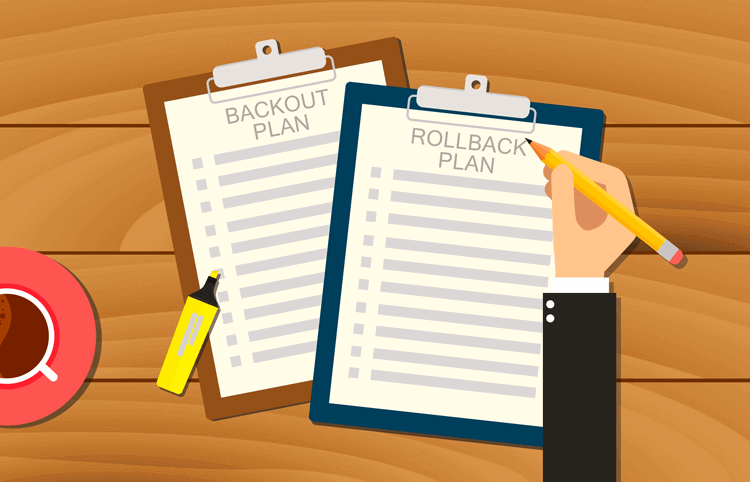
Backout vs Rollback Plan

Change Management is a constant for ITIL and ITSM. Changes are often necessary, whether software or hardware roll-outs or systems upgrades. Regrettably, as every IT professional and team leader knows, mistakes can happen.

Not every change management plan goes smoothly, and when you hit bumps in the road, you need control of the complete end-to-end process. Part of ensuring you have that control is to have contingencies in place for rolling back some of the changes that have been made.

[Read More]

How to Apply the Pareto Principle in ITSM (80/20 Rule Guide)

80 20 Rule Pareto Principle

The 80/20 Rule is the principle that 80% of the effects come from 20% of the causes. It's often used in business to help identify how to operate more efficiently. It can be applied to almost every area of business, including IT Service Management (ITSM).

IT service organizations and teams are focused on providing the best possible service to their internal customers. Efficiency has always been integral to ITSM. Monitoring Key Performance Indicators (KPIs) and dashboards, and adherence to Service Level Agreements (SLAs) is essential to producing successful outcomes in ITSM.

[Read More]

Master Service Agreement (MSA) or Service Level Agreement (SLA): Which Do You Need in Business?

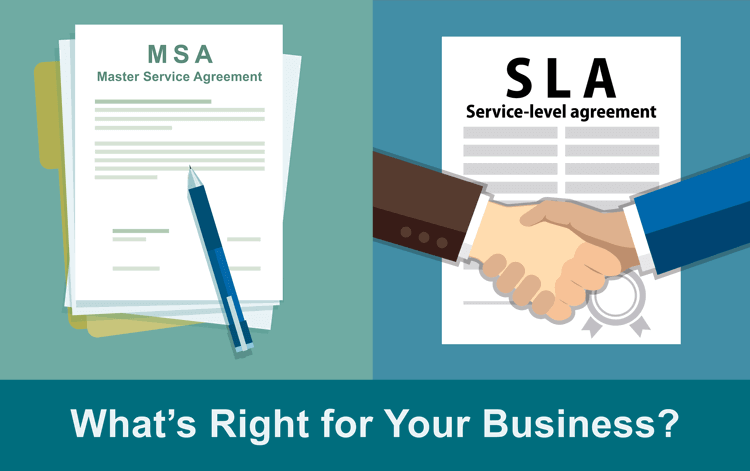
Master Service Agreement (MSA) vs Service Level Agreement (SLA)

In the IT sector, internal and external relationships are often governed by legal or quasi-legal documents. In IT and ITSM, the terms "Master Service Agreement" and "Service Level Agreement" are often used interchangeably. 

However, there are differences between the two kinds of agreements that can impact how you want to use them in your organization. While both can be used for similar purposes — such as establishing clear expectations for internal IT service providers or external vendors — what separates them and how they're used are sufficiently different that it's worth taking the time to understand why this is important.

[Read More]

What Is a Service Level Agreement in Business? SLA Meaning and Definition

SLA Meaning and Definition

So, what is the meaning of an SLA, or what does SLA stand for, anyway?

The term Service Level Agreement (SLA) is basically self-defining: two parties (service provider and customer) officially agreeing on the level of service by which they both are willing to abide. However, defining and creating an effective SLA between an ITSM team and the rest of the organization, or between a third-party provider and a business isn't always that easy.

[Read More]

IT Business Continuity Plan (BCP): Step-by-Step Guide and Checklist for IT Teams

IT Business Continuity Plan (BCP)

Every IT organization faces disruptions, from natural disasters and power failures to ransomware attacks and unplanned outages. An IT Business Continuity Plan (IT BCP) is the structured strategy that keeps your technology operations running, or recovers them quickly, when those disruptions occur. Without one, organizations are left improvising under pressure, and downtime can cost far more than the immediate repair bill. It can also damage client trust and your organization's long-term reputation.

[Read More]

What Is an IT Operating Model, and Why Does “Everyone” Need One?

Operating Models

New and seasoned businesspeople know that a well-thought-out business model and strategy are two key ingredients needed to create a successful company. 

However, something discussed less frequently is an operating or operational model. This outlines important details about a company, including those regarding employees, processes, systems and technology.

[Read More]


Newer Entires     1   2   3   4   5     Older Entries