Customer Service vs. Customer Experience: What's the Difference?
 By Ron Avignone
Customer service and customer experience are two terms that get used interchangeably all the time. They are related, and they share the same ultimate goal, but they describe different things. Treating them as synonyms leads to misaligned strategy, where you end up optimizing support ticket resolution when the real problem is a broken onboarding process, or you invest in journey mapping while neglecting the agents answering calls every day.
This article defines both terms clearly, walks through how they differ across scope, ownership, and metrics, and covers what it takes to improve performance in each. Understanding the distinction between customer service vs. customer experience is the first step toward building an effective customer service strategy that gets both right.

What Is Customer Service?
Customer Service is the direct assistance an organization provides to customers before, during, and after a purchase. It is reactive by nature. For example, a customer contacts your team with a question, problem, or complaint, and your team responds.
Customer service typically involves a dedicated support team handling interactions through channels such as phone, email, live chat, and ticketing systems. The goal is to resolve specific issues quickly, accurately, and with enough care that the customer leaves the interaction satisfied.
Customer service is a subset of the broader customer experience. It represents one category of touchpoints within the larger journey a customer takes with your brand.
Zappos is a frequently cited example of a brand that built its reputation almost entirely on customer service:
- Agents with no call time limits
- A 365-day return policy
- Agent authority to go beyond standard procedures to resolve problems
That service quality earned loyalty and drove word-of-mouth, but it was one component of a broader customer experience that also included fast delivery, easy returns, and a straightforward website.
What Is Customer Experience (CX)?
Customer Experience (CX) is the sum of every perception a customer forms across all interactions with a brand, from the moment they first hear about it to long after they have made a purchase. It involves not just support interactions but also website navigation, product quality, marketing communications, billing processes, social media engagement, and more.
CX is proactive and cross-organizational. While customer service is owned primarily by a support team, customer experience is shaped by every department, such as marketing, product, sales, IT, and operations. Each influences how a customer perceives your brand. This more complete approach to customer relationships is what sets CX apart from any single interaction or function.
The simplest way to remember the distinction is that customer service is what your team does, whereas customer experience is what your customers feel.
Amazon is a useful example:
- One-click purchasing
- Real-time shipping updates
- Frictionless returns
- Consistent delivery reliability
Each of these represents a deliberate CX design decision made well before a customer ever contacts support. The service interaction, when it is needed, is one element of a much larger experience the company has intentionally engineered across every touchpoint.
Customer Service vs. Customer Experience: Key Differences
The table below captures the core distinctions across four key dimensions:
Dimension |
Customer Service |
Customer Experience |
Scope |
Single interaction or touchpoint |
Entire customer journey across all touchpoints |
Nature |
Reactive (customer initiates) |
Proactive (business designs and manages) |
Ownership |
Support or service team |
Entire organization (marketing, product, IT, sales, support) |
Primary Metrics |
|
|
Breaking these dimensions down gives a clearer picture of how the two disciplines operate differently in practice:
-
Scope: Single Touchpoint vs. the Entire Journey
- Customer service addresses a specific need in a specific moment. A customer calls to ask about a return, a chat agent resolves a billing question, a support ticket closes. Each interaction has a clear beginning and end.
- Customer experience has no such boundaries. It starts when a potential customer first encounters your brand, whether through a search result, a social media post, or a recommendation from a friend. It continues through every purchase, every support interaction, and every renewal or referral that follows.
-
Reactive vs. Proactive
The difference shapes how each discipline operates:
- Customer service waits for contact: Your team responds when a customer identifies a need.
- Customer experience is designed in advance: A proactive outreach email when a product ships late, a knowledge base article that answers questions before users ask them, or a personalized onboarding sequence are all CX decisions made before a single customer reaches out.
-
Ownership: Support Team vs. the Whole Organization
- Customer service ownership is clear. Your support team, contact center agents, or help desk staff are responsible. They measure performance through service-level metrics and answer directly to a head of support or customer service director.
- Customer experience has no single owner. A Chief Customer Officer (CCO) or Chief Experience Officer (CXO) may lead strategy, but the experience itself is the product of every team that touches the customer. Marketing shapes first impressions. Product determines ease of use. Operations affects delivery reliability. When CX ownership is ambiguous, experiences become fragmented.
-
Metrics: Measuring Performance in Each Discipline
- Customer service performance is measured at the interaction level. Common metrics include Customer Satisfaction Score (CSAT) after a specific interaction, First Contact Resolution (FCR) rate, First Response Time (FRT), and Average Handle Time (AHT). These are largely operational metrics that reflect how efficiently and effectively individual issues get resolved.
- Customer experience metrics capture the broader relationship. Net Promoter Score (NPS) measures how likely customers are to recommend your brand. Customer Effort Score (CES) measures how easy it is to accomplish tasks with your company. Customer Lifetime Value (CLV) and churn rate reveal the long-term financial outcome of your CX strategy.
The quality of service interactions either reinforces or undermines everything else the CX strategy is trying to build. Organizations that invest in CX programs at the journey level while leaving support interactions inconsistent will find customers notice the gap quickly.
The Customer Journey: Where Customer Service Fits
The customer journey is the full sequence of stages a customer moves through with your brand. Most frameworks define five stages:
- Awareness: The customer discovers your brand, often through search, social media, advertising, or word of mouth.
- Consideration: The customer researches their options, comparing your product or service against alternatives.
- Purchase: The customer makes a buying decision and completes a transaction.
- Retention: Post-purchase, the customer uses your product or service. This is where most customer service interactions occur.
- Advocacy: Satisfied customers refer others, leave reviews, or champion your brand publicly.
Customer service operates primarily in the Retention stage. When a customer has a problem after purchase, needs technical help, or wants to make a change to their account, that is where your support team engages.
Customer experience spans all five stages. The ad someone sees in the Awareness stage, the ease of your checkout flow in the Purchase stage, the quality of post-purchase support in the Retention stage, and the referral program that drives Advocacy, each is a CX touchpoint. Customer service is one category of touchpoint within a much larger map.
This is why organizations that focus exclusively on customer service metrics can still have poor CX. They are measuring one stage of a five-stage journey and drawing conclusions about the whole.
Why Both Customer Service and Customer Experience Matter to Your Business
The business case for investing in both customer service and customer experience is well established. Customer experience has become a key competitive differentiator for businesses across industries, with Salesforce research showing that 80% of customers say the experience a company provides is as important as its products and services. Bain & Company analysis found that companies excelling in customer experience grow revenues 4–8% above their market. Satisfied customers also spend significantly more than those who have had a poor experience, reinforcing that CX is not just a service issue but a revenue driver.
Customer service sits at the center of these outcomes. SQM Group research found that 88% of customers stopped doing business with companies due to poor call center service. When a customer reaches out for help and the interaction goes badly, the damage extends well beyond that single touchpoint by reshaping how they feel about the brand as a whole and can permanently harm the company's reputation with that customer.
The two disciplines reinforce each other. Every customer service interaction is a source of feedback, such as what products are confusing, what processes cause friction, where customers consistently get stuck. Organizations that push customer service data back into their CX strategy use each support conversation as a signal for broader improvement. Customer service teams that operate in isolation, resolving tickets without feeding insights upstream, miss this loop entirely.
The reverse relationship matters too. A strong CX strategy reduces support volume by removing friction before customers encounter it. Customers who have fewer problems to report, and who find self-service tools that actually work, generate fewer contacts. That reduces pressure on your support team and improves CSAT scores because the interactions that do occur are more complex and more worth handling with full attention.
The most common organizational mistake is not failing to invest in one or the other but misdiagnosing which problem needs fixing first. A company that launches a CX transformation program (journey mapping, NPS dashboards, Voice of the Customer initiatives) without fixing the support function customers actually reach out to is building on a weak foundation. Equally, a company that tightens service-level metrics and agent training while leaving a confusing product or a broken checkout experience untouched is solving the wrong problem. Measuring both disciplines clearly is the only way to identify where the real gap is.
How to Improve Customer Service
Strong customer service is built on a handful of consistent disciplines. These are not complicated in concept, but they require investment in processes, training, and the right tools to execute reliably:
-
Prioritize Speed and Resolution
Customers rate fast resolution as one of the most important aspects of good service. Set clear targets for First Response Time (FRT) and First Contact Resolution (FCR), and track them consistently. An FCR rate above 70-75% is a common benchmark; every repeat contact on the same issue represents a failure that costs time and goodwill. While speed matters, resolution matters more. A fast response that does not solve the problem creates a second contact and lowers satisfaction. Prioritize actual resolution over the appearance of quick action.
-
Support Customers on Their Preferred Channels
Customers no longer expect to reach you only by phone. Email, live chat, social media, and text messaging are all active channels for support. Support teams need to be present and consistent across whichever channels their customers actually use.
This does not mean you need to be on every platform. It means understanding where your customers go when they need help and making sure your team can meet them there with the same level of quality they would get from a phone call.
-
Invest in Agent Training, Empathy, and Empowerment
Technical knowledge and product familiarity are baseline requirements. What differentiates good agents from great ones is how they handle emotionally charged situations. An example might be when the customer is frustrated, they've already contacted support twice, and now feel dismissed. Customer service training activities focused on de-escalation, active listening, and clear communication under pressure reduce customer complaints and improve satisfaction scores.
Agent empowerment is equally important. Agents who have the authority to make decisions, offer solutions, and resolve issues without requiring escalation approval handle interactions faster and with more confidence. Customers experience fewer handoffs and less friction. Empathy is not a soft skill in this context. Research consistently shows that customers who feel heard during a service interaction are more likely to remain loyal, even when the problem itself is not fully resolved.
-
Offer Self-Service Options
A well-built knowledge base, an FAQ section, and a functional chatbot can resolve a significant share of incoming requests without agent involvement. This is the principle behind ticket deflection, which is reducing the volume of inbound contacts by helping customers help themselves. The key word is "well-built", since self-service tools that do not actually answer questions create more frustration than having no self-service at all.
Done right, self-service tools free your agents to focus on complex, high-value interactions, reduce average handle time, and give customers faster answers around the clock.
-
Build a Customer Feedback Loop
Post-interaction surveys (CSAT), follow-up emails, and satisfaction tracking give you the data to identify patterns, including recurring issues, common failure points, agents who need coaching, and processes that need redesigning. The feedback loop is not a reporting exercise. It is the mechanism that turns individual service interactions into systemic improvement.
-
Define Clear Escalation Paths and Service Level Agreements (SLAs)
Not every issue can or should be resolved at the first level. A clear escalation process ensures that complex or sensitive cases get to the right person quickly, without the customer having to repeat their story multiple times. Inconsistent escalation paths lead to long handle times, customer frustration, and agent burnout.
Service Level Agreements (SLAs) formalize your response and resolution commitments. These include how quickly your team will respond to a new request, how long resolution should take by priority level, and what happens when a case is at risk of breaching those commitments.
SLAs are especially important in B2B environments, where customers often depend on your product or service to run their operations and have contractual expectations around support quality.
How to Improve Customer Experience
Improving customer experience requires a different kind of effort than improving customer service. It involves more stakeholders, more data sources, and a longer planning horizon. These are the foundational moves that tend to drive the most change:
-
Map the Customer Journey
Customer journey mapping is the process of visually documenting every touchpoint a customer has with your brand, from first discovery to post-purchase support. A journey map makes visible what is often only felt, such as customer pain points, where customers drop off, and where expectations are not being met.
Journey mapping is most useful when it is based on real customer data, not assumptions. Combine support ticket themes, survey responses, and behavioral analytics to build a map that reflects what customers actually experience, not what you think they experience.
-
Build an Omnichannel Strategy
Customers move between channels during a single journey. Someone might research your product on mobile, purchase on desktop, and contact support via chat. An omnichannel strategy keeps the experience staying consistent and connected across every channel, so customers do not have to repeat context or start over when they switch.
An omnichannel experience is not the same as a multichannel one. Multichannel means being present on multiple channels. Omnichannel means those channels share data and context so the experience feels continuous.
Building an omnichannel contact center capability is often the first step for support teams looking to unify their channels.
-
Personalize Interactions and Improve Customer Engagement
Personalized experiences increase customer engagement, conversion, and retention. Using Customer Relationship Management (CRM) data to tailor communications, recommendations, and outreach to individual customers makes those interactions feel more relevant and less transactional. Higher customer engagement ties directly to longer-term loyalty and higher Customer Lifetime Value (CLV).
Personalization does not require complex technology to start. Even basic segmentation, addressing customers by name, referencing their previous purchase, or adjusting messaging by industry, creates a meaningfully different experience from generic mass communication.
-
Engage Proactively
Proactive customer service anticipates needs before customers have to ask.
These actions show customers that your brand is paying attention and invested in their success:
- Shipping notifications
- Renewal reminders
- Health-check outreach for software users
- A check-in after a complex support resolution
Proactive engagement also reduces inbound contacts. Customers who are informed before they need to ask are less likely to generate reactive support tickets.
-
Encourage a Customer-Centric Culture
CX is a cross-functional discipline, which means improving it requires alignment across teams that may not typically collaborate, like product, marketing, support, finance, and operations departments. A customer-centric culture is one where every team understands how their decisions affect the customer experience and is held accountable for that impact.
Culture change starts with leadership. When executives make CX metrics visible at the organization level and tie team goals to customer satisfaction outcomes, the rest of the organization follows.
-
Use Voice of the Customer (VoC) Data to Close the Loop
Voice of the Customer (VoC) is the structured process of collecting and acting on feedback from customers across all channels. Examples might be surveys, support transcripts, reviews, social media, and behavioral data. VoC programs give organizations a continuous, real-world signal about what is working and what is not across the entire customer journey.
Customer data only creates value when it is acted on. A continuous improvement cycle means regularly reviewing CX metrics, identifying root causes of friction, implementing changes, and measuring whether those changes improved the customer experience.
Organizations that collect VoC data without acting on it find their customers gradually disengaging. The feedback loop only works if the loop is actually closed.
The Role of AI and Automation in CS and CX
Artificial intelligence is reshaping both AI in customer service and customer experience at speed. The organizations most affected are those that move beyond using AI as a cost-cutting tool and start using it as a mechanism for the following:
-
AI-Powered Customer Service
AI chatbots and virtual agents now handle a significant share of routine service interactions, such as answering common questions, resetting passwords, processing returns, checking order status. Many customer service and support organizations are using generative AI to improve agent productivity and customer experience in the near term.
AI also assists human agents in real time, suggesting responses, offering relevant knowledge base articles, and summarizing prior interaction history so agents do not have to ask customers to repeat themselves.
-
AI-Driven Personalization in CX
On the customer experience side, AI enables personalization at a scale that manual segmentation cannot reach. Recommendation engines, predictive outreach, and sentiment analysis on support conversations all feed into a more responsive, tailored experience for each customer. AI-driven sentiment analysis, for example, can flag when a customer is expressing frustration across multiple channels and trigger a proactive outreach before the issue escalates. This is proactive customer service enabled by CX-level data.
-
Agentic AI and Autonomous Resolution
One of the largest emerging technologies is Agentic AI. These are autonomous systems that can interpret complex customer goals and take multi-step actions to resolve them without human intervention.
Unlike scripted chatbots, agentic AI can navigate account changes, initiate refunds, schedule follow-ups, and coordinate across internal systems to resolve issues end-to-end.
Early deployments show meaningful productivity gains, with organizations reporting that agents spend significantly less time on manual tasks as agentic systems take over routine request handling.
-
Balancing Automation with Human Support
The risk in deploying AI aggressively is that customers notice when automation replaces human judgment in situations that call for empathy. Survey after survey finds that the majority of consumers prefer companies that keep human customer service options available, not those that automate everything. The winning approach uses automation for speed and scale on routine, low-stakes interactions, and preserves human support for complex issues, sensitive conversations, and high-value customer relationships.
Frequently Asked Questions: Customer Service vs. Customer Experience
-
Is customer service the same as customer experience?
No. Customer service refers to the direct assistance your team provides when a customer has a question, problem, or complaint. Customer experience is the broader set of perceptions a customer develops across every interaction with your brand, from first awareness through post-purchase support and beyond.
The distinction matters in practice. A company can score well on individual service interactions while still losing customers to a competitor with a smoother onboarding process, a cleaner checkout flow, or more relevant marketing. Service quality alone does not guarantee a strong customer experience.
-
Is customer service part of customer experience?
Yes. Customer service is a subset of customer experience. Every support interaction your team handles is a CX touchpoint. The quality of those interactions shapes how customers feel about your brand overall.
The practical implication of this is that improving customer experience requires looking beyond service-level metrics. CSAT scores reflect how individual interactions went; they do not capture how customers feel about your brand overall. CX improvement requires data from every touchpoint, not just support.
-
Which metrics measure customer service vs. customer experience?
Customer service metrics focus on individual interaction performance. See also: customer satisfaction metrics for a deeper breakdown.
- Customer Satisfaction Score (CSAT) after a specific service interaction
- First Contact Resolution (FCR) rate
- First Response Time (FRT)
- Average Handle Time (AHT)
Customer experience metrics capture the broader relationship:
- Net Promoter Score (NPS): The likelihood of a customer to recommend your brand
- Customer Effort Score (CES): How easy it is for customers to accomplish tasks with your company
- Customer Lifetime Value (CLV): The total revenue a customer generates over their relationship with your brand
- Churn rate and retention rate: Whether customers are staying or leaving over time
-
How does poor customer service affect customer experience?
A single poor service interaction can significantly damage the overall customer experience, even if every other touchpoint was positive. The reason is that service interactions tend to occur at high-stakes moments, like when a customer already has a problem. How your team handles those moments carries outsized weight in how customers remember your brand.
-
Who is responsible for customer experience in an organization?
Responsibility for customer experience is distributed across the entire organization. A Chief Customer Officer (CCO) or Chief Experience Officer (CXO) often owns overall strategy and accountability. But the actual experience is shaped by marketing, product, sales, IT, operations, and support working together.
The clearest signal of mature CX ownership is whether CX metrics appear in leadership reviews alongside financial results. Organizations where NPS or churn rate never surface in a leadership meeting tend to treat CX as a support problem rather than a business strategy. That gap at the top cascades down to fragmented experiences across every team that touches the customer.
-
Does the customer service vs. customer experience distinction differ for B2B vs. B2C?
The core distinction holds in both contexts, but the dynamics differ. In B2C, customer service interactions tend to be high-volume, shorter, and focused on quickly resolving common issues. The customer experience spans marketing, product ease of use, checkout convenience, and post-purchase support.
In B2B, the stakes are higher on both sides. B2B customer service issues are often more complex, with formal Service Level Agreements (SLAs) governing response and resolution times.
The customer experience involves multiple stakeholders, longer sales cycles, and an ongoing relationship where a single poor service interaction can affect a contract renewal. B2B organizations tend to rely more on dedicated account management and customer success functions alongside their support team.
-
Can a business have great CX but poor customer service?
In theory, a business could deliver exceptional experiences across most touchpoints and still have a weak support function. In practice, this gap tends to close quickly once customers encounter a problem and the service interaction fails to match the quality of the rest of their experience. Then, the problem ends up being that customers who expected a certain quality of experience, based on prior interactions, feel a sharper disappointment when service falls short. Consistency across all touchpoints, including support, is what defines a truly strong customer experience.
-
How is customer success different from customer service?
Customer success is proactive and relationship-focused. The goal is to make sure customers achieve their desired outcomes with your product or service, particularly in B2B and SaaS environments. Customer success managers own long-term account health, adoption, and renewal. Customer service is reactive, responding to issues and questions as they arise.
The distinction matters most in subscription businesses where ongoing adoption drives renewal. A customer success team works to prevent the problems that a customer service team would otherwise have to resolve. Both functions contribute to customer experience, but they operate on different timeframes and with different mandates.
-
What is Customer Experience Management (CXM)?
Customer experience management (CXM) is the discipline of tracking, analyzing, and improving the full range of interactions a customer has with an organization -- across every channel, touchpoint, and stage of the relationship. Where customer experience describes what customers feel, CXM describes the organizational practice of deliberately shaping those feelings.
CXM programs typically combine VoC data, journey mapping, and cross-functional governance to ensure that decisions made in product, marketing, sales, and support are all oriented around a consistent experience. It requires data from across the organization and a strategy that treats each touchpoint as part of a connected whole rather than a series of independent interactions.
-
What software tools support customer service and customer experience?
Customer service teams typically use help desk software for ticket management and SLA tracking, contact center platforms for call routing and omnichannel support, and live chat tools for real-time assistance. These tools focus on handling individual interactions efficiently and measuring service-level performance.
Customer experience programs draw on CRM platforms to track the full customer relationship, Voice of the Customer (VoC) and survey tools to capture NPS, CSAT, and CES data, and journey analytics platforms to identify friction across touchpoints. Giva's customer service software covers the service layer with built-in reporting, SLA management, and satisfaction tracking that feeds directly into broader CX strategy.
Related Giva Resources
- Seamless Customer Experience: Top 10 Service Strategies
- The 10 Top Customer Experience Statistics for 2026
- 5 Star Customer Service: Skills for Excellence and Examples
- Customer Service Reporting: Top Metrics and How-Tos
- 15 Top Strategies to Ensure Customer Satisfaction
- 23 Traits of Customer Service Excellence Plus How-to Steps
Customer Service and Customer Experience: Two Disciplines, One Goal
Customer service and customer experience are not the same thing, but they serve the same purpose: creating a relationship between your brand and your customers that holds up over time.
Customer service is the reactive layer, the team and the processes that respond when customers need help. Customer experience is the proactive layer, the strategy, the design, the data, and the culture that shapes every touchpoint across the entire customer journey. One without the other creates a gap that customers will eventually notice.
Organizations that invest in both, that take service quality seriously and build a CX strategy that extends beyond support, are the ones that earn the loyalty, the referrals, and the long-term customer relationships that drive sustainable growth.
See How Giva Connects Customer Service and Customer Experience
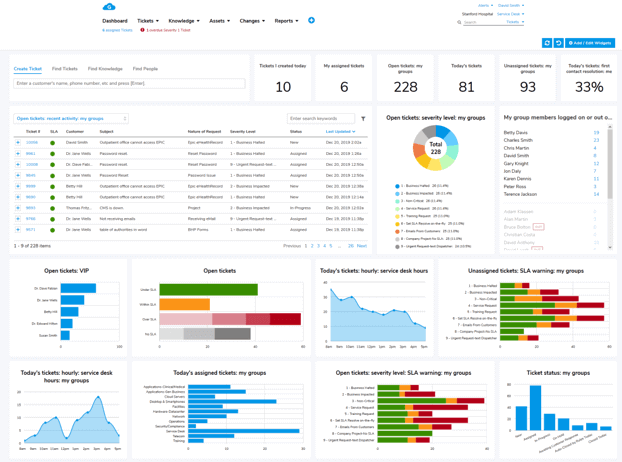
When the gap between your customer service and customer experience feels hard to close, the right tools make the difference. Giva's Customer Service Software is built to help support teams resolve issues faster, track performance across every channel, and feed the insights that power a stronger overall experience.
Giva connects the individual service interaction to the bigger picture, giving teams the visibility they need to improve both at once. From ticket management, real-time dashboards and reporting to customer satisfaction tracking, Giva brings together the capabilities that modern service and experience teams depend on.
Other Giva capabilities for customer service and CX teams include:
- Use Giva's AI Copilot to help agents craft the best responses to customers
- Help users find the best responses to questions from Giva's seamlessly-integrated knowledge base using Giva's Knowledge AI Copilot
Whether you are working to sharpen your team's response times, reduce customer effort, or align your entire organization around a better experience, Giva gives you the platform to do it.
Get a demo to see Giva's solutions in action, or start your own free, 30-day trial today!


Categories: Customer Service