Enterprise Service Management (ESM) Fully Examined
Across enterprise organizations, too many mission-critical questions, problems, and service issues are getting lost in inboxes, Slack channels, and confused communications.
Enterprise Service Management (ESM) can solve so many of these problemjavascript:void(null);s by extending proven IT Service Management (ITSM) approaches and solutions to every team in your organization.
ESM gives HR, Finance, Legal, Facilities, Marketing, Sales, and Customer Service the same unified platform, automated workflows, and self-service portals that IT has relied on for decades.
The outcome and ROI for enterprise teams and leaders?
Faster response times, lower operational costs, better employee experiences, and a scalable foundation for digital transformation. In this ultimate guide, we explain what ESM is, how it works, and how your organization can implement it successfully.

Key Takeaways: Summary Table
For those in a hurry, we've compiled the following quick reference summary table:
Aspect of ESM |
Key Takeaway |
What is ESM? |
Applying ITSM principles and tools across all departments (HR, Finance, Legal, Facilities), not just IT |
ESM vs. ITSM |
ITSM focuses on IT services; ESM extends those same principles enterprise-wide to all service providers |
Core Components of ESM |
Service catalog, service desk, self-service portals, workflow automation, knowledge management, incident/case management, asset management, reporting |
Benefits of ESM |
Reduced costs, better employee experience, improved collaboration, faster onboarding, consistent service quality, and digital transformation enablement |
Common Use Cases for ESM |
Every department: ITSM, HR onboarding/offboarding, facilities work orders, finance approvals, legal contract review, customer service |
AI's Role in ESM |
AI-powered chatbots, automated ticket routing, agentic AI for multi-step workflows, predictive analytics, and knowledge gap identification |
How to Implement ESM |
Start with IT, expand gradually to new departments, invest in training and change management, measure and improve continuously |
Best Practices for ESM |
Align to business outcomes, maintain service catalog, involve all departments as partners, automate high-volume requests, establish clear SLAs, measure the ROI |
What Is Enterprise Service Management (ESM)?
Enterprise Service Management (ESM) is the practice of applying IT Service Management (ITSM) principles, processes, and tools, such as service catalogs, automated workflows, self-service portals, and SLA-based accountability across multiple business functions. It enables HR, Finance, Facilities, Legal, Customer Service, and other departments to manage, deliver, and track service requests in the same structured, efficient way that IT teams have done for decades.
ESM is an enterprise-wide solution for how work gets requested, assigned, tracked, and completed. Instead of each department running its own operational software, or no workflow tool at all, ESM brings everything under a unified approach. ESM works in the following ways:
- Employees submit requests through a single portal
- Managers can see performance metrics in real time
- Service providers across all departments are held to consistent service levels aligning with the relevant KPIs
ESM recognizes that every department in your organization is, in effect, a service provider. HR provides onboarding and benefits services. When every department operates with the same service management principles as ITSM, the entire organization becomes more responsive, more accountable, and easier to manage.
It's worth noting that ESM adoption rates continue to rise. According to Dataintelo, "the global Enterprise Service Management (ESM) market size reached USD 7.9 billion in 2024, driven by a robust digital transformation trend across industries. The market is expected to grow at a compound annual growth rate (CAGR) of 17.2% from 2025 to 2033, reaching an estimated USD 33.1 billion by 2033."
What Is the Difference Between ESM and ITSM?
IT Service Management (ITSM) is the set of policies, processes, and tools that IT teams use to design, deliver, manage, and improve technology services.
ITSM frameworks like ITIL provide structured approaches to managing incidents, changes, problems, and assets. ITSM is focused entirely on IT and provides ITSM support for the whole organization.
Enterprise Service Management (ESM) extends those same ITSM processes and Service Management principles far beyond the IT department to serve non-IT teams throughout the organization. In summary:
- IT Service Management (ITSM): Focused on IT teams managing technology services. Handles incidents, change requests, and asset management within the IT department. Users submit IT tickets through an IT service desk.
- Enterprise Service Management (ESM): Extends ITSM principles to HR, Finance, Legal, Facilities, and more. Any department becomes a service provider. Employees get a unified employee experience through a single portal for all service requests, including IT and beyond.
In short, ESM doesn't replace ITSM but it builds on it. Organizations that have already invested in ITSM are the best-positioned to extend that foundation enterprise-wide.
Now, let's look at the key components of ESM, so you can gain a better understanding of the role it plays within an enterprise organization.
8 Key Components of Enterprise Service Management
A successful ESM platform is built from several core components that work together to deliver seamless service delivery across the enterprise. Here are the eight most important building blocks:
-
Service Catalog
A service catalog is a strategic tool that comprehensively overviews an organization's services, detailing Service Offerings, relationships, definitions, and performance commitments.
Its purpose within ESM is to facilitate clear communication between IT and business stakeholders, align services with organizational objectives, and enable cooperation through personalized service options.
A well-designed service catalog reduces confusion, sets clear expectations, and speeds up request fulfillment by ensuring the right information is captured upfront.
-
Service Desk
The service desk is the central hub for receiving, routing, and resolving service requests and incidents. The goal of a service desk is to manage incidents and service requests and handle all IT communication with users.
While an IT service desk traditionally handles only technology issues, an ESM platform extends this concept so that HR, Legal, and Facilities can each manage their own queues within the same system. Having a centralized management model gives leadership visibility across all departments and helps support teams effectively prioritize work.
-
Self-Service ITSM Portal
Self-service portals give employees a single portal to submit ESM or IT-based requests, check the status of open tickets, find answers in a knowledge base, and complete routine tasks without waiting for an IT agent.
Self-service options reduce the volume of inbound requests that reach support teams, freeing agents to focus on more complex issues. For employees, easy access to a clean, intuitive portal dramatically improves the overall service experience.
-
Workflow Automation
Workflow process automation eliminates the manual steps that slow services down and introduce errors.
With automated workflows, a new-hire request in HR can trigger equipment provisioning in IT and badge access in Facilities, all without emails bouncing between teams.
Workflow automation is one of the most powerful ESM capabilities because it creates consistent workflow execution across cross-functional teams, removes manual intervention, and accelerates service delivery at scale.
-
Knowledge Management
A knowledge base is a searchable library of articles, guides, FAQs, and how-to documents that help employees and agents solve problems faster.
In an ESM environment, every department has a knowledge base. This way, employees can find answers to the most common questions in one place.
-
ESM Incident and Case Management
In an ESM environment (not ITSM), incident management is the structured process of logging, categorizing, prioritizing, and resolving disruptions to normal service.
Case management expands on this for more complex, multi-step situations, such as an HR compliance investigation or a facilities safety incident. Combined, these components ensure nothing falls through the cracks, all actions are documented, and service performance can be measured against defined service levels.
-
Asset Management
Asset management tracks the hardware, software, and other resources an organization owns, who is using them, and when they need to be maintained or replaced.
In an ESM platform, asset management extends beyond IT equipment to include facility assets, medical devices (in healthcare orgs), legal tools, and any other resource tied to a service request. Better visibility over assets supports resource allocation decisions, reduces waste, and improves service consistency.
-
Reporting, Analytics, and Custom Dashboards
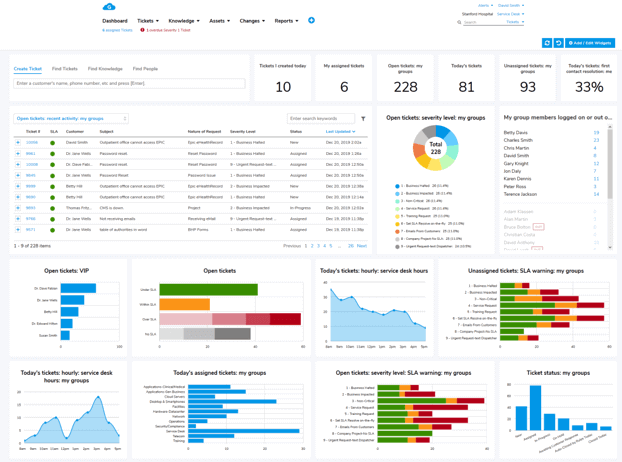
Comprehensive reporting and custom dashboards give managers real-time visibility into service performance across the enterprise. Key metrics like response times, resolution rates, SLA compliance, and customer satisfaction scores help leaders identify bottlenecks, track progress, and make better decisions.
Performance metrics also support the case for ESM adoption by demonstrating concrete business outcomes.
Schedule a demo with Giva today and discover how we can transform your organization's ESM capabilities.
Now, let's look at the core benefits of ESM.
9 Benefits of Enterprise Service Management
When ESM is implemented effectively, it delivers measurable improvements across the organization. Here are nine of the most impactful benefits:
-
Reduced Costs Through Process Efficiency
When you replace manual processes with automated workflows, ESM reduces the labor costs associated with routing, following up on, and tracking service requests. Fewer manual steps mean fewer errors, less rework, and faster resolution times. All of which translates directly into cost savings.
-
Better Employee Experiences
Employees no longer need to figure out who to email or which system to use. A unified employee experience through a single portal means every team member gets fast, consistent access to the services they need. All of this directly improves morale, productivity, and overall job satisfaction.
-
An Improved Customer Experience
For organizations that use ESM to manage external customer requests, the benefits extend beyond internal staff. A customer-centric service experience built on consistent workflows, faster response times, and proactive communication drives stronger customer satisfaction and loyalty.
-
Stronger Cross-Functional Collaboration
ESM breaks down departmental silos by connecting HR, IT, Finance, Marketing, Sales, Customer Services, Facilities, and other teams within a shared platform. When cross-functional workflows are visible and trackable in one place, collaboration always improves.
This means handoffs between departments become smoother and more reliable, which benefits every team and every customer.
-
Increased Operational Efficiency
Streamlining workflows across the organization reduces duplicated effort, eliminates fragmented processes, and helps teams focus on high-value work. Having a leaner, faster operation can handle more requests without adding headcount.
-
Inherent Scalability
ESM platforms are scalable by nature. Whether your organization has 50 or 5,000 employees, you can start with one department and expand to others gradually, handling more requests without adding headcount.
-
Consistent Service Quality
Service consistency is one of the hardest things to achieve at scale. ESM solves this by enforcing standardized workflows, defined service levels, and documented processes for every department. Whether a request comes in through HR or IT, the service experience follows the same high standard.
-
Accelerated Digital Transformation
ESM is a core enabler of digital innovation. When organizations automate service delivery across the enterprise, they build the foundation for broader digital workflows, AI-powered automation, and future technology adoption.
-
Faster Onboarding for New Employees
Without ESM, onboarding a new employee requires coordination among HR, IT, Facilities, and Finance. All of this is normally managed via a chain of emails. ESM automates this entire process so that IT, HR, Finance, and Facilities tasks are triggered simultaneously the moment a new hire is added to the system, dramatically reducing the time it takes to get new employees up and running.
-
Human Resources (HR)
- Pain point without ESM: HR teams manage employee onboarding, offboarding, policy questions, benefits changes, and performance management through a mix of email, paper forms, and manual processes. New employees often arrive without equipment, system access (passwords), or a clear onboarding schedule because coordination between HR and IT gets lost in other workloads.
- How ESM solves it: HR uses the ESM platform to create structured workflows for every stage of the employee lifecycle. An HR service catalog lists every available asset, from job offer letters to benefits enrollment, and allows employees to access everything through a single portal.
- Workflow example: When HR confirms that a new employee has been hired, the ESM platform automatically creates IT provisioning tasks, notifies IT and Facilities to set up a workspace, schedules onboarding meetings, and assigns someone to work with them, all before the new employee starts. All of this can be done whether someone is working from home (WFH) or on-site.
-
Finance and Procurement
- Pain point without ESM: In most large companies, tasks such as purchase requests, expense approvals, and vendor onboarding are handled through fragmented processes, with no clear visibility into the status of each request. Employees and managers spend too much time chasing approvals, and Finance lacks accurate data about spending patterns.
- How ESM solves it: ESM brings Finance into the same service management framework as IT and HR. Purchase requests flow through automated approval workflows, approvers receive notifications immediately, and Finance has a real-time view of all open and completed requests.
- Workflow example: A department head submits a software purchase request through the service catalog. The system automatically routes it to the relevant budget-holder or CFO for approval, notifies IT to evaluate the tool for security compliance, and logs the decision. All of this happens within the same platform, and with a full audit trail.
-
Legal and Compliance
- Pain point without ESM: Legal teams receive contract review requests, compliance questions, and policy update requests through email. None of these come with the ability to track volume, prioritize, or measure turnaround time. Deadline-sensitive requests can get lost in overflowing inboxes or noisy Slack channels.
- How ESM solves it: ESM provides Legal with a structured case management system that includes priority levels, due date tracking, and automated notifications. Legal teams can see their entire workload at a glance and ensure nothing misses a critical deadline.
- Workflow example: A sales manager submits a contract review request marked as high priority. The ESM platform assigns it to the next available in-house counsel, sets a deadline, and notifies the sales manager of the expected turnaround time. If the deadline approaches without resolution, the system automatically escalates it to the Legal team lead.
-
Customer Service (or Customer Experience (CX))
- Pain point without ESM: Customer service teams handle support requests across multiple channels, with no unified view of each customer's message history, previous issues, or other details. Agents spend time searching for information rather than solving problems, and customers have to repeat themselves with every interaction.
- How ESM solves it: An ESM platform with customer service capabilities gives agents a complete view of every customer interaction in one place. Integration capabilities connect the platform with CRM systems, and a shared knowledge base helps agents resolve issues faster and more consistently.
- Workflow example: A customer submits a billing dispute through the self-service portal. The system creates a case, routes it to the right agent based on category, pulls up the customer's full history, and suggests relevant knowledge base articles. The result is that the agent resolves the issue and closes the case.
-
Project Management (PM)
- Pain point without ESM: Project teams have no structured way to request resources, tools, or support from IT, HR, or Facilities. Too often, resource allocation is ad hoc, and project leaders don't know what's happening with critical workflow tasks.
- How ESM solves it: ESM connects project management workflows with the broader enterprise service ecosystem. Project teams can submit and track all internal service requests. This can include equipment provisioning to office space, within the same platform.
- Workflow example: A PM kicks off a new product launch and submits requests through the ESM portal for IT setup, an HR contract hire, and a Facilities workspace. All three requests are tracked in a single dashboard. And the project manager receives status updates as each is completed.
-
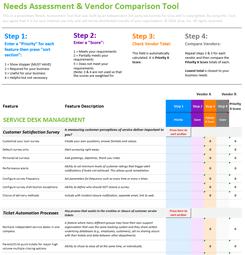
Phase 1: Assess Current Service Management Needs and Gaps
Before doing anything technical, conduct a thorough assessment of how services are currently being delivered across all departments.
Identify where fragmented processes, data silos, and manual interventions are causing delays or inconsistencies. A company-wide assessment should include input from team members in IT, HR, Finance, Facilities, Legal, and Customer Service.
Enterprise Service Management Maturity Model
Most organizations adopt ESM in stages. As such, the following can help you determine where you are in the process:
- Stage 1 – Reactive: Departments manage requests independently with minimal automation
- Stage 2 – Standardized: A shared service catalog and centralized intake portal are introduced
- Stage 3 – Automated: High-volume workflows are automated across departments
- Stage 4 – Integrated: Cross-functional workflows operate seamlessly with full visibility
- Stage 5 – Optimized and AI-Driven: Predictive analytics, agentic AI, and proactive service delivery replace reactive support
Your goal is to understand service management needs at every level and document the pain points that ESM is expected to solve. Use this data as a baseline to measure business outcomes after implementation.
-
Phase 2: Secure Leadership Buy-In and Build a Business Case
ESM is an enterprise-wide solution. It requires enterprise-wide support. Before moving forward, secure commitment from department leads and the C-Suite. The larger your organization, the more complex ESM will be, and the more budget and buy-in you will need.
Build a business case that ties ESM capabilities to specific business outcomes, like cost savings, faster onboarding, and improved customer and employee experiences. Frame ESM not as an IT initiative, but as a strategic investment that benefits the entire organization.
-
Phase 3: Select the Right ESM Platform with Strong Integration Capabilities
Not all service management tools are built for enterprise-wide use. When evaluating Enterprise Service Management software, look for a unified platform that supports multiple business functions without requiring separate systems for each department.
How to Evaluate Enterprise Service Management Software
Not all ESM platforms are built the same.
When evaluating Enterprise Service Management software, consider:
- Does the platform support multiple departments without requiring separate instances?
- Can it integrate with existing HR systems, ERP tools, CRMs, communication platforms, and monitoring solutions?
- Does it support HIPAA, SOC 2, or industry-specific compliance?
- Can workflows be built without heavy coding?
- Does it provide role-based dashboards for executives?
- Does it support AI-powered automation and intelligent routing?
For healthcare, legal, and finance organizations, compliance and auditability are not optional. A platform must provide robust access controls, audit logs, and configurable data retention policies.
Choosing the right ESM software determines whether your rollout becomes transformational or fragmented.
-
Phase 4: Start with IT and Expand to New Departments Gradually
The most successful ESM implementations begin with IT and then systematically expand to every other department. A phased approach lets your team learn what works, refine workflows, and build confidence before rolling out across the enterprise.
When bringing on each new department, spend time mapping their specific service management needs, building a department-specific service catalog, and training their team members on the platform.
-
Phase 5: Drive Adoption Through Training and Organizational Change Management
Technology does not create change. People do. Hence, why even Microsoft is being more wary about AI adoption. A carefully planned organizational change management strategy is essential to ESM adoption:
- Invest in training programs that help both service agents and end users get comfortable with the new platform.
- Communicate the benefits clearly so that employees understand how ESM makes their work easier.
- Identify champions in each department who can promote the platform and provide peer-level support.
-
Phase 6: Measure, Report, and Continuously Improve
Once ESM software and APIs are live, optimization begins. Use the platform's reporting and analytics tools to track key metrics like first-response time, resolution time, SLA compliance, employee satisfaction scores, and self-service adoption rates.
Review these metrics regularly with department leaders, and use the data to identify where workflows can be tightened or where additional automation can reduce manual intervention. A commitment to continual improvement and a data-driven approach will ensure ESM delivers increasing value over time.
-
Align ESM to Business Outcomes
Every ESM initiative should be aligned with a specific business outcome, whether that is reducing time-to-hire or improving customer satisfaction scores. When leaders and team members understand how ESM connects to results that matter, adoption accelerates. Revisit these outcomes regularly and report progress against them.
-
Build and Maintain a Comprehensive Department-based Service Catalog
A well-maintained service catalog is the backbone of a great self-service experience. Take the time to document every service each department offers, with clear descriptions, expected turnaround times, and intake requirements.
Review the catalog regularly with department managers to add new services, retire outdated ones, and update any information that has changed.
-
Involve Non-IT Departments as Operational Partners
ESM fails when it is treated as an IT project with non-IT departments as passive recipients. Involve HR, Finance, Facilities, and Legal leaders early in the design process and give them ownership over their service workflows.
When departments feel that the platform reflects their specific needs, they are far more likely to champion adoption among their teams.
-
Prioritize Process Automation for High-Volume, Repetitive Requests
Identify the 10 to 20 most common service requests across the enterprise and build automated workflows for those first. Measure the time saved on each, and use that data to justify expanding automation to more complex, cross-functional workflows.
-
Invest in Knowledge Management (KM)
Before going live with an ESM, build a foundational set of knowledge base articles covering each department's most common questions and issues.
Assign content owners in each department who are responsible for keeping articles up to date. Use AI, analytics, and data from resolved tickets to identify knowledge gaps and create new articles proactively.
-
Design Cross-Functional Workflows
When designing workflows that span multiple departments, map out every step in detail before building it in the platform.
Identify which team owns each step, the handoff criteria, and what happens if a step is delayed. Well-designed cross-functional workflows eliminate the coordination gaps that cause delays and frustrated employees.
-
Establish Clear Service Levels (SLAs) for Every Department
Service Level Agreements (SLAs) are for every department. Work with department managers to set realistic service levels based on current data, then use the platform's reporting tools to track performance against those targets.
-
Maintain Robust, AI-powered Security and Compliance Standards
An ESM platform that handles sensitive HR data, legal documents, and financial information must be built on a foundation of strong security and compliance.
Choose ESM software that meets your industry's compliance requirements, like HIPAA, SOC 2, and other standards. Ensure access controls are configured appropriately.
-
Gather and Act on Employee Feedback Regularly
Build feedback mechanisms into the platform, such as post-resolution satisfaction surveys. Review the results regularly with department leaders.
A consistent feedback loop is one of the most powerful tools for driving continual improvement.
-
Implement and Integrate AI and Automation
Choose a platform that supports AI-powered chatbots, machine learning, and agentic AI capabilities so you are not locked into a system that cannot evolve. Maintain clean, well-structured data in the platform from day one, because the quality of AI outputs depends entirely on the quality of the data that those systems are trained on.
-
Measure the ROI
Organizations measuring ESM success typically track:
- Reduction in manual processing time
- Decrease in email-based requests
- SLA compliance improvement
- Time-to-onboard reduction
- Employee satisfaction scores
- First-response time improvement
ESM ROI rarely includes just cost reduction but also operational improvements at scale.
- AI-powered chatbots and virtual assistants now handle routine requests instantly. Employees can describe what they need, and the AI collects information, routes the request, and provides status updates without human intervention.
-
Machine learning (ML), an integral part of AI, improves ticket categorization, prioritization, and routing by analyzing request content, comparing it to historical patterns, and automatically assigning work to the right team.
Over time, these models become more accurate, reducing errors and accelerating resolution across every department.
-
One of the most powerful developments is Agentic AI and autonomous service delivery, with systems that execute multi-step workflows autonomously.
An agentic AI might:
- Receive a new employee onboarding request
- Independently create IT accounts
- Submit Facilities work orders
- Schedule HR orientation
- Confirm completion
And they could do this all while keeping humans in-the-loop for approvals, and to catch errors.
- AI also enhances knowledge management by identifying gaps in knowledge bases and surfacing relevant articles to agents during case resolution. We await to see other ways ESM can be improved with AI tools and services.
- EHR Support Desk for IT
- Clinical Medical Device Support for IT
- PHI-Safe Ticketing Patterns
- Distributed Clinics IT Support
- Deadline-Driven Legal IT Support
- Employee Onboarding/Offboarding
-
What is Enterprise Service Management (ESM)?
Enterprise Service Management (ESM) is the practice of applying IT Service Management principles, processes, and tools to non-IT departments across an organization.
ESM provides HR, Finance, Facilities, Legal, and other departments with a unified platform for managing and delivering services, with the same structure, automation, and accountability that IT teams have used for years. The goal is to improve service consistency, reduce costs, and deliver a better employee and customer experience enterprise-wide.
-
What is the difference between ESM and ITSM?
IT Service Management (ITSM) refers to the policies and processes IT teams use to deliver technology services, typically within ITIL frameworks.
On the other hand, Enterprise Service Management extends those same ITSM processes and Service Management principles beyond IT to every department in the organization. In other words, ITSM is the foundation, while ESM is the enterprise-wide expansion of that foundation.
-
What are the benefits of ESM?
ESM delivers a wide range of benefits, including:
- Reduced operational costs through process automation
- Improved employee and customer experiences through a unified portal
- Faster onboarding for new employees
- Stronger cross-functional collaboration
- Improved service consistency across departments
- Data-driven insights that are needed for continual improvement
ESM also serves as a key enabler of digital transformation by creating the infrastructure for AI-powered automation and enterprise-wide digital workflows.
-
What are the best use cases for Enterprise Service Management?
Practical examples of ESM include:
- HR automating employee onboarding across the organization
- Facilities and HR simultaneously
- Facilities teams managing work orders through the same portal employees use for IT requests, Legal teams tracking contract review requests with defined SLAs
- Finance manages purchase approval workflows with full audit trails
Any situation where a non-IT department delivers structured services through a service management platform is an example of ESM in action.
-
How do you implement ESM across an enterprise organization
Successful ESM implementation follows a phased approach:
- Assess current service management needs
- Secure leadership buy-in
- Select a platform with strong integration capabilities
- Roll out across the ITSM team first and expand to new departments gradually
- Invest in organizational change management and training
- Continuously measure and improve performance using a data-driven approach
-
Does ESM support digital transformation?
Yes, ESM is one of the most direct paths to meaningful digital transformation. By digitizing and automating service delivery across the entire organization, ESM replaces manual processes and data silos with consistent, measurable, scalable, and AI-ready digital workflows. ESM leverages existing IT infrastructure to extend digital capabilities to HR, Finance, Facilities, and other departments.
-
What role does AI play in ESM?
AI is already playing an important role in ESM, like in the following ways:
- AI-powered chatbots and virtual assistants handle routine requests and reduce response times.
- Machine Learning (ML) improves how tickets are categorized, prioritized, and routed automatically.
- Agentic AI can execute multi-step service workflows, such as onboarding a new employee, without human intervention.
-
What is the difference between ESM and a help desk?
A help desk is a specific function, typically within ITSM, for solving internal user technical issues and support requests.
ESM is a broader strategic approach that includes the help desk, change management, knowledge management, automated workflows, self-service portals, and cross-functional service delivery across all departments.
While a help desk handles reactive support, ESM creates a proactive, enterprise-wide service management framework that every department can use.
Next, let's look at ESM use cases across an enterprise organization.
5 ESM Use Cases Across the Enterprise
ESM produces tangible, measurable improvements in every department it's used in across an enterprise. The following five use cases show what ESM looks like in practice:
How to Implement Enterprise Service Management: 6 Easy-to-Follow Steps
Implementing ESM is a phased process that requires careful planning, stakeholder buy-in, and a commitment to organizational change management. Here is a 6-step approach for making ESM adoption successful.
Schedule a demo with Giva today and discover how we can transform your organization's ESM capabilities.
Now, below are 11 ESM best practices that departmental leads and CIOs need to consider if they're going to implement ESM.
11 Enterprise Service Management Best Practices
Following proven best practices makes the difference between an ESM deployment that delivers lasting value and one that stalls after initial rollout. Here are 11 principles that successful ESM programs share.
Now, let's consider how AI is shaping ESM.
How AI Is Transforming Enterprise Service Management
AI is fundamentally changing how ESM platforms operate in the following ways:
Enterprise Service Management: Providing A Company-Wide Service Culture
ESM represents one of the most significant shifts in how modern organizations operate. By applying the structured, proven principles of IT Service Management across every department, ESM transforms fragmented processes into seamless service delivery that benefits every employee and every customer.
Organizations that invest in ESM today are building an enterprise-wide service culture. One where every department is accountable, every process is measurable, and every employee can access the services they need through a single, easy-to-use portal.
When that foundation is combined with AI-powered automation, machine learning, and agentic AI, the result is an organization that can deliver better service experiences at lower cost, at greater scale, and with less effort than ever before.
Whether you are just beginning to explore what ESM can do for your organization or looking to take your existing service management practices to the next level, the path forward starts with the right platform and the right partner.
Consider Giva for All of Your ESM Needs
Giva has spent more than 25 years helping organizations in healthcare, legal, finance, and beyond deliver high-quality, HIPAA-compliant service management solutions that are fast to deploy, easy to use, and built to grow with your business.
See our Use Cases how Giva can help organizations just like yours:
Schedule a demo with Giva and discover how we can transform your organization's ESM capabilities, or start your own free, 30-day trial today!
Enterprise Service Management Frequently Asked Questions (FAQs)



Categories: IT