How Decision Intelligence Improves Customer Service Consistency
 By Ron Avignone
Two customers contact the same company with identical issues. One gets a same-day resolution and a goodwill credit. The other waits three days, gets passed between teams, and receives a standard apology. Different agents, different shifts, different outcomes. That gap isn't usually a motivation problem or a staffing shortage. It's a decision problem: in the absence of a structured decision-making layer, agents improvise. And improvisation produces variability.
Decision Intelligence is the discipline built to solve this.
This guide covers what Decision Intelligence is, why customer service consistency is so hard to maintain without it, and the specific mechanisms through which a Decision Intelligence layer creates more predictable outcomes for both customers and the teams serving them.

Key Takeaways
- Decision Intelligence defined: Decision Intelligence (DI) is the practice of applying data, analytics, and AI to design and continuously improve how decisions are made, shifting the emphasis from reporting on outcomes to governing them before they happen.
- Five root causes of inconsistency: Most customer service inconsistency traces back to agent variability, channel silos, knowledge drift, escalation subjectivity, and tone or empathy variation. These are decision problems, not training problems.
- Five DI mechanisms: Real-time agent guidance, intelligent ticket routing and escalation, unified knowledge across channels, next best action decisioning, and continuous feedback loops are the five ways DI creates consistency in practice.
- Significant market growth: The global Decision Intelligence market was estimated at $15.22 billion in 2024 and is projected to reach $36.34 billion by 2030 (Grand View Research), reflecting growing adoption across customer-facing operations.
- DI augments, not replaces: Decision Intelligence standardizes repeatable, policy-governed decisions. Complex, emotional, or novel situations still require human judgment and always will. The goal is consistent execution, not automation for its own sake.
What Is Decision Intelligence?
Decision Intelligence is the discipline of using data, analytics, and AI to design and continuously improve how organizations make decisions.
At its base, DI connects four elements:
- Data inputs: Customer history, ticket records, real-time interaction signals
- Decision logic: Rules, models, and optimization constraints
- Actions: A routing assignment, a recommended response, an escalation trigger
- Feedback loops: Outcomes that inform and improve the next decision
Each cycle generates new data, which the system uses to refine the decision logic over time.
What makes DI different from AI in general?
- Autonomous AI can perform tasks without human direction.
- Decision Intelligence is more specific: it's applied to discrete, repeatable decision points where a choice must be made and consistency matters. Should this ticket escalate? What offer should this agent make? Which team should handle this issue? For each of these, DI provides a governed, consistent answer rather than leaving it to individual judgment.
Within DI, there's a practical distinction between decision augmentation and decision automation:
Decision augmentation means the system recommends and the human decides
Decision automation means the system acts without a human review step
Most customer service implementations start with augmentation, where agents receive a recommendation they can accept or override, and move toward automation only for the decisions where the system has shown reliable, consistent accuracy.
Why Customer Service Consistency Is Hard to Maintain
Consistency sounds like a simple goal. Getting it right though across dozens of agents, multiple channels, and thousands of interactions a week is anything but. The challenge isn't usually that teams don't care about consistency but that the structures in place can't guarantee it.
Five structural problems drive most of the inconsistency that service teams deal with:
-
Agent Variability
Individual agents interpret the same situation differently based on experience, confidence, and training depth. One agent escalates, another attempts to resolve independently. Both are trying to help. The customer just got different outcomes.
-
Channel Silos
Phone, chat, email, and self-service are often managed by different teams with separate knowledge bases, different escalation paths, and different standards for what a resolved interaction looks like. Omnichannel consistency requires that all these channels apply the same logic, which very few teams achieve without a structured decision layer.
-
Knowledge Drift
Policies change, but knowledge bases don't always update consistently, and updates to one channel don't always reach the others. An agent applying policy from six months ago isn't intentionally wrong but is just working with outdated information.
-
Escalation Subjectivity
When escalation criteria are informal norms rather than explicit rules, different agents escalate at different thresholds. The bar shifts by shift, by agent, and sometimes by how busy the queue is.
-
Tone and Empathy Variation
Some situations call for a specific approach. A customer who has had two prior complaints deserves a different tone than a first-time contact. Without in-the-moment guidance, agents can't adapt consistently to context they may not even know about.
According to Salesforce's State of the Connected Customer research, 79% of customers expect consistent, connected interactions across departments, but 55% say that they feel like they're dealing with each separately. That gap is where trust erodes, and where customers start looking for alternatives.
Training and policy documents can reduce these problems marginally. What they can't do is govern the actual decision in the moment, for that specific customer, in that specific context. That's the gap Decision Intelligence is built to fill.
Decision Intelligence vs. Business Intelligence for Customer Service
Most service teams already use Business Intelligence (BI). Dashboards showing Customer Satisfaction Score (CSAT), First Contact Resolution (FCR) rates, Average Handle Time (AHT), and ticket volume by channel are standard. Business intelligence is genuinely useful for identifying patterns and measuring performance over time.
BI identifies where consistency broke down but doesn't prevent the next breakdown from happening. It focuses on descriptive analytics, reporting on what happened. Decision Intelligence bridges into prescriptive analytics, governing what happens next and closing the insight-to-action gap in real time. A BI dashboard can show that escalation rates are 15% higher on the night shift. A DI system applies the same escalation criteria to every ticket regardless of which shift is running.
BI explains the past. DI governs the next decision.
DI vs. BI at a Glance
|
Business Intelligence |
Decision Intelligence |
|---|---|---|
Purpose |
Describe what happened |
Guide what happens next |
Data focus |
Historical |
Real-time and historical |
Output |
Reports, dashboards |
Decisions, recommendations |
Speed |
Periodic |
Continuous |
Customer service role |
Identifies inconsistency after the fact |
Prevents inconsistency in the moment |
Here's a sample scenario: After reviewing a monthly CSAT report, a support manager notices that chat interactions score significantly lower than phone interactions. The report shows there's a problem, but it can't say what kind. Some of the gap might come from the channel itself, since text-based interactions sometimes score differently than voice. But without a DI layer, much of the gap likely comes from agent variability. Across a dozen agents, each one is handling chat slightly differently, escalating at different thresholds, using different response approaches, making different judgment calls. Those two sources of inconsistency look identical in the CSAT data. With a DI layer, agent variability is eliminated. Every chat interaction now follows the same routing logic, response templates, and escalation criteria as voice. The manager can isolate whether the remaining gap comes from the channel or from the decision rules themselves. And when the rules need tuning, one change applies immediately to every agent on the channel.
5 Ways Decision Intelligence Improves Customer Service Consistency
Where does DI make the biggest difference? These five mechanisms cover the decision points where inconsistency tends to originate, and where a governed decision layer creates the most reliable improvement:
-
Real-Time Agent Guidance
Real-time agent guidance uses Natural Language Processing (NLP), sentiment analysis, and customer history to recommend the right response, offer, or escalation path during an active customer interaction. The guidance shows up on the agent desktop as the conversation unfolds, whether that's a suggested resolution, a retention offer, or a flag noting that this customer has had two unresolved contacts in the past week.
What this changes, concretely: a junior agent on their third week and a senior agent on their thousandth ticket see the same prompt when the system detects a churn signal. The senior agent may override it based on what they're hearing in that specific call. But the baseline decision is governed consistently, and it doesn't depend on which agent picks up the interaction.
T-Mobile's "Team of Experts" model, introduced in 2018, illustrates the underlying principle: assigning each customer to a dedicated small team rather than any available agent reduced the variability that comes from agents working without context. But real-time DI takes this further, bringing that context and consistency to any agent's desktop regardless of how your service team is structured.
And, new hires benefit directly from this structure. They operate with the same decision support as experienced colleagues from their first interaction, which narrows the performance gap that typically opens during onboarding and high-turnover periods.
-
Intelligent Ticket Routing and Escalation
Ticket routing is one of the highest-frequency decisions in a customer service operation, and one of the most commonly inconsistent. Without a DI layer, it often defaults to simple rules (issue type, channel) or informal queue management. With DI, routing decisions incorporate issue complexity, customer history, agent skill matching, sentiment signals from the initial contact, and current queue load. Tickets go to the right person the first time rather than the available person. Escalation criteria are encoded in the decision logic, not left to individual interpretation, where, for example, a ticket that meets the defined threshold escalates automatically, or triggers a recommendation for the agent.
The business case here extends beyond consistency. When routing is accurate, tickets reach the right agent the first time, which reduces transfers, shortens resolution times, and decreases the number of contacts required per issue. Efficiency and consistency improve together, which makes this one of the fastest areas to show measurable return from a DI investment.
-
Unified Knowledge Across Channels
One of the clearest forms of customer service inconsistency is when a customer gets a different answer via chat than they would have gotten by phone. This almost always traces back to the same structural problem, with different channels drawing from different knowledge sources, or updates to policy reaching some channels before others.
A DI-governed knowledge layer sits above individual channels and serves the same answer to each, regardless of how the question arrives. When a policy changes, the decision logic updates once and propagates across chat, voice, email, and self-service simultaneously. There's no gap between what the chatbot says and what the agent says, because they're drawing from the same governed source.
For the customer, this means they receive the same answer regardless of channel and don't need to re-explain their situation when switching from chat to phone. Manual knowledge base management can't offer this guarantee at any meaningful scale.
-
Next Best Action Decisioning
Next Best Action (NBA) is the real-time decisioning mechanism that evaluates customer context, business rules, and predictive model outputs to recommend the best action for each customer at a specific moment. Rather than responding only to what the customer says in the current interaction, an NBA-guided service layer also factors in what the customer's full history suggests they need.
A customer who has made three contacts in 30 days without resolution might have NBA automatically trigger an escalation path rather than waiting for an agent to decide whether the pattern warrants special treatment. A high-value customer asking about a product defect might receive a proactive service credit as the recommended action, not because this specific agent decided to offer one, but because the decision logic determined it was the right response given the customer's value and history. This shifts the service model from reactive to proactive customer service. The system identifies patterns before the customer has to follow up, and acts accordingly.
Amazon's approach to customer service illustrates what this looks like at scale. Automated decision logic governs when a refund processes immediately versus when a review is required, based on order history, account standing, and item value. The outcome doesn't depend on which associate handles the request. That consistency is a product of the decision layer, not the service team.
-
Continuous Feedback Loops
The four mechanisms above are only as good as the data they learn from. Did the recommended escalation resolve the issue, or did the customer contact the team again within 48 hours? Did the retention offer work, or did the customer churn anyway? Was the routing assignment matched to the ticket's actual complexity?
This is the piece most implementations underestimate. Feedback loops require clean, consistently captured outcome data, which means agents need to close tickets completely, tag resolutions accurately, and log outcomes in a way the system can use. Most teams need three to six months of deliberate data hygiene work before feedback loops generate reliable signals. While this is a relatively substantial time investment, the teams that skip it end up with decision systems that confidently apply outdated logic.
The long-term payoff is meaningful. As the system learns from outcomes, the decision logic improves: escalation criteria get refined based on what actually resolved issues, and routing rules adjust based on which skill matches produced the fastest resolutions. The system becomes more consistent over time, not less, because it's correcting based on real results rather than fixed assumptions.
The broader significance of this capability grows as customer service itself changes. A survey of 7,950 global decision-makers found that 68% of customer service interactions with technology providers are expected to be handled by agentic AI (AI systems capable of taking autonomous, multi-step actions without human direction) by 2028, according to Cisco's research on agentic AI in customer experience.
AI agents need the same governed decision layer as human agents, and continuous feedback loops are the mechanism that keeps that governance current as the mix of human- and AI-handled interactions shifts.
How DI Addresses Each Type of Customer Service Inconsistency
Type of Inconsistency |
Root Cause |
DI Mechanism That Solves It |
|---|---|---|
Agent Variability |
Different agents make different judgment calls |
Real-time agent guidance |
Channel Silos |
Different channels use different decision logic |
Unified knowledge across channels |
Knowledge Drift |
Outdated information reaches agents inconsistently |
Unified knowledge + continuous feedback loops |
Escalation Subjectivity |
No consistent criteria for when to escalate |
Intelligent routing and escalation |
Tone and Empathy Variation |
No in-the-moment guidance for context-specific responses |
Real-time agent guidance + next best action |
How to Implement Decision Intelligence for Customer Service
Most DI implementations that underperform start the same ways, with a platform decision before the problem is well-defined, or by trying to govern too many decision types at once. The result is a system that's technically operational but practically limited, because the underlying data isn't clean enough to support it and the decision criteria aren't specific enough to encode. Starting focused and expanding works well, but starting broad almost always produces a rewrite.
A practical implementation path for customer service teams would look like the following:
- Identify one decision type: Map the highest-frequency, most inconsistent decisions in your service workflow. Routing logic, escalation thresholds, and first-response templates are the most common starting points. Pick one to govern first.
- Audit your data quality: Decision Intelligence runs on the data you already have: ticket records, interaction logs, outcome tags, customer history. If that data is incomplete or inconsistently structured, the DI layer will reflect those gaps. Fix what you can before building on top of it.
- Define the decision criteria you want to standardize: What makes a ticket high priority? What triggers an escalation? What does a resolved interaction look like? These need to be explicit, documented rules before you can encode them in decision logic. Informal norms don't survive the translation.
- Choose a platform that integrates with your current tools: DI needs access to the data where decisions happen. A system that requires agents to check a separate tool or log in to a separate interface has already failed the adoption test. The platform you choose needs to connect to your existing help desk and Customer Relationship Management (CRM) tools at the workflow level.
- Build and validate feedback loops before expanding scope: Define what a good outcome looks like for each decision type, confirm agents are capturing it consistently, and check that the loop is producing useful signal before adding more decision types. The feedback loop is what makes DI improve over time.
- Expand gradually: Once one decision type is governed and performing reliably, add the next. DI programs that start narrow and build earn internal trust faster than those that try to govern everything from the start.
A note on platform selection: Rushing the evaluation is one of the most common mistakes. The most capable platform is not always the right one. The right platform is the one that fits your current data infrastructure and can grow with it. Taking time to map your current workflow before evaluating vendors narrows the field considerably and reduces the risk of a costly mid-implementation change.
And one governance consideration that's easy to overlook: For consequential decisions like escalations, refund approvals, or high-value retention offers, maintain an audit trail that captures not just what the system recommended, but which data inputs and rules drove the recommendation. This matters for dispute resolution, regulatory compliance in governed industries, and building the internal trust that lets you expand DI's scope over time.
Finally, knowing whether DI is actually improving consistency requires metrics that track variation, not just averages. CSAT by channel, escalation rate by shift, and first-contact resolution by agent are the most direct indicators. If DI is working, the range between your best- and worst-performing segments should narrow over time, not just the overall average.
FAQs on Decision Intelligence and Customer Service Consistency
-
What is Decision Intelligence in customer service?
Decision Intelligence in customer service is the practice of using data, analytics, and AI to standardize the decisions made during customer interactions, from how tickets are routed to what offers agents present.
Rather than leaving those choices to individual agent judgment, DI creates a governed decision layer that applies consistent logic to every interaction. The scope can range from simple routing rules to real-time guidance engines that factor in customer history, sentiment signals, and business constraints simultaneously.
The goal isn't to automate away human judgment. Complex, emotional, or novel situations still benefit from an experienced agent reading the room. DI's job is to handle the repeatable, policy-governed decisions consistently, so agents can focus their judgment on the cases that genuinely need it.
-
How is Decision Intelligence different from business intelligence?
Business Intelligence reports on what happened; Decision Intelligence governs what happens next.
Business intelligence (BI) gives service teams dashboards and reports that reveal patterns: escalation trends, CSAT movements, FCR rates over time. It answers the question "how did we do?" Decision Intelligence answers "what should we do right now?" by embedding decision logic directly into the service workflow.
For customer service consistency specifically, the distinction is practical. A BI report can show that escalation rates vary significantly across shifts. A DI system prevents the next inconsistent escalation by applying the same criteria before the decision is made, not after the damage shows up in a report.
-
What are the main causes of customer service inconsistency?
The five most common causes are agent variability, channel silos, knowledge drift, escalation subjectivity, and tone or empathy variation.
Each traces back to the same structural gap, where decisions are made informally rather than governed by a consistent system. When escalation criteria are informal norms rather than explicit rules, different agents escalate at different thresholds. When channels draw from different knowledge sources, the same question gets different answers depending on how the customer reached out.
-
Can small and mid-size customer service teams use Decision Intelligence?
Yes, and smaller teams often see the fastest initial results because they can start with one or two well-defined decision types and show measurable impact without a large implementation.
The common misconception is that DI requires enterprise-scale infrastructure. Many modern help desk platforms now include AI-powered routing, guided escalation workflows, and centralized knowledge management that apply consistent decision logic without requiring a custom-built DI system. For a team handling a few hundred tickets a day, the practical starting point is usually routing consistency and formalized escalation criteria. The principles are the same at any scale.
-
How long does it take to see results from Decision Intelligence?
Routine decision standardization like routing and escalation typically shows measurable improvement within the first few months. Strategic capabilities like next best action take longer, often six to twelve months, because they depend on accumulated and cleaned outcome data.
Faster results come from areas where the decision criteria are already well-understood and just need to be encoded. Slower improvements come from decisions that require the system to learn from outcomes, which takes time to accumulate cleanly. The most common reason teams abandon a working DI initiative is that they expected improvement before the feedback loops had generated enough results. Setting realistic timelines at the start protects against that.
Decision Intelligence and Customer Service Consistency: A Structural Fix for a Persistent Problem
The consistency gap in customer service is real and well-documented. The failure mode is almost never effort or intent. It's structure: in the absence of a governed decision layer, agents improvise, channels diverge, and the outcome of any given interaction varies based on factors the customer shouldn't have to think about.
Decision Intelligence fixes this at the structural level, not by adding more training or more oversight, but by making decisions themselves governed before they happen. According to Forrester's State of Customer Obsession Survey, customer-obsessed organizations report 41% faster revenue growth, 49% faster profit growth, and 51% better customer retention than their peers. Delivering consistent service is a central part of what customer obsession means in practice.
You don't need to overhaul your full platform on day one. Start with one decision type, get the data right, and let the feedback loops improve the system as it runs. The goal is a service operation where the outcome of any given interaction doesn't depend on which agent picked it up or which channel the customer happened to use. That's worth building toward deliberately.
Related Giva Resources
- Complete Guide to Customer Service Knowledge Management
- Customer Service Gaps Fully Examined Plus How to Identify and Close Them
- Customer Satisfaction Metrics: Top Measurements and How-To's
- Customer Service Reporting: Top Metrics and How-To's
- The 10 Top Customer Experience Statistics for 2026 and How To's
Giva's Customer Service Software: Built for Consistent Outcomes
Most service teams aren't starting with a full enterprise Decision Intelligence platform, and they don't need to. Governed routing, unified knowledge, and real-time agent guidance are the foundational layer where consistency starts. That's what Giva is built to deliver.
Giva's Customer Service Software gives you the consistency-improvement mechanisms this article describes:
- AI ticket and knowledge Copilots recommend the right response and relevant knowledge during active interactions
- A centralized knowledge base ensures every channel draws from the same governed source
- Automated workflows encode escalation criteria rather than leaving them to individual judgment
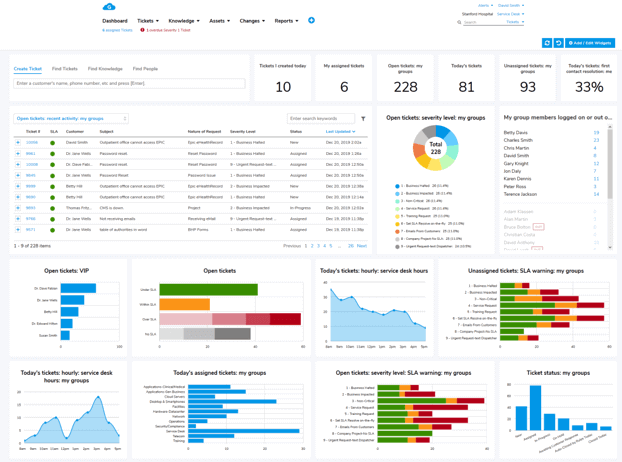
- A real-time dashboard and reports close the feedback loop on outcomes
For teams that need consistent decisions without a full enterprise DI investment, Giva is where that structure starts.
Find out how Giva can help your team continue to deliver top-notch service. Get a demo to see Giva's solutions in action, or start your own free, 30-day trial today!



Categories: Customer Service