Superior Customer Service: 10 Practical Ways to Deliver an Exceptional Experience
 By Ron Avignone
The gap between "good" and superior customer service is where companies win or lose loyalty. Good service is important, but it's not memorable. It's expected. It doesn't inspire customers to leave reviews or come back. That's where superior customer service makes the difference. It's what turns customers into brand advocates and elevates the customer experience.
What makes customer service superior? It's proactive, consistent, and driven by emotional intelligence. Because customers don't remember good service, they remember how you made them feel.
The following sections break down what defines superior service and the specific strategies organizations can use to deliver it consistently.

What Is Superior Customer Service?
Superior customer service goes beyond resolving issues or responding to inquiries. It means meeting and exceeding customer expectations and anticipating their needs, every time.
It involves understanding customer needs early, reducing the effort required to resolve issues, and making interactions feel natural. It's about creating a consistent standard customers can depend on every time they need to connect with your business. If a customer contacts your team five times in a year, each interaction should feel just as smooth and reliable as the last. Consistency is what builds trust over time.
Superior customer service is built through strong systems, company culture, and accountability. It is not driven by individual effort alone. Organizations that deliver it consistently are the ones that take ownership and pride in every stage of the customer journey.
Good vs. Superior Customer Service: What's the Difference?
"Good" customer service meets expectations, but superior customer service exceeds them in a way that feels intentional and memorable. The difference comes down to consistency, personalization, and proactive effort. Superior service goes beyond just solving problems to working to prevent them and create a better overall experience.
Here they are side by side:
Good Customer Service |
Superior Customer Service |
|---|---|
Resolves issues |
Anticipates issues before they happen |
Follows scripts |
Adapts to each customer |
Reactive |
Proactive |
Transactional |
Relationship-focused |
Meets expectations |
Exceeds expectations consistently |
Why Superior Customer Service Matters More Than Ever
You've heard it before. Customer expectations are higher than ever, and competition is everywhere. With ecommerce, next-day shipping, and AI-driven experiences, customers have more choice and less patience for poor service. In fact, a study performed by Emplifi shows that 70% of customers indicate they would walk away from a brand after only two poor interactions and 24% said they would leave after only one. If they have a bad experience, there is nothing standing between them and the next best option.
Poor experiences also spread quickly. Word of mouth has always mattered, but now every interaction can show up in online reviews or on social media. A single negative experience can shape how people view your business, stopping them in their tracks, before they even connect with you.
This is why superior customer service is no longer optional. It directly impacts customer loyalty, customer retention, and long-term business growth. Companies are not just competing on product or price. They are competing on the experience they deliver.
Many customers are willing to pay more for a better experience. Whether that means 24-hour support, fast delivery, or a great website flow, the value is in how the service makes them feel. Of course, this is highly dependent on the business type and the customer base. As the business owner or manager, it is important you define these key categories. Remember, companies do not lose customers because of price alone. They lose them because of poor experiences and inconsistent service.
Delivering that level of service requires a deliberate approach. Below we'll talk more about how you can put these words into action.
10 Ways to Deliver Superior Customer Service
-
Lead with Empathy, Not Efficiency
Many businesses assume that speed to resolution is the key to great customer service. While long wait times and repeated transfers create friction, speed alone does not define a positive experience. Scripted responses and rushed interactions often leave customers frustrated.
Leading with empathy starts by acknowledging the issue and validating the customer's feelings. Then adjust your tone to fit the situation. For example, if a customer is clearly frustrated, the goal should be to defuse the situation early. A simple response like, "Hi Mr. Smith, I understand your frustration. I would feel the same in your position. Let's work through this and find the best solution," can immediately shift the tone of the interaction.
Customers are not always looking for speed or perfection. They expect to feel understood. That alone can strengthen trust, improve perception, and build long-term loyalty.
-
Anticipate Needs Before Customers Ask
The best customer service interactions are the ones that never have to happen. Most teams wait for problems to reach their call center or chat queues. Great teams prevent them before they occur. It's not possible to eliminate every issue. But proactive customer service helps reduce friction and improve the overall experience.
In practice, this can look like:
- Notifying customers about a product delay before they ask. Instead of waiting until the launch date passes, communicate early and provide updated timelines.
- Identifying recurring issues and addressing them as soon as possible. If several customers report the same problem, send a proactive update to prevent a surge in new support requests.
- Offering service credits or small gestures after disruptions. A simple credit can reduce frustration and prevent unnecessary follow-up interactions.
- Providing clear self-service options, such as access to a knowledge base. Remind customers these resources are available on a regular basis.
Proactive service may seem like a small gesture, but it is often the difference between good and exceptional service.
-
Personalize Every Interaction
Customers dislike generic service where they feel like another ticket number. They don't want to repeat themselves. They expect you to know who they are, understand their history with your business, and have context for why they're reaching out. "One-size-fits-all service" feels outdated.
To achieve this, businesses need customer data. This includes past interactions and preferences. Without it, personalization is not possible at scale. With it, teams can deliver faster, more informed responses that feel tailored rather than transactional.
Personalization is no longer a bonus. It is an expectation.
-
Empower Employees to Go Off-Script
Scripts help standardize service. But they can also prevent great service. They help teams follow company policy and cover key details. But they can also lead to rigid, impersonal interactions that limit personalized service.
Employees should have the flexibility and authority to go off script when needed. This allows them to adapt to the situation, respond more naturally, and deliver service that fits the specific needs of the customer.
-
Create Seamless, Frictionless Experiences
Most customers have experienced the frustration of dealing with a difficult support process. Long wait times, multiple transfers, and the need to repeat information all add unnecessary friction.
Creating a seamless experience means reducing that friction at every step. This means keeping long wait times, transfers, and the need to repeat information to a minimum. The goal is simple: fewer steps, faster paths to resolution, and less effort overall.
When processes are filled with friction, they waste the customer's time. And few things matter more to customers than how their time is used.
-
Turn Mistakes into Loyalty Moments
Mistakes are going to happen. The real test is how your team responds. Slow responses, incorrect information, or a lack of accountability can turn a simple issue into bad customer service.
Strong teams respond in a way that builds trust and reinforces loyalty. This includes:
- Acknowledging the mistake quickly
- Taking ownership and accountability
- Providing a clear resolution, with a small gesture if needed (refund, credit, replacement, or proactive outreach)
A mistake handled well can matter more than a flawless experience. A mistake handled poorly can lead to customer churn with little room for recovery.
-
Use Feedback as a Strategic Asset
Most companies collect feedback. Few actually use it. Customers notice. When nothing changes, they stop filling out surveys or assume their input does not matter.
Many businesses have the right intentions, but capacity limits action. Customer feedback often sits in dashboards, while few meaningful changes are made as a result. This is where opportunities are missed. Feedback can help identify trends, improve processes, and prevent future issues before they impact more customers.
Strong teams treat feedback as a strategic asset. They look for patterns across surveys and support requests, then use those insights to make targeted improvements. Just as important, they close the loop by communicating what has changed or following up directly with customers.
Feedback only creates value when it leads to action.
-
Invest in Consistency Across Channels
Customers don't care which channel they use. They expect the same experience everywhere. Businesses tend to think in terms of channels, while customers think about the entire customer experience. Was it easy to find support? Did they have to wait? Did they get the resolution they needed?
This doesn't diminish the importance of different channels. It highlights the need for consistency across all of them, whether that is phone, social media, live chat, or text. The problem many customers encounter is inconsistent information and standards between channels. They may receive different answers, or find that one channel is less helpful than another.
The goal is to deliver a consistent experience no matter where the customer engages. This comes down to alignment across your customer service team. Inconsistency is one of the fastest ways to lose trust, so consistently great experience is paramount.
-
Build a Culture of Continuous Improvement
Superior service is not something you achieve once. It's something you must continuously refine. You can achieve this through three simple steps:
- Asking for feedback
- Refining processes based on that feedback
- Adapting to new trends over time
Strong teams treat this as an ongoing cycle, not a one-time initiative. Feedback highlights what is not working. Process improvements address those gaps. Over time, these small changes compound into meaningful improvements in the overall experience.
This is where scalable solutions come into play. As your business grows, your ability to maintain a high standard of service depends on how well your processes evolve with it. Without continuous improvement, service quality begins to decline.
The companies that deliver superior customer service are the ones that never stop improving.
-
Avoid These Common Mistakes
Even well-intentioned teams can fall short if they overlook common service pitfalls. Avoiding these mistakes is just as important as implementing best practices:
- Focusing only on speed: Fast responses without empathy can feel impersonal
- Over-reliance on scripts: Rigid responses limit personalization
- Ignoring customer feedback: Collecting feedback without acting on it reduces trust
- Inconsistent service across channels: Different answers across channels create confusion
- Making customers repeat information: This adds friction and frustration
Key Metrics Guiding You to Provide Superior Customer Service
The right metrics help teams understand what is working and where improvements are needed.
Key metrics include:
- Customer Satisfaction Score (CSAT): Measures how satisfied customers are after an interaction
- Net Promoter Score (NPS): Indicates customer loyalty and likelihood to recommend
- First Contact Resolution (FCR): Tracks how often issues are resolved on the first interaction
- Average Resolution Time: Measures efficiency without sacrificing quality
- Customer Effort Score (CES): Evaluates how easy it is for customers to get help
Teams should use a combination of these metrics rather than relying on a single number. This provides a more complete view of the customer experience.
How Giva Helps Teams Deliver Superior Customer Service
Delivering superior customer service requires more than good intentions. It requires the right systems, visibility, and structure to support your team.
Giva's Customer Service Software helps teams do this by:
- Using a centralized support request platform: Tickets are tracked, prioritized, and routed in one place. This helps teams stay organized and deliver consistent service.
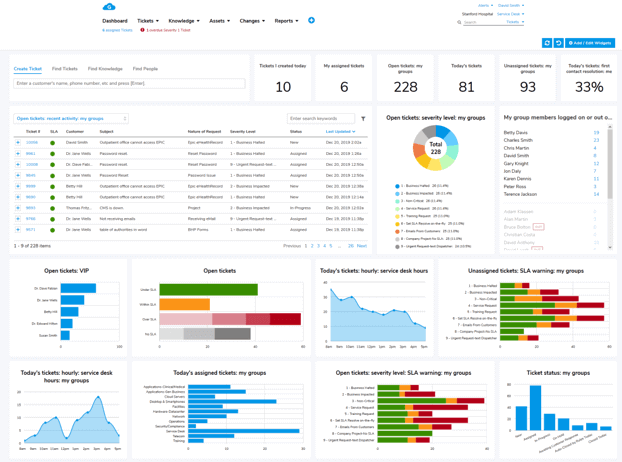
- Seeing real-time customer data and past interactions in a unified dasboard: This helps them provide more personalized service without repeating questions. This gives agents the context they need to respond clearly and with personalization.
- Having an ingegrated knowledge base and self-service capabilities in a dasboard: AI Copilots allow customers to find answers on their own while reducing incoming support requests. This supports faster resolution times and frees up teams to focus on more complex issues.
- Working with advanced reporting: These provide visibility into trends, performance, and recurring issues. This makes it easier for teams to identify areas for improvement and refine their processes over time.
Giva's Customer Service Software helps teams deliver consistent, scalable support. The right system is the first step to better service.
If you're looking to improve your service offering, Getting a demo to see Giva's solutions in action or starting a 30-day free trial is a great way to get started.
Superior Service Is a Mindset, Not a Metric
Superior customer service is not defined by a single interaction or a performance metric. It is shaped by the choices your team makes every day. The gap between good and superior service comes down to consistency, intention, and a willingness to improve.
Customers may not remember every detail, but they remember how they were treated. When service is proactive, personalized, and easy, it builds trust and keeps customers coming back.
In the end, superior service is not something you measure once. It is something you commit to over time.
Additional Resources
- 5-Star Customer Service: Skills for Promoting Excellence in Every Interaction Plus Examples
- Customer Satisfaction Score (CSAT): What It Is, How to Calculate It, and How to Improve It
- White Glove Customer Service: How to Implement, Overcome Obstacles and Measure for Success
- 23 Characteristics of Customer Service Excellence and Steps for How to Implement and Measure
- Negative Words vs. Positive Words in Customer Service



Categories: Customer Service