12 Excellent Strategies for How to Improve Customer Experience in Your Call Center
 By Ron Avignone
Most customers contact a call center as a last resort. By the time they dial in, they have usually checked the website, maybe sent an email, or maybe waited. They arrive with a problem that has not been solved, and often with patience already stretched. How that call goes will determine how they feel about your brand for a long time.
Improving call center Customer Experience (CX) requires more than encouraging agents to be helpful. It involves the routing systems that connect customers to the right person, the tools agents use to access information and resolve issues, and the original problems that drive calls in the first place.
This guide covers 12 concrete strategies and how to's, the six metrics that show whether those improvements are working, and the common mistakes that slow progress.

Key Takeaways
- The most powerful CX improvements often happen before a call begins, by reducing the call volume driven by upstream failures that agents have no control over.
- First Contact Resolution (FCR) is the single metric most closely correlated with customer satisfaction in call center research. The industry benchmark for a good FCR rate is 70-79%.
- Agent empowerment, giving agents the authority to resolve issues such as refunds and replacements without escalating, is one of the fastest ways to improve First Contact Resolution and customer satisfaction.
What Is Customer Experience in a Call Center?
Customer Experience in a call center is the overall impression a customer forms through every interaction with your team, from the moment they navigate your phone menu to any follow-up they receive after their issue is resolved.
This is more comprehensive than customer service:
- Customer service refers to the specific interaction when a customer contacts your team and someone responds
- Customer experience spans the full customer journey, covering:
- How long they waited
- Whether they had to repeat themselves
- How engaged the agent appeared
- Whether the resolution actually held after the call ended
Teams that manage chat, email, and other digital channels alongside phone are often called contact centers rather than call centers, though the principles for improving customer experience apply equally to both.
One important implication is that the call center is often not where the problem started. Customers call because something went wrong elsewhere, such as a product failed, a billing statement was confusing, or a delivery did not arrive on time, but the call center deals with the results of those issues.
In practice, improving call center CX is partly about fixing the experience inside the call center and partly about fixing what drives calls in the first place.
Why Call Center CX Matters: Business Impact and Revenue
Poor call center customer experience is a direct business cost, not just a satisfaction issue.
PwC found that 32% of customers would stop doing business with a brand they love after just one bad experience. Call centers, as the front line for customer problems, are among the most common sources of those defining moments. A single poorly handled call can end a relationship that took years to build.
The positive side is equally clear. Call centers that consistently resolve issues and make customers feel heard build loyalty that is hard to replicate through marketing. Loyal customers also tend to spend more over time, making customer experience a direct driver of customer lifetime value, not just satisfaction scores. Each call is an opportunity either to reinforce or to damage the relationship.
12 Ways to Improve Customer Experience in Your Call Center
Meaningful CX improvement requires changes to how agents operate, how your systems support them, and what drives customers to call in the first place. The 12 strategies below address all three:
-
Improve First Contact Resolution (FCR)
First Contact Resolution is the percentage of calls where the customer's issue is fully resolved without any need for a follow-up contact. It is the metric most closely correlated with customer satisfaction in call center research.
When customers do not have to call back, they experience less frustration, less wasted time, and more confidence that the company actually handled their problem.
Three things drive FCR more than almost anything else:
- Agent empowerment: The authority to actually resolve issues rather than just document them and escalate
- Knowledge base access: A complete and accurate resource agents can use without putting customers on hold to find information
- Skill-based routing: Connecting customers to the agent best equipped for their issue type on the first attempt
Research from SQM Group suggests that a 1% improvement in FCR produces roughly a 1% improvement in customer satisfaction scores. That correlation makes FCR one of the highest-impact targets in call center CX improvement.
-
Reduce Hold Times and Wait Times
Hold time is one of the most immediate and measurable sources of customer frustration. A study from Nextiva on call center behavior consistently shows that 54% of callers hang up after approximately eight minutes on hold, and many abandon far sooner.
The industry standard, sometimes called the 80/20 rule, is to answer 80% of calls within 20 seconds. Every call that misses that threshold carries a real risk of abandonment and negative sentiment.
Reducing hold time is largely a staffing and routing problem. Teams typically address it by:
- Predicting call volume accurately and scheduling coverage to match it
- Routing calls to the right agent on the first attempt, rather than passing them through a general queue
- Using workforce management tools to predict peak call periods and schedule staffing to match anticipated volume
- Offering a callback option so customers are not forced to wait on hold
- Providing estimated wait time announcements so customers know what to expect and can decide whether to stay on hold or call back later
- Identifying peak periods where consistent gaps in coverage exist
Hold times are often a symptom of FCR problems. When customers call back repeatedly about the same issue, queues fill up faster for everyone. Improving resolution quality reduces repeat contact volume, which brings wait times down across the board.
-
Train Agents in Active Listening and Empathy
Active listening means more than staying quiet while a customer talks. It involves acknowledging what the customer said before responding, confirming your understanding of the issue before jumping to solutions, and asking clarifying questions rather than assuming. When agents do this consistently, customers feel heard, which often reduces emotional tension even before the issue is resolved.
Empathy matters more now that AI and self-service tools handle routine queries. The calls that reach agents are increasingly the complex or emotionally charged ones. They might be:
- A billing dispute that feels personal
- A service failure that caused real inconvenience
- A first-time customer who does not understand a complicated product
Training programs that focus on soft skills for these specific situations, using role-play, scored call reviews, and group coaching sessions with concrete examples, build capabilities that scripts alone cannot replicate.
-
Empower Agents to Resolve Issues Without Escalation
Every unnecessary escalation is a CX problem. Customers transferred to another team member must re-explain their situation, wait longer, and receive the implicit message that the first person they spoke with could not actually help them.
Escalation should be reserved for genuinely complex issues, not used as a way to avoid giving agents the authority to make real decisions.
Empowerment means defining clearly what agents can do without asking permission. Decisions like a refund threshold, a discount authorization, or a free replacement for a damaged product are the ones that, when agents can make them in real time, often turn a frustrating call into a positive memory. Organizations that restrict agent authority to protect short-term costs frequently pay more in churn over time.
Practical steps to build agent empowerment:
- Document exactly what first-tier agents can approve, including refund limits, discount thresholds, and replacement decisions, so the policy is consistent and agents do not have to guess
- Build an escalation decision tree that specifies which issue types genuinely require a supervisor and which do not
- Track escalation reasons weekly to spot patterns where agents are defaulting to escalation because authority boundaries are unclear
- Review agent authority limits at least annually as your product, pricing, and policy landscape changes
-
Personalize Interactions Using Customer Data
Customers do not expect call center agents to know their complete history, but they do expect agents to know who they are. McKinsey research found that 71% of consumers expect personalized interactions from companies, and 76% get frustrated when that expectation goes unmet. In a call center context, personalization starts with recognizing the caller by name, knowing their account status, and being aware of any prior contacts so they do not have to start from the beginning every time.
A well-integrated CRM makes this possible. When customer history, prior issue descriptions, and account details appear automatically when a call connects, agents spend less time gathering background and more time on the actual problem. That streamlining shortens handle time and improves resolution quality, but also tells the customer that they are being treated as a person and not just a ticket to close.
Customers value personalization but resist feeling over-monitored. Referencing prior interactions and account details builds rapport, but volunteering information that feels invasive or irrelevant can have the opposite effect. Train agents on being careful to understand where the line is.
Getting personalization right in practice means:
- Integrating your phone system with your CRM so customer data surfaces automatically when a call connects, often called a "screen pop"
- Training agents on which details to reference proactively, such as a recent order or prior issue, and which data points feel intrusive when volunteered unprompted
- Using the customer's name early in the call as a baseline standard, reinforced consistently through QA scoring
-
Build Consistent Omnichannel Support
Omnichannel support means customers can move between channels without losing context. If a customer starts a conversation through chat and then calls in because the chat agent could not resolve the issue, the phone agent should already know what was discussed.
The alternative of requiring the customer to re-explain the full problem from scratch is one of the most consistently cited sources of call center frustration.
The difference between omnichannel and multichannel is context preservation:
- A multichannel operation gives customers multiple ways to reach your team but treats each channel as a separate experience
- An omnichannel operation shares data across channels so the experience is continuous, regardless of how the customer reaches out. CRM integration, shared ticketing systems, and consistent escalation notes all contribute to that continuity
Channel consistency matters within voice interactions too. A customer who received a specific commitment from a prior agent should not have to fight to have it honored when they call back. Standardized resolution documentation makes that consistency achievable rather than dependent on an individual agent's memory.
Building toward omnichannel continuity involves:
- Auditing every channel handoff to identify where customer context is currently dropped
- Establishing a shared case or ticket ID that follows an interaction across channels so agents can pull up prior history immediately
- Standardizing the escalation note format so the receiving agent immediately knows what was tried, what was promised, and what the customer's current emotional state is
- Testing the handoff experience firsthand: try initiating a chat, then call in, and observe what the phone agent can actually see
-
Offer Self-Service Options That Actually Work
Good self-service reduces call volume for agents while giving customers a faster path to resolution for straightforward questions. A well-designed knowledge base, FAQ page, or Interactive Voice Response (IVR) system can handle a meaningful share of inbound contacts before they ever reach an agent.
The most important distinction is between self-service that genuinely helps and self-service that acts as a barrier. When customers navigate an IVR and cannot find a clear path to an agent, or when a chatbot loops them without offering resolution, they arrive at your team more frustrated than if they had reached a person directly. Self-service should be built around the questions customers actually ask and not the questions your team wishes they were asking.
Well-implemented self-service also benefits agents. When customers use it for simpler queries like order status, appointment scheduling, or account lookups, agents are free to focus on the complex issues that require genuine problem-solving.
-
Use Quality Assurance and Regular Coaching
Quality Assurance (QA) is the feedback loop that catches CX problems before they become ingrained habits or patterns. When QA is absent or inconsistent, issues accumulate quietly.
Agents develop habits that go uncorrected, routing rules send calls to the wrong teams, and scripts that confuse customers stay in circulation. All of these damage experience gradually before they show up clearly in satisfaction scores.
Traditional QA relies on manually reviewing 2-5% of calls per agent per week. AI-assisted QA tools, including speech analytics platforms that analyze conversation patterns across 100% of calls, flag interactions that fall below thresholds for tone, resolution quality, compliance, or script adherence. Full coverage gives managers a far more accurate picture of actual performance than sampling alone, and reveals patterns that a small manual review would miss.
Coaching should be grounded in specific examples rather than abstract feedback. Telling an agent they were abrupt is less useful than playing back the exact moment in a call where they interrupted a customer and working through a better response together. When coaching targets concrete behaviors with evidence, agents improve faster and are more likely to retain the lesson.
-
Collect and Act on Customer Feedback
Post-call surveys, follow-up email surveys, and Voice of Customer (VoC) programs all generate useful data about the call center experience. The failure area that most organizations share is not a lack of data collection, but a lack of action on what is collected.
Acting on feedback means reviewing patterns regularly, identifying the highest-impact gaps, and making visible changes in response.
The step most often skipped is telling customers what changed. When a customer's feedback leads to a policy update or process fix, a brief communication shows that the company is paying attention. That builds trust and increases the likelihood that customers will keep sharing their experience.
The processes that make feedback loops work are:
- Assign a single owner, such as a QA lead or CX manager, who reviews feedback data on a defined weekly or monthly cadence
- Categorize feedback by issue type rather than just score, so patterns by category reveal fixable system problems rather than individual agent incidents
- Set a response threshold for high-priority negative feedback, for example CSAT scores below a defined level should trigger a follow-up review within 48 hours
- Close the loop publicly when customer feedback leads to a real change, which indicates to customers that the process is worth participating in
-
Address the Root Causes of Repeat Calls
Some calls are genuinely complex and require human intervention. But a significant portion of call center volume is driven by failures that originate elsewhere in the business. Confusing billing statements, product defects, unclear delivery communications, and commitments that were made but not honored all generate calls that could have been prevented at the source.
In service design, this pattern is sometimes called "failure demand," which refers to demand created by a failure to do something right the first time.
The way to identify failure demand is to categorize incoming calls by reason and look for patterns. When 25-30% of calls cluster around a single question or complaint type, the solution is not to get faster at answering those calls but to fix whatever generates them.
This kind of root-cause work delivers cumulative returns. Fewer repeat calls means shorter queues for everyone, less agent burnout from handling the same frustrating conversation repeatedly, and better satisfaction scores as agents have more time and attention for the calls that genuinely need them.
-
Use AI and Automation Thoughtfully
AI tools are increasingly embedded in call center operations. They handle tasks like:
- Intelligent call routing based on issue type and agent skill
- Real-time agent guidance, which brings up relevant knowledge base articles during a conversation based on what the customer is describing
- Real-time sentiment analysis that flags frustrated or distressed customers during a call, allowing supervisors to intervene or agents to adjust their approach before the conversation deteriorates
- Automated QA scoring across 100% of calls
- Customer-facing self-service for routine queries
Used well, these tools reduce agent workload on repetitive tasks and help agents access the right information faster. Gartner predicts that agentic AI (AI systems capable of taking autonomous, multi-step actions without human direction) will autonomously resolve 80% of common customer service issues without human intervention by 2029.
The important word in that prediction is "common." Complex disputes, emotionally charged interactions, and judgment calls that require real context still require human skill. AI should handle the volume that does not need it, freeing agents to focus on the interactions that do. That division of labor is where AI-powered CX improvement actually lives.
The risk of over-automating is real. When customers sense that a company has made it deliberately difficult to reach a person, they interpret that as indifference. AI-powered CX improvements work best when they make the path to resolution faster, not when they are used primarily to minimize human contact as a cost-cutting measure.
-
Support Agent Well-Being and Reduce Burnout
Agent well-being is not a soft topic. It has direct consequences for customer experience. Agents who are burned out, disengaged, or working under constant pressure from unrealistic efficiency metrics are less present in conversations, less effective at problem-solving, and more likely to leave the organization.
High turnover forces teams into perpetual training mode, which reduces the overall experience level and consistency of service.
Chewy, the online pet retailer, is frequently cited for its agent empathy culture. Agents are encouraged to take meaningful time with customers who are grieving a pet, and the company is well-known for practices like sending handwritten condolence cards and flowers to customers who have lost an animal. That kind of response is possible because agents have the time and the authority to make those decisions, rather than being measured on call volume alone.
Most organizations do not need to replicate Chewy's specific practices to make meaningful progress.
Some practical starting points are:
- Giving agents balanced metrics that weigh resolution quality alongside efficiency
- Equipping them with tools that reduce process friction
- Building recognition programs that highlight genuine problem-solving
- Providing access to mental health support resources
When agents feel that the organization supports their ability to do their job well, that experience tends to show up in the calls they handle.
6 Key Metrics for Measuring Call Center Customer Experience
Tracking whether the strategies above are working requires a consistent set of metrics. The following six give call center leaders a practical view of performance across speed, resolution quality, and overall satisfaction:
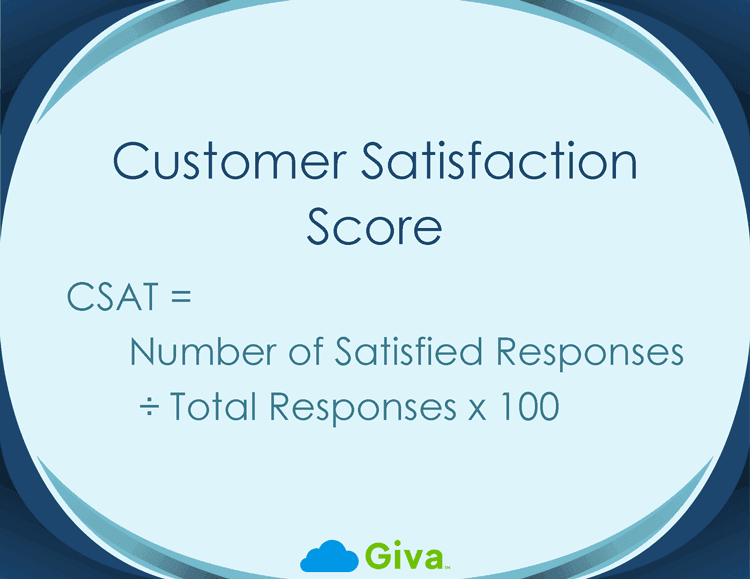
- Customer Satisfaction Score (CSAT): Immediate satisfaction with a specific interaction, typically captured through a brief post-call survey on a 1-5 or 1-10 scale. CSAT is the most direct read on whether a given call met the customer's expectations.
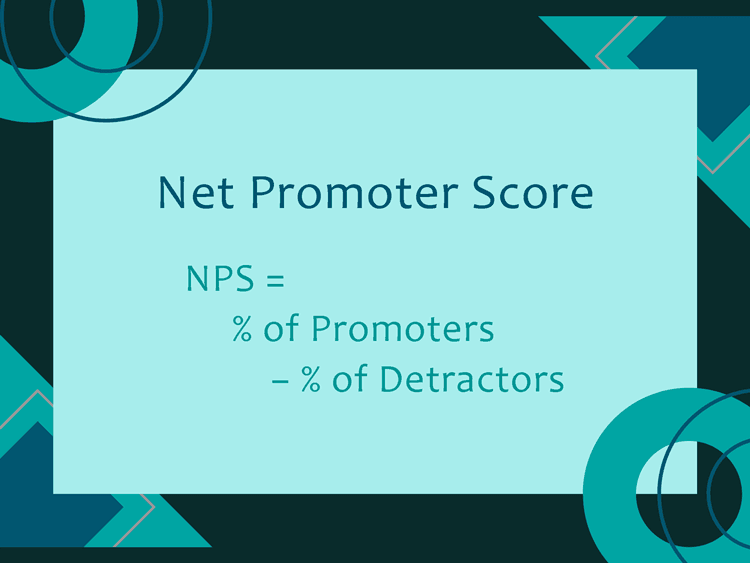
- Net Promoter Score (NPS): Customer loyalty and the likelihood that someone will recommend your company, measured on a 0-10 scale. Scores of 9-10 are Promoters (loyal advocates), 7-8 are Passives (satisfied but not enthusiastic), and 0-6 are Detractors (unhappy customers likely to share negative experiences). NPS reflects longer-term sentiment, not just single-interaction satisfaction.
- Customer Effort Score (CES): How easy it was for a customer to get their issue resolved. Customers who expend less effort report higher satisfaction and are more likely to return.
CES is particularly useful for spotting process friction: overly complex menus, unnecessary transfers, or policies that require customers to call multiple times for a single issue. - First Contact Resolution (FCR): The percentage of customer issues resolved fully on the first interaction, without a callback or repeat contact. FCR correlates more directly with customer satisfaction than almost any other call center metric. The industry benchmark for a good FCR rate is 70-79%.
- Average Handling Time (AHT): The total time spent on a call, including hold time and after-call work such as documentation and follow-up tasks. AHT should always be read alongside FCR, not in isolation. A short AHT that results in unresolved calls is worse for CX than a longer call that actually fixed the problem. The industry average is approximately six minutes.
- Average Speed of Answer (ASA): How long a customer waits before reaching an agent. The common industry standard is the 80/20 rule: 80% of calls answered within 20 seconds. Long wait times are one of the fastest ways to damage customer experience before a conversation even begins.
Summary of the six metrics:
Metric |
What It Measures |
Target or Industry Benchmark |
|---|---|---|
CSAT |
Satisfaction with a specific interaction |
Typically 80%+ (varies by industry) |
NPS |
Customer loyalty and likelihood to recommend |
Positive score is the baseline; varies by industry |
CES |
Ease of getting an issue resolved |
Lower score = less effort = better outcome |
FCR |
Issues resolved fully on the first contact |
70-79% is considered good |
AHT |
Total handle time per call |
Approximately 6 minutes on average |
ASA |
Wait time before reaching an agent |
80% of calls answered within 20 seconds |
Common Call Center CX Mistakes to Avoid
Getting CX right requires not just applying the strategies above, but avoiding the patterns that quietly undermine them:
- Optimizing AHT without FCR context: Shorter calls are not automatically better. An agent who rushes through a call and leaves the issue unresolved creates a callback, which is worse for CX and worse for efficiency than a slightly longer call that actually fixed the problem.
- Treating all callers the same: A customer who has been with your company for eight years and a first-time caller with the same apparent issue type may need very different handling.
CRM data that reveals account history allows for more appropriate prioritization and tone. - Building self-service to filter, not to help: Deploying self-service primarily to reduce agent contacts, rather than to help customers, produces IVRs and chatbots that customers route around or resent. Self-service should be a shortcut to resolution, not a barrier.
- Collecting feedback without acting on it: Post-call surveys that generate scores but drive no changes are a missed opportunity. Customers who notice the pattern stop responding, which reduces data quality over time.
- Confusing script compliance with issue resolution: An agent who follows every script step precisely but leaves the customer's problem unsolved has failed at the core task. QA programs that score compliance without also measuring actual resolution reinforce the wrong behaviors.
- Waiting too long to address agent burnout: High call center turnover is expensive. Recruiting, onboarding, and training a new agent typically costs several thousand dollars per position. Addressing workload, tools, and recognition before burnout peaks is substantially cheaper than managing the consequences afterward.
Frequently Asked Questions About Call Center Customer Experience
-
What is the difference between customer service and customer experience in a call center?
Customer service refers to the specific interaction when a customer contacts your team for help, while customer experience covers the full impression customers form across all their interactions with your brand.
In a call center, customer service is what happens during the call. Customer experience includes everything surrounding it. That covers the process customers went through to find the phone number, the wait before reaching an agent, and whether the resolution held up after the call ended.
A team can deliver polite, professional customer service and still produce a poor customer experience if the system around them creates unnecessary friction.
The practical implication is that improving CX requires looking at more than agent behavior. It means examining routing systems, self-service options, feedback loops, and the upstream problems that drive calls in the first place.
See Customer Service vs. Customer Experience: What's the Difference? for the complete comparison.
-
What are the most important metrics for measuring call center customer experience?
The six metrics most relevant to call center CX are:
- Customer Satisfaction Score (CSAT)
- Net Promoter Score (NPS)
- Customer Effort Score (CES)
- First Contact Resolution (FCR)
- Average Handling Time (AHT)
- Average Speed of Answer (ASA)
The most important of these for CX specifically is FCR.
CSAT captures immediate satisfaction after a call. NPS reflects longer-term loyalty. CES measures how much effort the customer had to exert to reach a resolution. FCR tells you whether the issue was actually solved, which is the most reliable predictor of how a customer will feel after the interaction. AHT and ASA tell you whether you are meeting speed expectations.
Using all six together gives a more complete picture than any single number. A high CSAT with a low FCR, for example, often means agents are creating good impressions in conversations that do not fully resolve the problem, which leads to repeat contacts and erodes satisfaction over time.
-
What is an acceptable call abandonment rate?
A call abandonment rate below 5% is generally considered acceptable in most call center operations, though the appropriate threshold varies by industry, contact type, and customer expectations.
Abandonment happens when customers hang up before reaching an agent. Most abandonment occurs within the first two minutes of hold time, and research consistently shows that more than half of callers disconnect after approximately eight minutes. A rate above 5-8% is worth investigating, since it typically points to a staffing gap, a routing problem, or an IVR that makes it hard for customers to find a path to the right queue quickly.
Abandonment rate should be read alongside Average Speed of Answer (ASA) and FCR rather than in isolation. A low abandonment rate combined with a low FCR means customers are reaching agents but not getting their issues resolved, which is a different problem than long waits.
Offering callback options is one of the most effective ways to reduce abandonment without adding headcount, since customers who can receive a return call report higher satisfaction even when the total wait time is similar.
-
How do you know if your call center CX needs improvement?
The clearest signs that call center CX needs improvement are a First Contact Resolution rate below 70%, rising call abandonment rates, CSAT scores that are trending downward, and high volumes of repeat contacts on the same issue.
Metrics tell part of the story. But what agents and customers say often surfaces problems faster than dashboards:
- Agents who frequently use phrases like "I can't actually do that, you'd need to call back" are flagging an empowerment gap
- Customers who open calls with "I've already called about this three times" are describing a repeat contact problem that FCR data may be undercounting
Listening to a random sample of calls each week, rather than only reviewing flagged ones, tends to surface these patterns earlier.
A useful quick diagnostic is to categorize incoming call reasons and look for any single reason that accounts for more than 20-25% of volume. When that much exists, it almost always points to a fixable upstream problem in billing, product communications, or service delivery, rather than something that can be solved by training agents to handle it more smoothly.
-
How can AI improve call center customer experience without replacing human agents?
AI improves call center CX most effectively when it handles repetitive tasks and gives agents better information in real time, leaving humans to handle the complex or emotionally charged interactions that require more judgment.
Practical AI applications that improve CX without displacing agents include:
- Real-time agent guidance: Pulling up relevant knowledge base articles during a call based on what the customer is describing
- Intelligent routing: Matching customers to the agent best equipped for their issue type
- Automated QA: Reviewing 100% of calls rather than a small manual sample
More and more, agentic AI will autonomously resolve common customer service issues without human intervention. The interactions that require nuance, judgment, and genuine empathy will continue to depend on skilled human agents for the foreseeable future.
-
How long should customers wait on hold before it affects satisfaction?
Wait times above two minutes begin to negatively affect satisfaction scores, and research on call center behavior shows that more than half of callers hang up after approximately eight minutes on hold.
The standard industry benchmark, often called the 80/20 rule, is that 80% of calls should be answered within 20 seconds. At that threshold, most customers do not form a strongly negative impression before the conversation even starts. Beyond two minutes, call abandonment rates increase significantly, and the customers who do stay often arrive at the conversation already frustrated.
Reducing wait times requires both staffing decisions and routing improvements. Sending calls to the right queue the first time, rather than transferring, removes one of the most common causes of extended wait times. Offering callback options also helps, since customers who can receive a return call instead of waiting on hold report higher satisfaction even when the total wait time is similar.
Related Giva Resources
- Top 12 Critical Call Center Metrics + Formulas & Best Practices
- The 10 Top Customer Experience Statistics for 2026 + How To's
- 15 Top Ways to Elevate Your Customer Service Strategy
- The Call Center Service Level: A Detailed Guide
Improving Call Center Customer Experience: Start with the System, Not Just the Script
The 12 strategies in this guide span agent training, technology, process design, and organizational culture, and all of them matter. But the core insight is that what happens inside the call center reflects what is happening across the rest of the business.
When call volume is driven by product failures, confusing communications, or promises that were made and not fulfilled, agent training alone cannot fix the experience. When agents lack the tools and authority to actually resolve issues, better scripts do not help.
The teams that improve CX most continuously are the ones that measure what is actually happening, trace problems to their root causes, and change the conditions rather than just the behavior of individuals within them.
Start with your metrics. If your FCR, CSAT, and wait time numbers are not clearly visible today, that is the first step. The data will tell you where the gaps are and which of the strategies above will have the most impact for your specific operation.
See How Giva Supports Better Call Center CX
Most of the improvement levers in this guide require the right infrastructure to act on reliably. Giva's Customer Service Software is built to put each of these strategies within reach.
Our platform includes the tools your CX strategy depends on:
- Intuitive ticket management
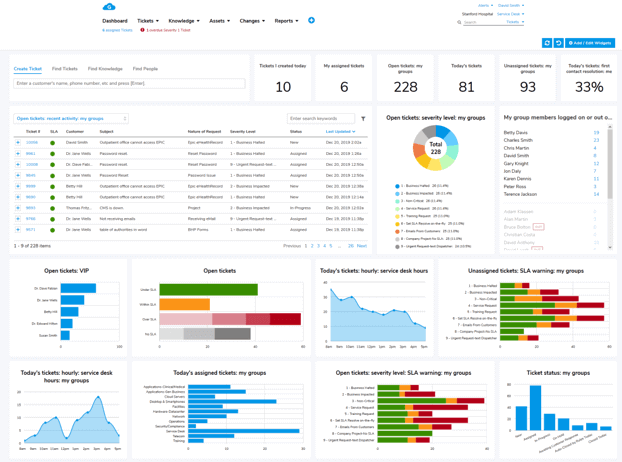
- Real-time dashboards and reporting
- SLA tracking
- Customer satisfaction surveys
- AI-Copilots that free your agents to focus on the interactions that matter most
Ready to learn how Giva can help you? Get a demo to see Giva's solutions in action, or start your own free, 30-day trial today!

Categories: Customer Service