IT Transformation Strategy: 5-Phase Framework, Roadmap Example, and Implementation Steps
An IT transformation strategy is a structured plan for modernizing an organization's IT infrastructure, processes, and teams, aligning technology with business goals, enabling automation, and building the foundation for long-term growth. As technology keeps evolving, CIOs and IT leaders need this plan to move from reactive IT support to a proactive leader of innovation. Unlike broader digital transformation (which touches every part of the business), IT transformation is specifically about upgrading the IT function itself to serve the organization better.
The business case for IT transformation is clear. According to IDC via BusinessWire, worldwide spending on digital transformation is forecast to reach almost $4 trillion by 2027. But the execution challenge is equally clear: BCG's analysis found that only 1 in 4 transformations deliver value-creating, enduring change. These two statistics just show the necessity for a well-structured IT transformation strategy.
This guide explains the key steps, the roles involved, and what tools can help make your transformation a success.

What is IT Transformation?
IT transformation focuses on modernizing IT systems, processes, and teams to ensure technology aligns with business objectives and supports future growth.
For CIOs and IT leaders, it goes beyond infrastructure upgrades — it's about:
- Building a foundation for innovation
- Improving operational efficiency
- Staying agile in a fast-changing digital landscape
By doing so, organizations can outpace competitors and meet evolving customer expectations.
IT Transformation vs. Digital Transformation
While digital transformation focuses on integrating technology into all areas of a business, IT transformation is specifically about modernizing the IT department to better serve the organization.
This means:
- Replacing outdated systems with modern tools like cloud platforms
- Automating repetitive processes to save time
- Reorganizing IT teams to work more efficiently
The goal is to create a responsive IT environment that supports company goals, adapts to new challenges, and delivers measurable value.
Key Areas of IT Transformation
They often include the following:
- Streamlining IT operations to improve efficiency and ultimately reduce costs
- Implementing newer technologies such as automations and Artificial Intelligence (AI)
- Enhancing team collaboration with agile workflows and cross-functional alignment
- Strengthening security to protect sensitive data and maintain compliance
Types of IT Transformation
IT transformation isn't one-size-fits-all. Most organizations focus on one or two areas first, then expand. Here are the five most common types:
- Infrastructure Modernization: Replacing or upgrading physical and virtual infrastructure, like servers, storage, networking, and data centers, to reduce technical debt, cut costs, and improve reliability. This often means moving from on-premises hardware to cloud or hybrid environments.
- Application Modernization: Updating or re-architecting legacy software applications so they run efficiently on modern platforms. This includes re-hosting (lift-and-shift), re-platforming, or rebuilding apps entirely using current development frameworks.
- Cloud Migration: Moving workloads, data, and services from on-premises systems to public, private, or hybrid cloud environments. Cloud migration is often the first major step in a broader IT transformation because it enables scalability, remote access, and modern service delivery.
- Process and Workflow Automation: Using tools like Robotic Process Automation (RPA) and AI-powered workflow engines to eliminate repetitive manual tasks. Automation reduces errors, frees IT staff for higher-value work, and accelerates service delivery across the organization.
- AI and Data Transformation: Building the data infrastructure and AI capabilities needed to support intelligent decision-making. This includes moving from analytics platforms and data repositories to AI Agents that can autonomously handle IT service tasks like ticket routing, anomaly detection, and incident response.
In practice, most IT transformation strategies combine several of these types within a phased roadmap. A useful measurment: start where the operational pain is highest, then build outward once the foundational infrastructure is stable.
IT transformation types summary:
Type |
What It Involves |
Primary Benefit |
|---|---|---|
Infrastructure Modernization |
Replacing or upgrading servers, storage, networking, and data centers; moving from on-premises to cloud or hybrid environments |
Reduced technical debt, lower hardware costs, improved reliability |
Application Modernization |
Re-hosting, re-platforming, or rebuilding legacy software to run on current platforms and frameworks |
Faster feature delivery, less maintenance overhead, compatibility with modern integrations |
Cloud Migration |
Moving workloads, data, and services from on-premises systems to public, private, or hybrid cloud |
Scalability on demand, remote access, consumption-based cost model |
Process and Workflow Automation |
Using RPA and AI-powered workflow tools to eliminate repetitive manual tasks across IT and business operations |
Faster service delivery, fewer errors, IT staff freed for higher-value work |
AI and Data Transformation |
Building data infrastructure and AI capabilities -- from analytics platforms to AI Agents that handle ticket routing, anomaly detection, and incident response |
Intelligent decision-making, autonomous handling of routine IT tasks, improved predictive visibility |
5 Key Phases of an IT Transformation Strategy Framework
A successful IT transformation strategy typically follows a structured framework that helps organizations move from legacy environments to modern, scalable IT operations. The framework should help reduce risk while making sure IT transformation delivers measurable business value.
While every organization's needs are different, most IT transformation efforts include five main phases:
- Assessment and Discovery: Evaluate existing systems, technical debt, security policies and procedures, and operational issues.
- Strategy and Alignment: Define business-aligned goals, prioritize initiatives, and secure executive buy-in.
- Architecture and Planning: Design architecture for the future, cloud models, and integration plans.
- Execution and Modernization: Implement new platforms, automate workflows, and migrate systems incrementally.
- Optimization and Continuous Improvement: Measure results, refine processes, and adapt to changing business needs.
And here's a summary table for these key phases:
Phase |
Purpose |
Key Activities |
|---|---|---|
Assessment and Discovery |
Understand the current state before committing to a direction |
IT infrastructure audit, technical debt mapping, security posture review, stakeholder interviews |
Strategy and Alignment |
Set direction and get organizational buy-in |
Goal setting, executive alignment, prioritization of initiatives, resource planning |
Architecture and Planning |
Design the future state |
Cloud architecture design, integration planning, vendor selection, security-by-design |
Execution and Modernization |
Build and deploy |
Platform migrations, automation deployment, system integrations, change management |
Optimization and Continuous Improvement |
Refine and sustain |
KPI tracking, performance tuning, ongoing training, iterative improvements |
A common question follows: how long does IT transformation take? The honest answer is: it depends on scope. A focused initiative, such as migrating a single application to the cloud, for example, or automating one category of service requests, can be completed in three to six months. A full enterprise-wide transformation that touches infrastructure, applications, workflows, and organizational culture typically takes two to five years and is best treated as a continuous program rather than a project with a end date.
The phases above give you a sequence. But in the end, the timeline depends on your starting point, available resources, and how willing the organization is to commit to change at each stage.
What Goes Into an IT Transformation Roadmap?
A roadmap translates your transformation strategy into a sequenced plan with milestones, owners, and timelines. It is the document that moves IT transformation from a vision into an executable program.
A solid IT transformation roadmap typically includes:
- Current-State Snapshot: A plain-language summary of where IT stands today -- key systems, known gaps, technical debt, and performance baselines
- Future-State Goals: The measurable outcomes you are building toward (e.g., 99.9% uptime, 40% reduction in manual ticket handling, migration of three legacy apps to cloud within 18 months)
- Initiative Inventory: The specific projects, migrations, or automation deployments that make up the transformation -- prioritized by impact and feasibility
- Phase Mapping: Which initiatives fall into which phase (assessment, planning, execution, optimization) and in what sequence they depend on each other
- Resource and Budget Plan: Headcount, vendor contracts, training needs, and capital expenditure broken down by initiative
- KPIs and Review Cadence: Which metrics get tracked, at what frequency, and who reviews them
It's important to note that the roadmap is not static. Expect to revisit and revise it at the end of each phase as you learn what worked, what took longer than planned, and what the business priorities now are.
Common IT Transformation Challenges and How to Address Them
Even well-planned IT transformation strategies face challenges. Common difficulties include:
- Legacy system complexity that slows modernization
- Resistance to change from teams and stakeholders
- Skill gaps in cloud, automation, or security
- Security and compliance risks during system migrations
- Unclear ownership or governance
Organizations can address these issues with:
- Strong change management
- Phased rollouts
- Ongoing training
- Clear accountability across IT and business leadership
Steps to Implement an Effective IT Transformation Strategy
A successful IT transformation strategy is built on clear goals, careful planning, and alignment with business objectives. Below are the essential steps CIOs and IT leaders should follow to bring a smooth and impactful transformation:
-
Evaluate Your Current IT Environment
Begin with a thorough audit of your IT infrastructure, processes, and tools. Identify inefficiencies, outdated systems, and gaps in meeting current business needs.
-
Define Clear Goals Aligned with Business Priorities
Set specific, measurable objectives for your IT transformation. These might include improving scalability, reducing costs, or enabling faster product delivery. Make sure these goals support the broader goals of the organization.
-
Create a Comprehensive Roadmap
Develop a step-by-step plan that outlines priorities, timelines, and resource allocation. Focus on high-impact initiatives first, such as migrating to the cloud or automating routine processes.
-
Modernize Your IT Infrastructure
Embrace new technologies like cloud computing, artificial intelligence, and DevOps practices. Modern infrastructure not only improves efficiency but also supports innovation and scalability.
-
Adopt Agile Methodologies
Shift to agile workflows that bring flexibility and continuous improvement. This involves selecting partners that provide regular updates and opportunities to upscale to meet new goals or trends as they arise.
-
Invest in Skills and Team Collaboration
Provide training to upskill your IT workforce and encourage cross-departmental collaboration. Building a culture of learning and teamwork is key to long-term success.
-
Monitor Progress Using KPI Metrics
Key Performance Indicators (KPIs) should be determined ahead of time. Measuring from a baseline makes it possible to show real progress and justify continued investment. Common KPIs in IT transformation include:
- System availability and uptime: Target: 99.9%+ for critical services)
- Mean Time to Sesolve (MTTR) incidents: Target: reduce by 20-30% within the first year)
- Cost savings from automation or infrastructure consolidation: Track in dollar terms, not just percentages
- Deployment frequency and change success rate: A rising success rate signals that your delivery process is maturing
- User satisfaction and service adoption: Survey scores and active-user rates show whether people are actually using the new tools
Tracking these metrics helps IT leaders demonstrate ROI, identify where things are stalling, and make the case for the next phase of investment. Revisit them quarterly at minimum, and be willing to drop a KPI that is no longer measuring what matters.
What this looks like in practice: Capital One's IT transformation is one of the most-cited enterprise examples. Over eight years, the financial services company migrated entirely to the cloud, closed all its on-premises data centers, and built roughly 80% of its 2,000+ cloud applications in-house. The transformation required addressing every challenge on the list above, including legacy system complexity, cultural resistance, skill gaps, and security requirements, in sequence, over a multi-year program. It succeeded because leadership treated it as an ongoing capability-building exercise rather than a finite project. Most organizations won't start at Capital One's scale, but the sequencing principle applies regardless of size: stabilize the foundation before modernizing applications, and modernize applications before automating at scale.
Ready to get started? To ensure your IT transformation stays on track, effective change management is essential. Giva's Change Management Software provides a powerful solution to streamline the change approval process, track modifications, and minimize risks. With its user-friendly interface and real-time reporting, Giva empowers IT leaders to manage complex transformations with confidence. Ready to take control of your IT changes? Learn more about Giva's Change Management Software today.
Who Drives IT Transformation?
Successful IT transformation is a team effort, requiring leadership and collaboration across various roles and departments. Here are the key players driving the process:
-
The CIO: Architect of Transformation
As the chief strategist, the Chief Information Officer, or CIO, oversees the entire transformation effort.
They:
- Align IT goals with business priorities
- Secure executive buy-in
- Ensure resources are allocated as required
-
IT Leaders and Managers
IT directors and team leads play a vital role in managing day-to-day execution.
They:
- Turn strategies and goals into actionable plans
- Oversee and lead project teams
- Monitor progress
-
IT Teams
The technical backbone of transformation, IT teams:
- Handle implementation tasks like migrating systems
- Deploy new technologies
- Troubleshoot challenges
Their expertise helps bring a smooth execution.
Note: Depending on the size of the organization, this 'hands-on' role might be fulfilled by IT Leaders or Managers. This is especially true in smaller organizations with less staff.
-
Business Stakeholders
Business stakeholders include:
- Department heads
- Team managers
- Executives from areas like finance, operations, marketing, and sales
They collaborate with IT to:
- Ensure that solutions address specific departmental needs
- Align with organizational goals
- Integrate seamlessly into existing workflows
-
External Partners
Third-party consultants, technology vendors, and service providers can offer expertise and solutions to accelerate transformation. They help bridge gaps in knowledge and resources.
Additional Reading: Top 20 Tools of Communication: Business Success Today, Trends of Tomorrow
How Technology Enables a Successful IT Transformation Strategy
Technology choices play an important role in IT transformation, but success depends on how those technologies are applied in a well-planned and executed manner.
Here are some examples:
- Cloud platforms improve scalability, resilience, and cost control and serve as the foundation for deploying AI workloads.
- Automation reduces manual work and operational errors, from ticket handling to software deployment processes.
- AI and AI Agents are now central to modern IT transformation. Traditional AI tools surface insights and recommendations, while AI Agents (autonomous systems capable of taking multi-step actions without human direction) can handle tasks like incident assessment, access provisioning, and service request fulfillment end-to-end.
- DevOps practices accelerate deployment while improving reliability, bringing development and operations teams into a single continuous delivery workflow.
- Observability and monitoring tools provide real-time visibility into system health, making it possible to detect and respond to issues before they escalate
For the best results, these technologies work together rather than in isolation. Cloud provides the platform, automation and AI Agents handle the routine work, DevOps and observability tools keep delivery fast and systems visible. The questions then become, in what order do you adopt them and which capabilities does your organization need most urgently.
Why Change Management Is Critical to IT Transformation
IT transformation introduces significant operational change. Without effective change management, even the best strategies can struggle.
A well-instituted change management process helps organizations:
- Reduce disruption during system updates
- Maintain service continuity
- Improve adoption of new tools and processes
- Minimize security and compliance risks
This is why many organizations bring in change management platforms during their IT transformation initiatives. They help track approvals, assess risk, and bring controlled execution of plans.
The Bottom Line: Achieving IT Transformation Excellence
For CIOs and IT leaders, IT transformation is more than just modernizing technology — it's about aligning IT with business goals, unlocking innovation, and preparing for the future. By following a clear strategy, involving the right stakeholders, and leveraging tools like Giva's Change Management software, organizations can effectively manage IT changes, reduce risks, and provide a smooth transformation process.
IT transformation is an ongoing project, not a one-time event. Success comes from a commitment to continuous improvement, agility, and a focus on delivering value across the organization. With the right plan — and the right tools — your IT team can become a critical enabler of growth and competitive advantage in an ever-evolving digital landscape.
Giva Can Help With All Your IT Transformation Needs
Giva's IT help desk, ITSM and change management software offer easy-to-use and set-up solutions to help streamline your IT organizations.
Features include:
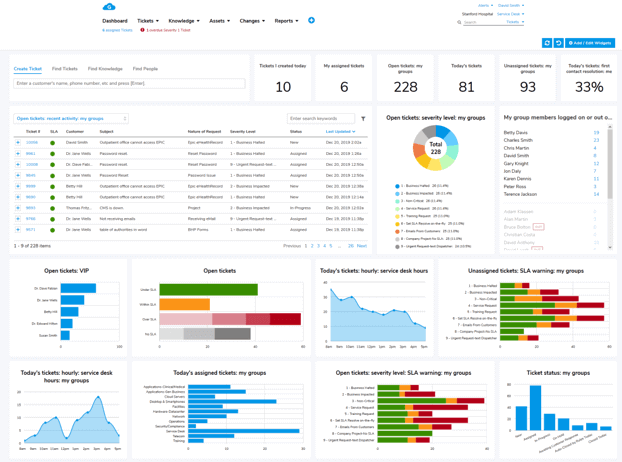
- Intuitive and flexible dashboard
- Helpful copilots for quicker issue handling
- Ticket macros for faster UI interactions
- Multiple service desks for different departments
To learn more, book a free Giva demo to see our solutions in action, or start your own free, 30-day trial today!
Categories: Technology, IT