Contact Center Workforce Management Fully Examined Plus Best Practices and How-To's
Contact center Workforce Management (WFM) is an integral part of managing the people and resources of a customer service contact center.
Effective workforce management makes a big difference, whether you run a small call center or manage a large operation with multiple channels. It can make all of the difference between frustrated customers waiting on hold and seamless service that builds brand loyalty.
In this guide, we cover everything you need to know about contact center WFM. We'll explore best practices all the way to future trends shaping the call center industry.

What Is Call Center Workforce Management?
Contact center Workforce Management (WFM) is a set of processes designed to achieve and maintain operational efficiency by keeping the right number of agents with the right skill sets staffed at the right time at minimal cost to the organization. It uses monitoring of real-time performance, typically supported by AI-powered software, to optimize efficiency and service levels and reduce operational costs and agent burnout by balancing staffing levels with workload.
In practice, WFM optimizes your entire contact center, such as staffing levels, scheduling, real-time management, and performance tracking, while making sure agents have the tools, training, resources, and processes they need to handle customer interactions effectively.
WFM in contact centers makes sure that your operational managers have the right number of agents with the right skills available to handle call volumes at the right times. Agents can handle customer interactions more efficiently when they have the resources, training, and tools they need.
WFM combines forecasting, scheduling, real-time team management, and performance tracking.
WFM helps contact center leaders answer important questions, like the following:
- How many agents do we need next Tuesday at 2 PM?
- Which team members should handle technical support calls?
- How should we handle general inquiries?
- How do we balance workloads during unexpected call spikes?
Contact center workforce management and customer service software make all of this possible.
Modern, AI-powered software uses historical data points and real-time analytics to work. Software like Giva predicts future contact volumes. Then it creates optimized schedules. Modern WFM solutions do more than simple scheduling.
Customer service contact center software now includes workforce engagement management features. These features improve both the agent experience and overall customer experience.
Key Takeaways: Summary Table
For those in a hurry, we've compiled the following quick reference summary table:
Topic |
Key Points |
What is WFM? |
WFM combines forecasting, scheduling, real-time management, and performance tracking to guarantee the right number of skilled agents are available at the right times to handle customer interactions efficiently. |
Why It Matters in Contact Centers |
Poor WFM causes long wait times, agent burnout, and wasted costs. Effective WFM improves service levels, reduces operational costs, boosts employee engagement, and lowers turnover. |
Main Components |
|
Best Practices |
|
How to Implement |
|
Key Metrics |
|
Common Benefits |
|
Future Trends |
|
Now, let's get into these topics in more detail.
The Importance of Workforce Management in Contact Centers
Poor workforce management creates serious problems in contact centers, and this has a secondary effect on customer service, brand loyalty, and both staff, management, and customer retention rates.
Understaffing leads to long wait times. Customers get frustrated, and in most cases, give up waiting. Agents burn out. Overstaffing drives up unnecessary labor costs and wastes resources. Both scenarios hurt contact center performance and your bottom line.
Effective workforce management solves these challenges:
- It creates a data-driven approach to staffing resources
- You can accurately predict call volume patterns
- You schedule agents accordingly
This helps you maintain service level agreements. At the same time, you keep operating costs lower than they would be without effective WFM.
The impact goes beyond just answering calls faster:
- Effective WFM practices improve employee engagement
- Agents get more predictable schedules
- Team members experience less stress from being constantly understaffed
- This leads to lower turnover rates
This makes a big difference in the call center industry. Recruiting and training new agents is expensive and time-consuming, and you lose much-needed internal and customer-centric knowledge and skills.
Contact centers that invest in workforce optimization see real improvements. They track productivity metrics and see the results. First Contact Resolution rates increase. The right agents with specialized skills handle the appropriate contact types.
Average Handle Time (AHT) improves when agents aren't rushed or overwhelmed. The result is a better customer experience, and this drives customer satisfaction and long-term loyalty.
Main Processes of Workforce Management Systems
Understanding the core components of WFM helps you implement these practices well. Here are the essential processes that make up complete contact center workforce management:
-
Forecasting is the foundation of WFM.
Contact center forecasting uses several types of information. It analyzes historical call data, seasonal trends, and business factors. This predicts future contact volumes. Advanced WFM solutions consider multiple variables. They analyze workday patterns, marketing campaigns, and even external factors.
Weather and current events can affect call volumes. These create precise forecasting models. Accurate predictions help you plan staffing resources. This means that you can plan weeks or months in advance.
-
Scheduling takes those forecasts and creates actual agent schedules.
The scheduling process balances business needs with agent preferences. It creates optimized schedules that cover predicted demand.
Modern automated scheduling tools handle complex variables. These include agent-preferred start times and skills-based routing requirements. They also manage lunch breaks and scheduling conflicts.
In multi-channel contact centers that serve customers via phone, chat, email, and social media, the process also includes multi-skill scheduling. This is building shifts based on skill and channel requirements so the right agents are available for the right interaction types at the right time.
Overall, the goal is flexible scheduling. This meets contact center needs while respecting work-life balance.
-
Intraday management monitors current activity and makes proactive staffing adjustments in real-time. Real-time visibility through live dashboards is essential. These show when actual call patterns differ from forecasted data. WFM teams can then respond quickly. They might move agents between skills and queues. They might offer voluntary overtime. Or they might adjust break schedules to maintain service levels.
-
Performance tracking measures how well your workforce management strategies work. This includes monitoring adherence.
Are agents following their schedules and adhering to KPIs? WFM tracks performance metrics such as Average Handle Time and First Contact Resolution. It also analyzes agent productivity.
These mission-critical, real-time data-driven insights help you continuously improve your WFM processes.
-
Capacity planning considers the broader picture of staffing resources.
This involves human resource management decisions. You need to think about hiring needs, training requirements, and long-term resource planning.
Strategic workforce management considers many factors. These include business growth, new product launches, and seasonal variations.
This makes sure that your contact center has adequate staffing in the months ahead.
Workforce Management Software and Technology
A growing number of dedicated WFM platforms supports contact center operations. Well-known solutions in the market include tools such as:
When evaluating WFM technology, contact centers should prioritize platforms that include:
- Automated scheduling
- Real-time analytics
- Skills-based routing support
- Integration with existing CRM and ticketing systems
- Employee self-service tools for scheduling
Now, let's look at ways that contact center, customer experience (CX), and operations managers can improve and optimize WFM.
10 Best-Practice Strategies for Optimal Contact Center Workforce Management
Robust and reliable contact center workforce management software isn't enough on its own. You need to implement it well. Here are proven call center workforce management best practices. The following 10 strategies help you maximize your outcomes:
-
Use Multiple Data Sources for Forecasting
Don't rely only on historical call volume. It's not the only set of metrics you need to review. Look at upcoming marketing campaigns and product launches. Consider seasonal trends and industry benchmarks because these are more accurate predictions.
The more data points you consider, the better your forecasts become. Track unexpected call spikes. Analyze what caused them. With this, you can predict similar events in the future.
-
Implement Skills-Based Routing
Not every agent can handle every contact type well. Skills-based routing matches customers with the right agents. These agents have the specialized skills required to address specific issues. All of this improves First Contact Resolution and reduces Average Handle Time.
It creates a better customer experience. Your WFM solution should account for these different skill levels. Factor them in when scheduling agents.
-
Embrace Flexible Scheduling
Rigid schedules frustrate agents. They make it harder to fill shifts. Offer demand-based shifts. Let agents choose from available time slots. Consider night shifts for agents who prefer them.
Allow shift swaps through your scheduling tools. This flexible scheduling approach improves employee engagement. It makes it easier to cover all hours.
-
Build in Scheduled Buffer Time
Don't schedule every agent to maximum capacity. Build in buffer time for surprises. You'll need coverage for unexpected call spikes and agent absences. Having backup agents available prevents service-level crashes. This helps when actual volumes exceed forecasts.
Buffer time also gives you flexibility. You can use this spare time and capacity for ongoing training and team meetings.
-
Monitor and Respond in Real-Time
Even the best forecasts encounter surprises. Use real-time analytics and live dashboards. Monitor contact center performance throughout the day. Set up alerts for when key metrics fall outside acceptable ranges.
Give your WFM team the power to make proactive staffing adjustments. Fix small issues before they become major problems.
-
Digital Channels
Modern contact centers handle multiple channels, including email, chat, social media, and other digital channels. Multi-channel customer engagement requires different staffing approaches.
It's different from traditional voice response systems. Factor in how long each interaction type takes. Schedule multi-skilled agents who can handle multiple channels.
This makes it much easier to handle higher volumes of calls and Live Chat messages.
-
Invest in Ongoing Training
Well-trained agents handle calls more efficiently. They require less supervision. Schedule regular ongoing training sessions and provide targeted training to address specific skill gaps.
Quality Assurance (QA) programs help identify where additional training would be most effective. This improves call handling ability, and at the same time, it reduces Average Handle Time (AHT); a key customer success and operational metric.
-
Track Attendance Carefully
Attendance tracking is essential for accurate scheduling. Agents sometimes arrive late or take unscheduled breaks. This throws off your entire WFM plan.
Use attendance data to identify patterns. Address attendance issues early. Clear policies and consistent enforcement help maintain schedule adherence.
-
Leverage AI
Modern AI-powered WFM systems can analyze thousands of inputs simultaneously, such as historical call data, real-time queue activity, agent schedules, and external factors. Together these generate optimized schedules not just for the week ahead, but throughout the workday with real-time reporting and analytics.
Also, AI-powered scheduling creates better schedules faster than manual methods. Machine learning algorithms identify patterns humans might miss. They optimize schedules across multiple variables simultaneously.
Further, AI tools built into these systems can also identify where individual agents or teams need additional support. This helps managers reduce bottlenecks and improve day-to-day efficiency before problems escalate. The result is a shift from reactive scheduling adjustments to proactive, data-driven workforce optimization.
Lastly, AI-connected SaaS tools also help with real-time adherence monitoring. This is because they can make automated schedule adjustments.
-
Reduce Repetitive Tasks with Automation
Free up your team members by automating repetitive tasks. Self-service portals let customers handle simple requests. They don't need agent assistance.
Interactive Voice Response (IVR) systems can route calls. These virtual agents (most of which are AI-infused now) gather information before a customer reaches an agent, and this works the same via telephony or Live Chat.
Virtual agents can handle basic inquiries around the clock. This allows your human agents to focus on complex issues. These require specialized skills and personalized service.
How to Implement Contact Center Workforce Management
Implementing workforce management doesn't have to be complex or disruptive. A phased, practical approach helps teams build confidence, reduce risk, and see results faster:
-
Assess Current Performance
Start by reviewing your existing contact center data. Look at call volumes, service levels, Average Handle Time, schedule adherence, and staffing gaps. Identify where performance regularly falls short, such as peak periods, understaffed shifts, or channels that are harder to support. This baseline helps you understand where WFM will have the biggest impact.
-
Clean and Organize Historical Data
Accurate forecasting depends on reliable data. Review historical contact volumes across all channels, not just voice. Remove outliers caused by one-time events, system outages, or unusual spikes. The cleaner your data, the more accurate your forecasts and schedules will be.
-
Start with Forecasting and Scheduling
Use your historical data to build demand forecasts by day, time, channel, and skill. From there, create schedules that align staffing levels with expected demand. Focus on getting coverage right first, then layer in agent preferences and flexibility once the foundation is solid.
-
Introduce Real-Time Monitoring
Once schedules are in place, real-time visibility becomes very important. Live dashboards help managers see issues as they happen, such as unexpected call spikes. This allows teams to make small adjustments throughout the day instead of reacting after service levels drop.
-
Train Managers and Agents
Workforce Management works best when everyone understands how it impacts them. Train managers on forecasting, scheduling logic, and adjustments during coverage times. Further, help agents understand schedules, expectations for adhering to them, and how WFM supports fair workloads and work-life balance. Clear communication builds trust and adoption.
-
Optimize Continuously
Regularly review performance results, forecasting accuracy, and staffing outcomes. Adjust rules, assumptions, and schedules based on what you learn. Continuous optimization helps your WFM strategy stay consistent with customer demand and business growth.
Key Contact Center Workforce Management Metrics
Tracking the right metrics is essential for effective workforce management. These KPIs help leaders understand whether staffing plans match real-world demand:
- Service Level: Measures how quickly customer contacts are answered
- Average Speed of Answer (ASA): Tracks the average time customers wait before an agent picks up
- Schedule Adherence: Shows whether agents are following assigned schedules
- Occupancy Rate: Indicates how much of an agent's time is spent handling contacts
- Average Handle Time (AHT): Tracks efficiency without sacrificing quality
- First Contact Resolution (FCR): Measures how often issues are resolved on the first interaction
- Shrinkage: Accounts for time agents are unavailable due to meetings, training, breaks, or absences
Monitoring these metrics together helps avoid common problems like burnout, understaffing, or unnecessary labor costs.
Benefits Contact Centers and Businesses Receive from Good Contact Center WFM
Good workforce management delivers real benefits across your entire organization. These advantages make WFM software one of the most valuable investments. A contact center can make this investment with confidence:
-
Improved Customer Satisfaction is perhaps the most important benefit:
- You have the right number of agents available
- Customers experience faster response times and shorter wait times
- Skills-based routing ensures customers connect with agents who can solve their problems. This improves First Contact Resolution
The result is a consistent customer experience, and this builds trust and brand loyalty.
-
Enhanced Contact Center Performance shows up in every metric that matters. Well-managed schedules reduce Average Handle Time:
- Agents aren't rushed or overwhelmed
- First Contact Resolution improves
- The right agents handle the right types of contact
- Service Level Agreements (SLAs) become easier to maintain
- Staffing matches demand
These performance improvements create a positive cycle. Better metrics lead to more satisfied customers, and this creates a better work environment for agents.
-
Lower Operational Costs result from smart staffing. You eliminate both understaffing and overstaffing. Precise forecasting prevents paying for unnecessary labor costs during slow periods. It also prevents the hidden costs of understaffing.
These include overtime pay and rushed service, which create repeat calls. It prevents customer churn. When you track performance against industry benchmarks, you can spot inefficiencies and can optimize resource planning.
-
Better Agent Experience makes your contact center more attractive. It becomes a better place to work. Optimized schedules consider agent-preferred start times:
- Flexible scheduling improves work-life balance
- Agents aren't constantly stressed by understaffing
- They're not bored during periods of overstaffing
- Employee engagement increases. This leads to lower turnover
- You save money on recruiting and training
- You maintain a more experienced team
-
Increased Productivity comes from several sources. Automated scheduling tools free up managers:
- They can focus on coaching and quality assurance
- They don't spend all their time manually building schedules
- Real-time adherence monitoring helps keep agents on task
- Data-driven insights reveal opportunities for targeted training. This improves call handling ability.
The result is a team that accomplishes more with the same resources.
-
Greater Operational Flexibility allows you to respond quickly to planned or unplanned changes:
- You can quickly identify backup agents
- You can offer voluntary overtime to the right team members
- Marketing campaigns can be launched with confidence
- You can plan ahead for the increased contact volumes
- New digital channels can be added with proper staffing support
-
Strategic Advantages emerge when workforce management is done well:
- You can launch new services
- You can enter new markets
- You can handle outbound sales campaigns
- You have the capacity planning insights to do it well
- Real-time visibility into operations helps you spot revenue opportunities
- You can respond to competitive threats faster
Your contact center becomes a strategic asset. It's not just a cost center.
Future of WFM Contact Center Trends
The contact center industry is evolving rapidly, and WFM strategies need to keep pace. Here are the key trends reshaping workforce management:
-
AI-Powered Intelligence
- Analyzes thousands of variables simultaneously for complex forecasting
- Optimizes schedules across multiple goals: cost, service levels, satisfaction, and skills
- Future systems will predict individual performance and auto-adjust based on real-time learning
-
Remote and Distributed Teams
- Enables hiring talent from anywhere but requires new management approaches
- Demands better tools for monitoring productivity and building virtual cohesion
- Drives flexible scheduling across time zones and work preferences
-
Digital-First Customer Service
- Digital channels (chat, social media, etc.) are now primary, not secondary to telephony
- Requires rethinking WFM models originally built for phone calls
- Needs tighter integration between WFM and CRM platforms for unified customer views
-
Employee Engagement as Strategy
- Giving agents schedule control and work-life balance improves retention
- Personalized scheduling optimizes both business results and agent satisfaction
- Career pathing becomes integral to workforce planning
-
Integrated Platforms
- Moving from disconnected tools to unified systems
- Combines WFM, quality assurance, customer data, and analytics
- Enables sophisticated, data-driven optimization
- Future systems predict customer behavior, revenue opportunities, and performance issues
- Enables proactive interventions instead of constant firefighting
- Shifts contact centers from problem-solving to opportunity-seeking
Predictive vs. Reactive Management
Success requires balancing technology adoption with human-centered strategy. Stay flexible and open to innovation. However, you need to remember that even the most advanced AI can't replace a skilled agent delivering personalized, caring service.
Conclusion: Effective Workforce Management for Efficient Call Centers
Effective contact center workforce management combines the right software, proven strategies, and continuous optimization to deliver exceptional customer service while supporting business growth.
Success requires balancing technology with the needs of your staff. Investing in the most effective tools, training your team, and maintaining clear communication with agents.
Whether you're starting fresh or refining existing practices, every improvement in forecasting, scheduling, and real-time management delivers measurable results:
- Faster customer response times
- Better agent work-life balance
- Improved operational efficiency
With the right approach, your contact center transforms from a cost center into a competitive advantage that drives customer loyalty and sustainable growth.
Contact Center Workforce Management: Frequently Asked Questions (FAQs)
-
What's the best way to start with WFM if we're new to it?
Begin with a pilot program focused on one team or channel. Implement complete WFM practices there, track results carefully, and learn before expanding. This reduces risk and builds internal support.
-
What features should I look for in WFM software?
Prioritize automated scheduling, real-time analytics, skills-based routing support, and multi-channel capabilities. Consider whether cloud-based (flexible and scalable) or on-premise (more control) solutions better fit your needs. Most vendors offer free trials.
-
Is WFM just about the technology?
No, in this and many other cases, technology is only half the solution. And we include AI in that. AI isn't a perfect solution, even when it's integrated with SaaS tools you already use. Clear agent communication, fair policies, and genuine employee engagement are equally critical. The best programs balance business efficiency with respect for your team.
-
How important is training as part of WFM?
Very important. In contact centers, it's always been critical. Invest in learning forecasting, scheduling, and optimization principles to maximize your tools' effectiveness. Look for vendor certification programs and resources from industry associations like the Contact Center Network Group.
-
What results can we expect from effective WFM?
Measurable improvements in forecasting accuracy, scheduling efficiency, lower costs, higher productivity, improved customer satisfaction, faster response times, and better agent workload balance.
-
What's the difference between Workforce Management (WFM) and Workforce Engagement Management (WEM)?
Workforce Management (WFM) focuses on staffing and operations, including forecasting demand, scheduling agents, managing daytime changes, and tracking performance to meet service levels.
Workforce Engagement Management (WEM) focuses on the agent experience, covering coaching, quality management, learning, and engagement.
In modern contact centers, the two often work together: WFM ensures operational efficiency, while WEM helps improve agent performance, satisfaction, and retention.
Contact Center Workforce Management: Additional Resources
- Giva Customer Service Software: AI Powered and HIPAA Compliant
- The 16 Best Customer Service Software Solutions for 2026: Buyer's Guide
- Customer Service Resource Center
- Omnichannel Contact Center: What It Is, Features and Best-Practice How-To's
- Customer Effort Score (CES): How to Calculate and Improve It Plus Industry Benchmarks
- CSAT vs. NPS vs. CES: How to Calculate Plus the Pros and Cons of Each
Giva Can Help Streamline Your Call Center Processes
Your customer service and call center personnel deserve the best technology. Likewise, your customers deserve the best possible customer service experience. To accomplish that, you need to be working with the best technology.
Giva offers Customer Service Software, which is built for quick deployment and ease of use. That way, you can start seeing value right away. Giva is also ideal for high security and compliance in healthcare, banking, legal, state, and local governments.
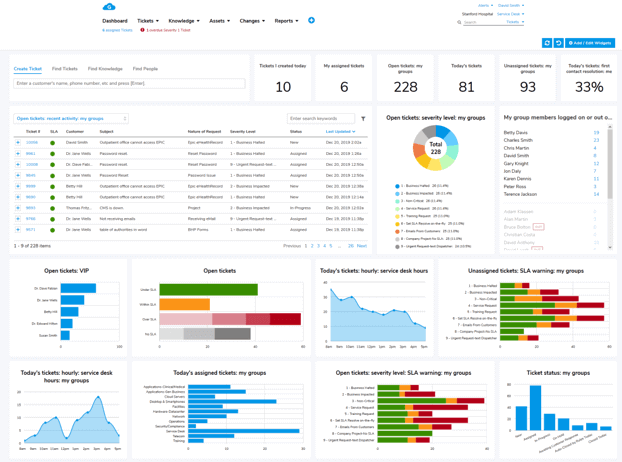
- Get visual Insights with real-time dashboards
- Spend more time assisting customers and less on setup and training
- Make fast business decisions with out-of-the-box reporting and analytics
- Answer custom questions quickly and precisely with Giva's AI Copilots for ticket response writing and summarizing, and knowledge base summary overviews
Giva's products come with free setup assistance. Giva's experts will offer configuration assistance and answer questions during your trial.
Ready to learn more? Get a demo to see Giva's solutions in action, or start your own free, 30-day trial today!



Categories: Customer Service